• Fri frakt över 249 kr
  • •
  • Snabba leveranser
  • •
  • Billiga böcker
Kundservice

Du är på sajten för privatpersoner.

Företag, bibliotek eller offentlig verksamhet?

Du handlar på classic.bokus.com, där alla dina funktioner finns intakta.
Till classic.bokus.com
Bokus logotyp. Gå till startsidan.
  • Erbjudanden
  • Nyheter
  • Student
  • Topplistor
  • Barn & ungdom
  • Bokus Play
  • E-böcker
  • Pocketböcker
  • Spel & pussel

10% rabatt på allt med kod NYSTART10 →

Sidfot

Mina sidor

    Hjälp

    • Kundservice
    • Vanliga frågor och svar
    • Frakt och leverans
    • Retur vid ångerrätt
    • Reklamera vara
    • Betalning
    • Köpvillkor
    • Allmänna villkor
    • Information om webbplatsens tillgänglighet

    Om Bokus

    • Om oss
    • Pressrum
    • För studenter
    • För företag
    • För bibliotek och offentlig verksamhet
    • För leverantörer
    • Hållbarhet

    Populärt

    • Aktuella erbjudanden
    • Presentkort
    • Studentlitteratur
    • Nya böcker
    • Topplistor
    • Signerade böcker
    • Engelska böcker

    Inspiration

    • Boktips
    • BookTok
    • Populära bokserier
    • Barnbokskaraktärer
    • Populära författare
    Logotyp för Bokus
    Följ oss på Facebook (extern länk)Följ oss på Instagram (extern länk)Följ oss på YouTube (extern länk)Följ oss på TikTok (extern länk)
    bokus @ CookiesAnpassa cookiesIntegritetspolicyKöpvillkor
    Till Citymail hemsida (extern länk)Till Budbee hemsida (extern länk)Till Postnord hemsida (extern länk)Till Schenker hemsida (extern länk)Till Early Bird hemsida (extern länk)Till Walleys hemsida (extern länk)
    1. Ekonomi och Ledarskap
    2. Nationalekonomi
    3. Mikroekonomi

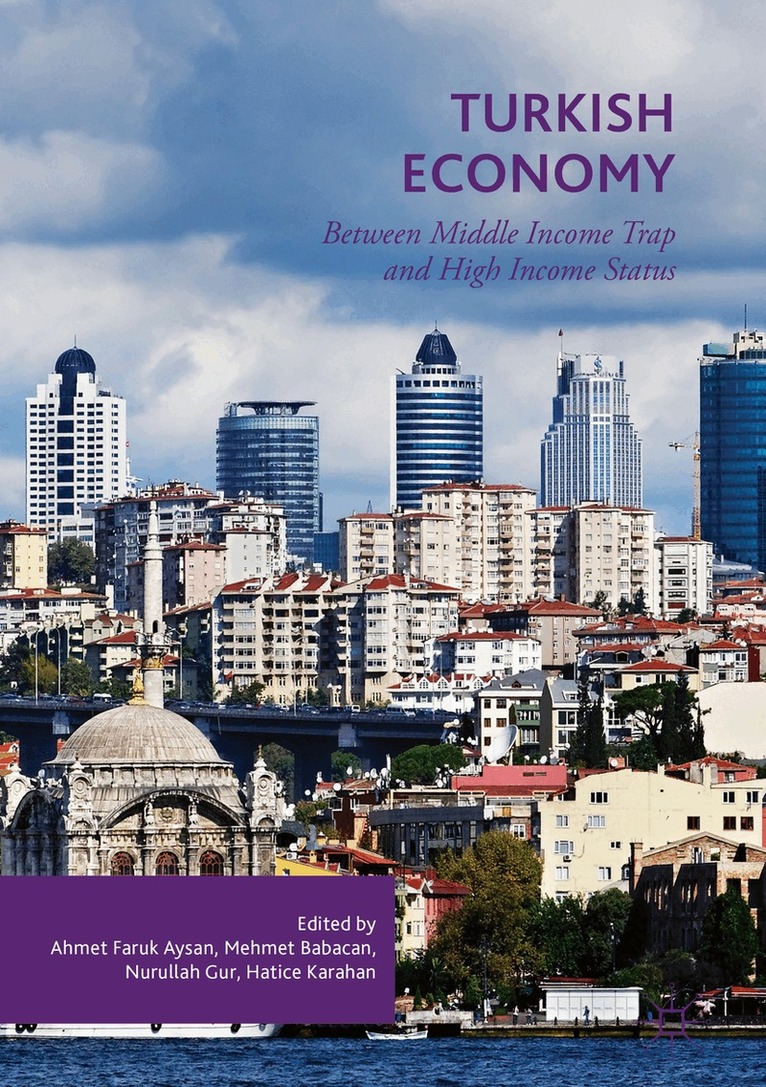
    Turkish Economy

    Between Middle Income Trap and High Income Status

    AvAhmet Faruk Aysan,Mehmet Babacan

    Inbunden, Engelska, 2018

    1 785 kr

    Beställningsvara. Skickas inom 10-15 vardagar. Fri frakt över 249 kr.

    Beskrivning

    This book scrutinizes the last 15 years of exceptional growth in the Turkish economy, and presents a model for sustainable ongoing growth that has particular implications for other key emerging economies. The growth of the Turkish economy in the 2000’s was based on two integrated fundamental factors: fixing deteriorating dynamics and implementing further reforms to stimulate economic activity. This basic formula led to pleasing rates of economic growth, fuelled particularly by domestic private investments along with revived consumption and exports. Driven by political stability established by single party governments in the post-2002 period, an improved economic outlook helped Turkey enjoy record levels of foreign investment, adding momentum to its growth story. The Turkish experience in the post-crisis period implies that in order to achieve a fast and - more importantly - sustainable onward growth, the economy needs a new generation of structural reforms that simultaneously heal fragility and vitalize economic activity.The papers in this book offer professional assessments and assistance - especially for policymakers, and present a new direction upon which the Turkish economy - and emerging markets - can progress successfully for a further 15 years.

    Produktinformation

    • Utgivningsdatum:2018-04-16
    • Mått:148 x 210 x undefined mm
    • Format:Inbunden
    • Språk:Engelska
    • Antal sidor:419
    • Förlag:Springer International Publishing AG
    • ISBN:9783319703794

    Utforska kategorier

    • Mikroekonomi inom Ekonomi och Ledarskap
    • Ekonomiska system inom Ekonomi och Ledarskap

    Mer om författaren

    Dr Ahmet Faruk Aysan is an associate professor and a member of the Board and the Monetary Policy Committee of the Central Bank of the Republic of Turkey. Dr Aysan has served as a consultant at various institutions including the World Bank, the Central Bank of the Republic of Turkey and Oxford Analytica, and he has been lecturing at the Department of Economics at Boğaziçi University since 2005. Before joining the Central Bank, Dr Aysan was Deputy Director of the Center for Economics and Econometrics at Boğaziçi University, a member of the G-20 Financial Safety Net Experts Group, a member of the Advisory Board of Social Sciences and Humanities Research Group of TÜBİTAK, and a National Expert in 'Socio-Economic Sciences and Humanities' under the Seventh Framework Programme of the European Union.Dr Aysan's fields of specialization are international finance, macroeconomics, political economy, banking and finance, econometrics, governance and development.Dr Mehmet Babacan is an advisor to the Office of the Prime Minister of Turkey. He has also been a member of the Auditing Committee of the Central Bank of the Republic of Turkey since May 2015. Dr Babacan has contributed a range of publications, projects, research documents and conference presentations, primarily on international trade and governance, economic growth, and political economy. He has published and refereed for articles in several international journals and is the author of three book chapters on trade and development in distinct edited volumes.Dr Nurullah Gur is currently a faculty member at the Department of Economics & Finance, Istanbul Medipol University. He has published numerous articles in international journals with a focus on economic development and finance-real sector relations. Dr Hatice Karahan specialises in macroeconomics, and currently heads the Department of Economics and Finance at Istanbul Medipol University. In addition, she serves as an economic consultant for the Turkish Exporters’ Assembly and writes bi-weekly columns at Yeni Safak, a Turkish newspaper. Karahan also contributes to Dunya, a national newspaper on economy and business with her opinion columns. She has academic publications on the Turkish economy, foreign trade, energy, R&D, and entrepreneurship in various national and international journals, books and reports.

    Innehållsförteckning

    • 1. Introduction.- 2. The Role of the State in the Turkish Economy.- 3. Political Economy of Transformation of Capital Structure in Turkey: A Historical and Comparative View.- 4. Single Party Governments as a Cause and Coalitions as a Consequence of Coups in Turkey.- 5. Between Risks and Opportunities: Social Policies in Contemporary Turkey.- 6. Turkey’s Struggle to Achieve High Income Status through Adaptation for Knowledge Economy.- 7. Financial openness, financial stability, and macroeconomic performance in Turkey: A comparative perspective.- 8. Capital Inflows and Banking in the Turkish Economy.- 9. Turkish Banking Industry: A CAMELS Analysis.- 10. Modern History of Islamic Finance and Strategic Roadmap for its Development in Turkey.- 11. Saving Behavior in Turkey: Where are we? And what to do about it?.- 12. Towards Inclusive Growth and Sustainable Development: Science Technology and Innovation Strategies and Policy Implications.- 13. Thinking About a New Industrial Policy Framework for Turkey.- 14. Turkish Labor Market: Outlook, Key Challenges and Policy Recommendations.- 15. Developing National Competence in Nuclear Energy: The Case of Turkey.- 16.- Beyond Planning and Liberalization: Foreign Trade and Industrial Development in Turkey.- 17. Challenges of Turkish Family Businesses Related to Effective Management Strategies.