• Fri frakt över 249 kr
  • •
  • Snabba leveranser
  • •
  • Billiga böcker
Kundservice

Du är på sajten för privatpersoner.

Företag, bibliotek eller offentlig verksamhet?

Du handlar på classic.bokus.com, där alla dina funktioner finns intakta.
Till classic.bokus.com
Bokus logotyp. Gå till startsidan.
  • Erbjudanden
  • Nyheter
  • Student
  • Topplistor
  • Barn & ungdom
  • Bokus Play
  • E-böcker
  • Pocketböcker
  • Spel & pussel

10% rabatt på allt med kod NYSTART10 →

Sidfot

Mina sidor

    Hjälp

    • Kundservice
    • Vanliga frågor och svar
    • Frakt och leverans
    • Retur vid ångerrätt
    • Reklamera vara
    • Betalning
    • Köpvillkor
    • Allmänna villkor
    • Information om webbplatsens tillgänglighet

    Om Bokus

    • Om oss
    • Pressrum
    • För studenter
    • För företag
    • För bibliotek och offentlig verksamhet
    • För leverantörer
    • Hållbarhet

    Populärt

    • Aktuella erbjudanden
    • Presentkort
    • Studentlitteratur
    • Nya böcker
    • Topplistor
    • Signerade böcker
    • Engelska böcker

    Inspiration

    • Boktips
    • BookTok
    • Populära bokserier
    • Barnbokskaraktärer
    • Populära författare
    Logotyp för Bokus
    Följ oss på Facebook (extern länk)Följ oss på Instagram (extern länk)Följ oss på YouTube (extern länk)Följ oss på TikTok (extern länk)
    bokus @ CookiesAnpassa cookiesIntegritetspolicyKöpvillkor
    Till Citymail hemsida (extern länk)Till Budbee hemsida (extern länk)Till Postnord hemsida (extern länk)Till Schenker hemsida (extern länk)Till Early Bird hemsida (extern länk)Till Walleys hemsida (extern länk)
    1. Ekonomi och Ledarskap
    2. Företagsekonomi
    3. Organisationsteori

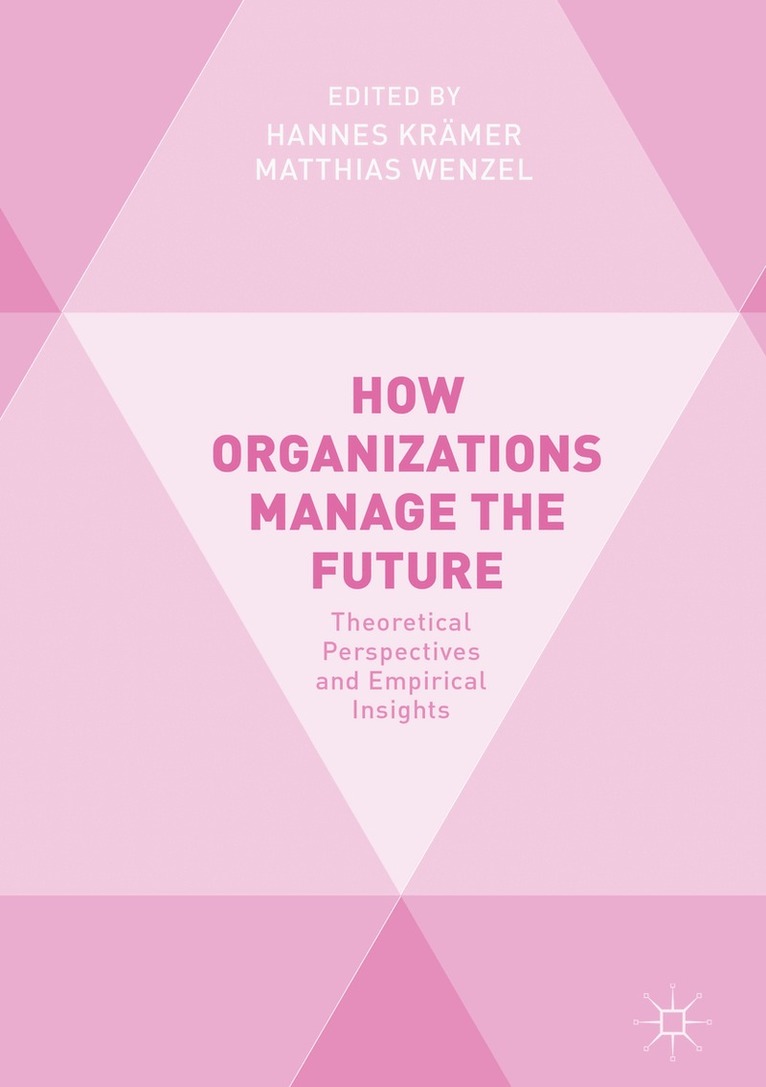
    How Organizations Manage the Future

    Theoretical Perspectives and Empirical Insights

    AvHannes Krämer,Matthias Wenzel

    Inbunden, Engelska, 2018

    1 673 kr

    Beställningsvara. Skickas inom 10-15 vardagar. Fri frakt över 249 kr.

    Beskrivning

    This pioneering edited collection explores the question of how organizations manage the future. Moving away from traditional research which focuses on the past, the editors problematize the future as an inherent but under-examined part of organizing. Arguing that the future acts as both a driver of and a performative result of organizing, the book asks how organizations conceptualize and deal with the future and what processes are in place to handle things to come. With empirical research examining the practices, discourses and concepts that play key roles, organizations and their approaches are scrutinized. A timely compendium of theoretical discussion and practical implications on the relevance of the future, this book is essential reading for those interested in organization, sociology and management studies.

    Produktinformation

    • Utgivningsdatum:2018-07-11
    • Mått:148 x 210 x 23 mm
    • Vikt:848 g
    • Format:Inbunden
    • Språk:Engelska
    • Antal sidor:328
    • Upplaga:18001
    • Förlag:Springer International Publishing AG
    • ISBN:9783319745053

    Utforska kategorier

    • Organisationsteori inom Ekonomi och Ledarskap
    • Sociologi inom Samhälle och politik
    • Affärsstrategi inom Ekonomi och Ledarskap

    Mer om författaren

    Hannes Krämer is Head of the research group Border and Boundary Studies and Scientific Coordinator of the Viadrina Center B/ORDERS IN MOTION at the European University Viadrina in Frankfurt (Oder), Germany. His research interests comprise the fields of future research, practice theory, organizational sociology, cultural theory, and boundary research. Matthias Wenzel is a post-doctoral researcher at the Chair of Management and Organization at the European University Viadrina in Frankfurt (Oder), Germany. His research interests include strategy as practice, demand-side research in management and video methods.

    Innehållsförteckning

    • 1. Introduction: Managing the Future – Foundations and Perspectives; Matthias Wenzel and Hannes Krämer.- Part I. Philosophical Perspectives.- 2. From Defuturization to Futurization and Back Again? A System-Theoretical Perspective to Analyze Decision-Making;  Victoria von Groddeck.- 3. What's New? Temporality in Practice Theory and Pragmatism; Anders Buch and Iben S. Stjerne.- 4.  Creativity in/of Organizations for Managing Things to Come: Lessons to be Learnt from Philosophy;  Günther Ortmann and Jörg Sydow.- 5. Organizational Futurity: Being and Knowing in the Engagement with What is Yet to Come; Seelan Naidoo.- Part II. Theoretical and Methodological Perspectives.- 6. Open(ing up) For the Future: Practising Open Strategy and Open Innovation to Cope with Uncertainty; Maximilian Heimstädt and Georg Reischauer.- 7. Antenarratives in Ongoing Strategic Change: Using the Story Index to Capture Daunting and Optimistic Futures; Tommi P. Auvinen, Pasi Sajasalo, Teppo Sintonen, Tuomo Takala and Marko Järvenpää.- 8. What Scenarios Are You Missing Poststructuralism for Deconstructing and Reconstructing Organizational Futures; Ricarda Scheele, Norman M. Kearney, Jude H. Kurniawan and Vanessa J. Schweizer.- 9. Historical Methods and the Study of How Organizations Manage the Future; Yves Plourde,- Part III. Empirical Insights.- 10. In the Wake of Disaster: Resilient Organizing and a New Path for the Future; A. Erin Bass and Ivana Milosevic.- 11. The Darkened Horizon: Two Modes of Organizing Pandemics; Matthias Leanza.- 12.  Managing the Digital Transformation: Preparing Cities for the Future; Markus Kowalski, Anja Danner-Schröder and Gordon Müller-Seitz.- 13. Creating Collective Futures: How Roadmaps and Conferences Re-configure the Institutional Field of Semiconductor Manufacturing; Uli Meyer, Cornelius Schubert and Arnold Windeler.- 14. Organizational Artifacts as Pre-presentations of Things to Come: The Case of Menu Development in Haute Cuisine; Jochen Koch, N. Natalie Senf and Wasko Rothmann.- 15. Solid Futures: Office Architecture and the Labour Imaginary; David Adler.