• Fri frakt över 249 kr
  • •
  • Snabba leveranser
  • •
  • Billiga böcker
Kundservice

Du är på sajten för privatpersoner.

Företag, bibliotek eller offentlig verksamhet?

Du handlar på classic.bokus.com, där alla dina funktioner finns intakta.
Till classic.bokus.com
Bokus logotyp. Gå till startsidan.
  • Erbjudanden
  • Student
  • Topplistor
  • Barn & ungdom
  • Bokus Play
  • E-böcker
  • Ljudböcker
  • Pocketböcker
  • Spel och pussel

Pocketfynda! Hundratals böcker för 49 kr/st →

Sidfot

Mina sidor

    Hjälp

    • Kundservice
    • Vanliga frågor och svar
    • Frakt och leverans
    • Retur vid ångerrätt
    • Reklamera vara
    • Betalning
    • Köpvillkor
    • Allmänna villkor
    • Information om webbplatsens tillgänglighet

    Om Bokus

    • Om oss
    • Pressrum
    • För studenter
    • För företag
    • För bibliotek och offentlig verksamhet
    • För leverantörer
    • Hållbarhet

    Populärt

    • Aktuella erbjudanden
    • Presentkort
    • Studentlitteratur
    • Nya böcker
    • Topplistor
    • Signerade böcker
    • Engelska böcker

    Inspiration

    • Boktips
    • BookTok
    • Barnbokskaraktärer
    • Populära författare
    Logotyp för Bokus
    Följ oss på Facebook (extern länk)Följ oss på Instagram (extern länk)Följ oss på YouTube (extern länk)Följ oss på TikTok (extern länk)
    bokus @ CookiesAnpassa cookiesIntegritetspolicyKöpvillkor
    Till Citymail hemsida (extern länk)Till Budbee hemsida (extern länk)Till Postnord hemsida (extern länk)Till Schenker hemsida (extern länk)Till Early Bird hemsida (extern länk)Till Walleys hemsida (extern länk)
    1. Psykologi och pedagogik
    2. Pedagogik
    3. Pedagogisk psykologi

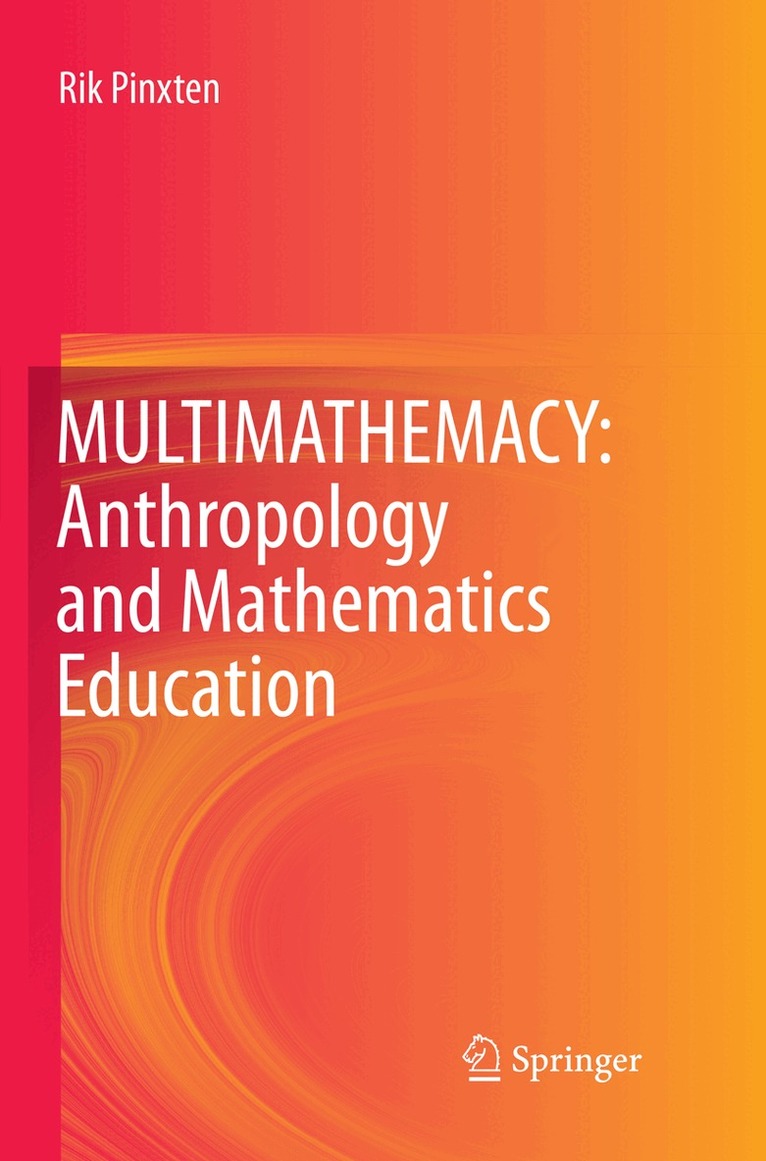
    MULTIMATHEMACY: Anthropology and Mathematics Education

    AvRik Pinxten

    Häftad, Engelska, 2019

    542 kr

    Beställningsvara. Skickas inom 10-15 vardagar. Fri frakt över 249 kr.

    Fler format och utgåvor

    Inbunden

    542 kr

    E-bok

    690 kr

    Beskrivning

    This book defends that math education should systematically start out from the diverse out-of-school knowledge of children and develop trajectories from there to the Academic Mathematics   tower of knowledge. Learning theories of the sociocultural school (Vygotsky and on) are used here, and ethnographic knowledge from around the world is shown to offer a rich and varied base for curricula. The book takes a political stand against the exclusively western focus  in OECD analyses and proposals on math education. This book aimsat agents in education and social actions in every cultural environment. But itis also attractive to mathematicians, anthropologists and other specialists. Itoffers a broad and scholarly view of knowledge and culture and a veryoriginal  transcultural and transdisciplinarian approach to education. Ubiratan D'Ambrosio, UNICAMP/Universidade Estadual de Campinas, Brazil

    Produktinformation

    • Utgivningsdatum:2019-03-27
    • Mått:155 x 235 x 12 mm
    • Vikt:330 g
    • Format:Häftad
    • Språk:Engelska
    • Antal sidor:190
    • Förlag:Springer International Publishing AG
    • ISBN:9783319799179

    Utforska kategorier

    • Pedagogisk psykologi inom Psykologi och pedagogik
    • Matematik inom Naturvetenskap och teknik
    • Pedagogik inom Psykologi och pedagogik

    Innehållsförteckning

    • Foreword.- Introduction. What ifs.- Worldview: sphere and worldview.-Part I: The general context of education.- 1. Education in a post-industrial world.- 2. Math education and culture: learning theories.- Part II: Epistemological questions on AM and EM.- 3. Foundational issues? Whitehead s Multiperspectivalness.- 4. Language and thought.- Part III: Ethnomathematics and education.- 5. Multimathemacy and education: general principles.- 6. Learning formal thinking in a culture-specific context.- 7. Combined mathematical operations: Locating and representing, measuring, designing, traditional building, archaeological digging, dancing, computer designing, storytelling, buying and selling.- 8.  Education in a school context.- 9. General conclusions.- 10. Appendix: Human Beings as Learners-in-Context: A Motor for the Capability Approach.- Bibliography.