• Fri frakt över 249 kr
  • •
  • Snabba leveranser
  • •
  • Billiga böcker
Kundservice

Du är på sajten för privatpersoner.

Företag, bibliotek eller offentlig verksamhet?

Du handlar på classic.bokus.com, där alla dina funktioner finns intakta.
Till classic.bokus.com
Bokus logotyp. Gå till startsidan.
  • Erbjudanden
  • Nyheter
  • Student
  • Topplistor
  • Barn & ungdom
  • Bokus Play
  • E-böcker
  • Pocketböcker
  • Spel & pussel

Må bättre, för mindre! Upp till 50% rabatt på hälsoböcker

Sidfot

Mina sidor

    Hjälp

    • Kundservice
    • Vanliga frågor och svar
    • Frakt och leverans
    • Retur vid ångerrätt
    • Reklamera vara
    • Betalning
    • Köpvillkor
    • Allmänna villkor
    • Information om webbplatsens tillgänglighet

    Om Bokus

    • Om oss
    • Pressrum
    • För studenter
    • För företag
    • För bibliotek och offentlig verksamhet
    • För leverantörer
    • Hållbarhet

    Populärt

    • Aktuella erbjudanden
    • Presentkort
    • Studentlitteratur
    • Nya böcker
    • Topplistor
    • Signerade böcker
    • Engelska böcker

    Inspiration

    • Boktips
    • BookTok
    • Populära bokserier
    • Barnbokskaraktärer
    • Populära författare
    Logotyp för Bokus
    Följ oss på Facebook (extern länk)Följ oss på Instagram (extern länk)Följ oss på YouTube (extern länk)Följ oss på TikTok (extern länk)
    bokus @ CookiesAnpassa cookiesIntegritetspolicyKöpvillkor
    Till Citymail hemsida (extern länk)Till Budbee hemsida (extern länk)Till Postnord hemsida (extern länk)Till Schenker hemsida (extern länk)Till Early Bird hemsida (extern länk)Till Walleys hemsida (extern länk)
    1. Historia och arkeologi
    2. Arkeologi

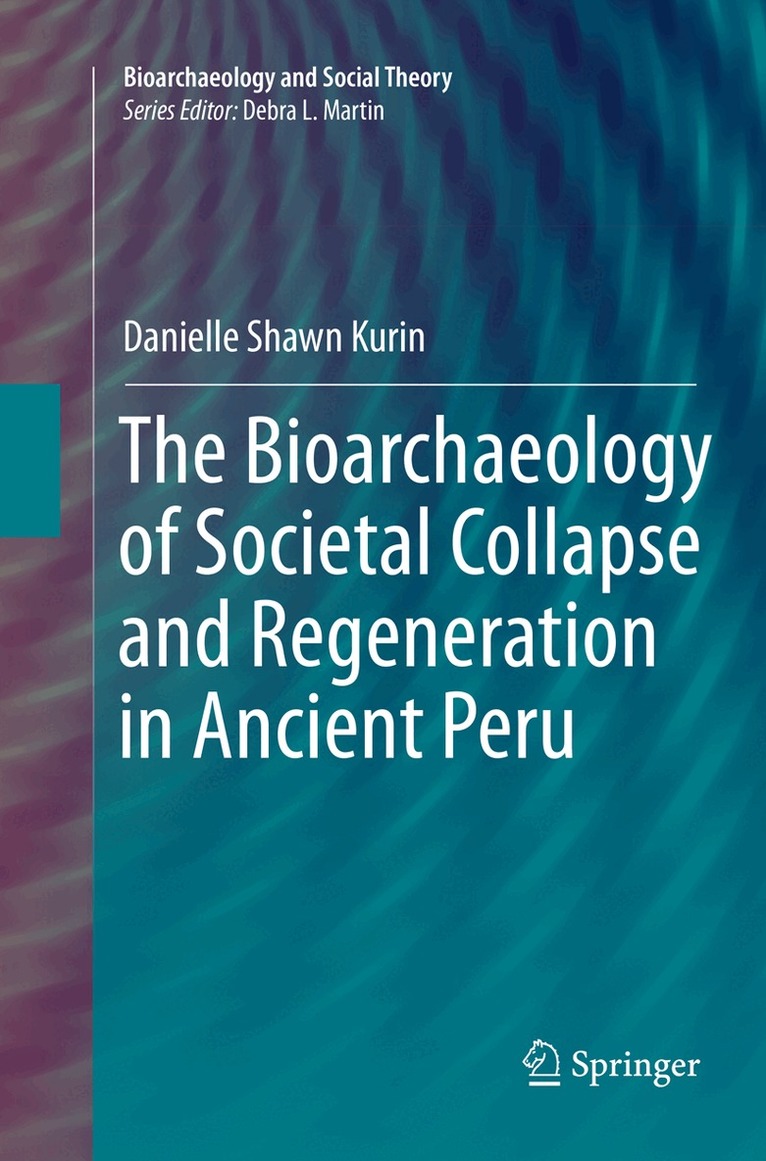
    Bioarchaeology of Societal Collapse and Regeneration in Ancient Peru

    AvDanielle Shawn Kurin

    Häftad, Engelska, 2018

    Del i serien Bioarchaeology and Social Theory

    563 kr

    Beställningsvara. Skickas inom 10-15 vardagar. Fri frakt över 249 kr.

    Fler format och utgåvor

    Inbunden

    563 kr

    E-bok

    732 kr

    Beskrivning

    This book explores how individuals, social groups, and entire populations are impacted by the tumultuous collapse of ancient states and empires. Through meticulous study of the bones of the dead and the molecules embedded therein, bioarchaeologists can reconstruct how the reverberations of traumatic social disasters permanently impact human bodies over the course of generations. In this case, we focus on the enigmatic civilizations of ancient Peru. Around 1000 years ago, the Wari Empire, the first expansive, imperial state in the highland Andes, abruptly collapsed after four centures of domination. Several hundred years later, the Inca rose to power, creating a new highland empire running along the spine of South America. But what happened in between? According to Andean folklore, two important societies, known today as the Chanka and the Quichua, emerged from the ashes of the ruined Wari state, and coalesced as formidable polities despite the social, political, and economic chaos that characterized the end of imperial control. The period of the Chanka and the Quichua, however, produced no known grand capital, no large, elaborate cities, no written or commercial records, and left relatively little by way of tools, goods, and artwork. Knowledge of the Chanka and Quichua who thrived in the Andahuaylas region of south-central Peru, ca. 1000 – 1400 A.D., is mainly written in bone—found largely in the human remains and associated funerary objects of its population. This book presents novel insights as to the nature of society during this important interstitial era between empires—what specialists call the “Late Intermediate Period” in Andean pre-history. Additionally, it provides a detailed study of Wari state collapse, explores how imperial fragmentation impacted local people in Andahuaylas, and addresses how those people reorganized their society after this traumatic disruption. Particular attention is given to describing how Wari collapse impactedrates and types of violence, altered population demographic profiles, changed dietary habits, prompted new patterns of migration, generated novel ethnic identities, prompted innovative technological advances, and transformed beliefs and practices concerning the dead.

    Produktinformation

    • Utgivningsdatum:2018-04-22
    • Mått:155 x 235 x 13 mm
    • Vikt:365 g
    • Format:Häftad
    • Språk:Engelska
    • Serie:Bioarchaeology and Social Theory
    • Antal sidor:218
    • Förlag:Springer International Publishing AG
    • ISBN:9783319803463

    Utforska kategorier

    • Arkeologi inom Historia och arkeologi
    • Antropologi inom Samhälle och politik
    • Sociologi inom Samhälle och politik

    Mer om författaren

    Visiting Assistant Professor, Department of Anthropology, UC Santa Barbara. Courses: Human Evolution, Human Osteology, Bioarchaeology and Forensic Anthropology, the Bioarchaeology of Natural and Social Disaster, Biorchaeological Method and Theory (graduate seminar); 2013-present. Adjunct Assistant Professor, Department of Science and Letters, Universidad Nacional Jose Maria Arguedas, Andahuaylas, Apurimac, Peru. Course: Introducción a la Sociología, Metodologia de la Investigacion; 2013-present.

    Recensioner i media

    “This 200-page volume is a revised version of the author’s 2012 dissertation. … Each chapter essentially stands alone, with its own bibliography … . The volume will interest archaeologists seeking to understand how the new subspecialty of bioarchaeology is being practiced and all Peruvianists interested in the Late Intermediate Period, just preceding the Inka.” (D. L. Browman, Choice, Vol. 54 (2), October, 2016)

    Innehållsförteckning

    • Chapter 1. Inequality and Innovation in the Aftermath of Empire.- Chapter 2. The Life and Death of the Wari Empire in the Andean Hinterlands.- Chapter 3. Chanka Origins and Community in Andahuaylas.-Chapter 4. Social Theory and a Bioarchaeological Perspective on Collapse and Reorganization.- Chapter 5. The Reorganization of Social Groups: Cranial Modification and Ethnogenesis.- Chapter 6. Cranial Trauma and Violence: Raiding and Ethnic Warfare in the Post-Imperial Era.- Chapter 7. The Sequelae of Structural Violence: Health and Nutrition in Troubled Times.- Chapter 8. Coping with Collapse: Trepanation and Medical Innovation.- Chapter 9. Conclusions: Resilience and Reorganization in the Ancient Andes.