• Fri frakt över 249 kr
  • •
  • Snabba leveranser
  • •
  • Billiga böcker
Kundservice

Du är på sajten för privatpersoner.

Företag, bibliotek eller offentlig verksamhet?

Du handlar på classic.bokus.com, där alla dina funktioner finns intakta.
Till classic.bokus.com
Bokus logotyp. Gå till startsidan.
  • Erbjudanden
  • Nyheter
  • Student
  • Topplistor
  • Barn & ungdom
  • Bokus Play
  • E-böcker
  • Pocketböcker
  • Spel & pussel

Må bättre, för mindre! Upp till 50% rabatt på hälsoböcker

Sidfot

Mina sidor

    Hjälp

    • Kundservice
    • Vanliga frågor och svar
    • Frakt och leverans
    • Retur vid ångerrätt
    • Reklamera vara
    • Betalning
    • Köpvillkor
    • Allmänna villkor
    • Information om webbplatsens tillgänglighet

    Om Bokus

    • Om oss
    • Pressrum
    • För studenter
    • För företag
    • För bibliotek och offentlig verksamhet
    • För leverantörer
    • Hållbarhet

    Populärt

    • Aktuella erbjudanden
    • Presentkort
    • Studentlitteratur
    • Nya böcker
    • Topplistor
    • Signerade böcker
    • Engelska böcker

    Inspiration

    • Boktips
    • BookTok
    • Populära bokserier
    • Barnbokskaraktärer
    • Populära författare
    Logotyp för Bokus
    Följ oss på Facebook (extern länk)Följ oss på Instagram (extern länk)Följ oss på YouTube (extern länk)Följ oss på TikTok (extern länk)
    bokus @ CookiesAnpassa cookiesIntegritetspolicyKöpvillkor
    Till Citymail hemsida (extern länk)Till Budbee hemsida (extern länk)Till Postnord hemsida (extern länk)Till Schenker hemsida (extern länk)Till Early Bird hemsida (extern länk)Till Walleys hemsida (extern länk)
    1. Samhälle och politik
    2. Politik och statsskick
    3. Statsskick och politiska processer
    4. Politiskt ledarskap

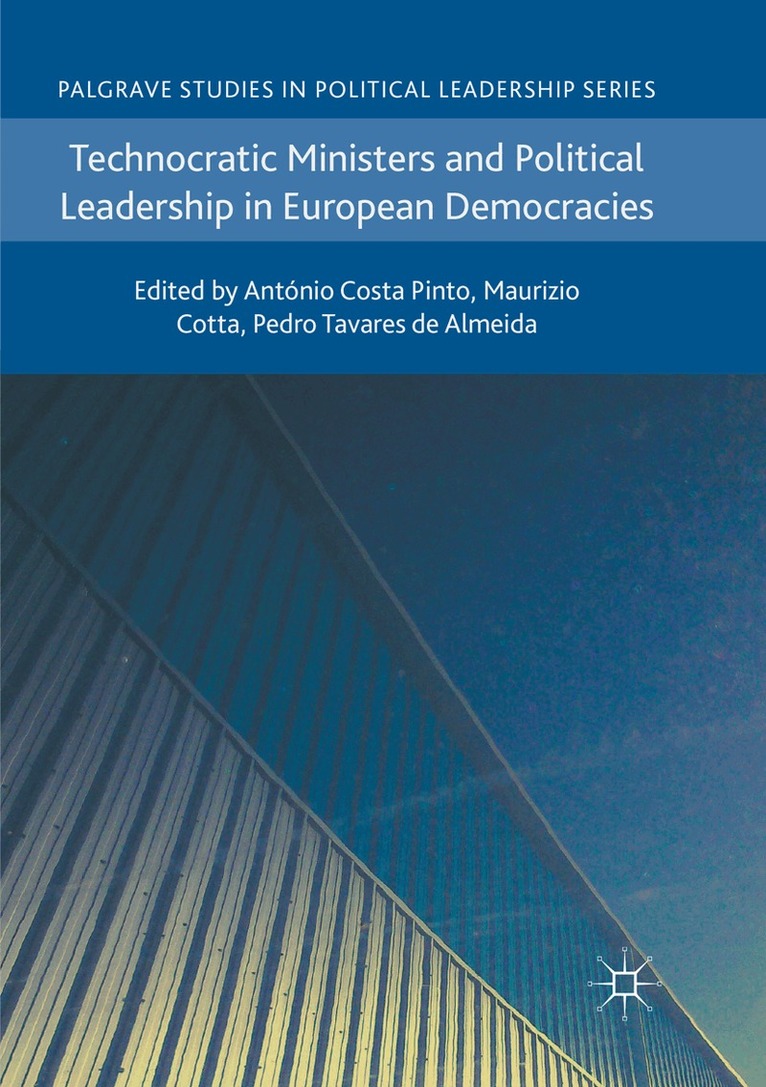
    Technocratic Ministers and Political Leadership in European Democracies

    AvAntónio Costa Pinto,Maurizio Cotta

    Häftad, Engelska, 2018

    Del i serien Palgrave Studies in Political Leadership

    1 734 kr

    Beställningsvara. Skickas inom 10-15 vardagar. Fri frakt över 249 kr.

    Beskrivning

    This book provides an in-depth analysis of the ‘technocratic shift’ in ministerial recruitment, measuring its extent and variations over time in fourteen European countries. It addresses the question: who governs in European democratic regimes? Just a few decades ago, the answer would have been straightforward: party-men and (fewer) party-women. More recently, however, and in varying degrees across Europe, a greater proportion of non-politicians or experts have been recruited to government, as exemplified by the 2017 election of Emmanuel Macron to the French Presidency. These experts, frequently labelled “technocrats”, increasingly occupy key executive positions and have emerged as powerful actors in the decision-making process. This edited collection explores the contemporary debates surrounding the relationship between technocracy, democracy and political leadership, and will appeal to scholars and advanced students interested in these fields.

    Produktinformation

    • Utgivningsdatum:2018-08-26
    • Mått:148 x 210 x 17 mm
    • Vikt:406 g
    • Format:Häftad
    • Språk:Engelska
    • Serie:Palgrave Studies in Political Leadership
    • Antal sidor:295
    • Förlag:Springer International Publishing AG
    • ISBN:9783319872889

    Utforska kategorier

    • Politiskt ledarskap inom Samhälle och politik
    • Statsvetenskap och politisk teori inom Samhälle och politik
    • Politik och statsskick inom Samhälle och politik

    Mer om författaren

    António Costa Pinto is Research Professor at the Institute of Social Sciences, University of Lisbon, Portugal. He has published on authoritarianism, political elites, democratization and transitional justice. He co-edited Who Governs Southern Europe? Regime Change and Ministerial Recruitment, 1850-2000 (2003; first reprint, 2012) and Dealing with the Legacy of Authoritarianism: The “Politics of the Past” in Southern European Democracies (2013) (with L. Morlino).Maurizio Cotta is Professor of Political Science at the University of Siena, Italy. His research interests include the comparative study of political elites, political institutions and Italian politics. He has co-edited and co-authored many books, namely Parliamentary Representatives in Europe (2000), Democratic Representation: Diversity, Change and Convergence (2007), and Political Institutions of Italy (2007) (with L. Verzichelli).Pedro Tavares de Almeidais Professor of Political Science at NOVA University of Lisbon, Portugal. His research interests focus on elite recruitment, elections and political representation. He has co-edited Who Governs Southern Europe? Regime Change and Ministerial Recruitment, 1850-2000 (2003; first reprint, 2012), Perspectives of National Elites on European Citizenship (2012) and The Politics of Representation: Elections and Parliamentarism in Portugal and Spain, 1875-1926 (2017).

    Innehållsförteckning

    • 1. Beyond Party Government? Technocratic trends in society and in the executive; António Costa Pinto, Maurizio Cotta and Pedro Tavares de Almeida.- 2. Non-Partisan Ministers under the French Fifth Republic (1959-2013); Marie-Hélène Bruère and Daniel Gaxie.- 3. No More Political Insiders? Ministerial selection in Sweden during the post-WWII period; Hanna Back and Thomas Persson.- 4. Shades of Technocracy. The varying use of non-partisan ministers in Italy; Luca Verzichelli and Maurizio Cotta.- 5. The Primacy of Experts? Non-partisan ministers in Portuguese democracy; António Costa Pinto and Pedro Tavares de Almeida.- 6. The Selection and Deselection of Technocratic Ministers in Democratic Spain; Juan Rodríguez Teruel and Miguel Jerez.- 7. Recruitment and Careers of Ministers in Central Eastern Europe and Baltic Countries; Elena Semenova.- 8. Variations in the Expert Ministerial Frameworkin Hungary and Romania: Personal and institutional explanations; Gabriella Ilonszki and Laurentiu Stefan.- 9. Turkey’s Ministerial Elites: The growing importance of technical expertise; Sabri Sayari and Hasret Dikici Bilgin.- 10. Technocratic government versus party government? Non-partisan ministers and the changing parameters of political leadership in European democracies; Maurizio Cotta.