
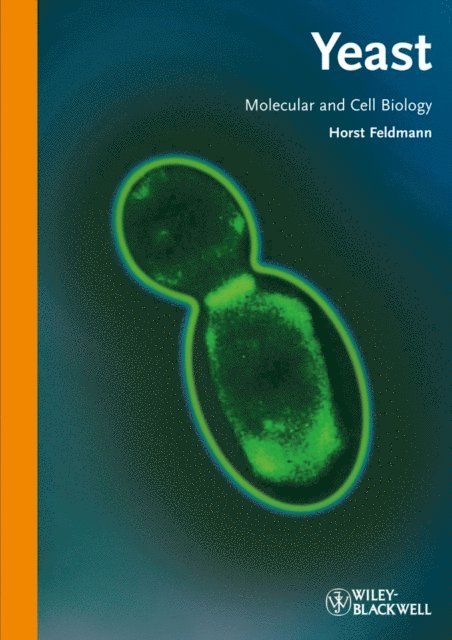
Yeast
Molecular and Cell Biology
AvHorst Feldmann,Horst Feldmann
Häftad, Engelska, 2012
892 kr
Skickas . Fri frakt över 249 kr.
Fler format och utgåvor
Beskrivning
Finally, a stand-alone, all-inclusive textbook on yeast biology. Based on the feedback resulting from his highly successful monograph, Horst Feldmann has totally rewritten he contents to produce a comprehensive, student-friendly textbook on the topic. The scope has been widened, with almost double the content so as to include all aspects of yeast biology, from genetics via cell biology right up to biotechnology applications. The cell and molecular biology sections have been vastly expanded, while information on other yeast species has been added, with contributions from additional authors. Naturally, the illustrations are in full color throughout, and the book is backed by a complimentary website.The resulting textbook caters to the needs of an increasing number of students in biomedical research, cell and molecular biology, microbiology and biotechnology who end up using yeast as an important tool or model organism.
Produktinformation
- Utgivningsdatum:2012-10-15
- Mått:211 x 279 x 20 mm
- Vikt:1 452 g
- Format:Häftad
- Språk:Engelska
- Antal sidor:464
- Upplaga:2
- Förlag:Wiley-VCH Verlag GmbH
- ISBN:9783527332526
Utforska kategorier
Mer om författaren
Horst Feldmann studied Organic Chemistry in Cologne and did his PhD in this discipline. From 1962 to 1967 he worked at the Institute of Genetics in Cologne. In 1974 he became Professor of Physiological Chemistry at the Medical Faculty in Munich. His pioneering research included sequencing yeast tRNA. He extensively studied tRNA and protein biogenesis, yeast retrotransposons and mitochondrial genome and was a co-ordinator in the EU project "Sequencing and Analysis of the Yeast Genome". From 1971 until 2007 he was one of the organizers of the International "Spetses Summer Schools on Molecular and Cell Biology". Horst Feldmann was a member of the Board of FEBS and served as chairman of the Advanced Courses Committee, Secretary of the Prize "Biochemical Analysis" and the Head of SFB "Mechanisms and Factors in Gene Regulation". He has also served as member of a number of different committees, namely the DFG, IUBMB, DISNAT (German-Israeli cooperation). He is also an Honorary Member of Hellenic Society for Biochemistry and Biophysics. In 1996 he received the FEBS Diplome d'Honneur.
Recensioner i media
“The book is an example of writing with the minimum of redundancy and maximum information, organised into a versatile illustrated review on modern yeast biology.” (British Journal of Biomedical Science, 1 October 2012)“In summary, this well-written work is a significant achievement that will reward both casual reading and more detailed study - recommended!.” (Society for General Microbiology, 25 February 2013)
Innehållsförteckning
- Preface xviiAuthors xix1 Introduction 11.1 Historical Aspects 11.2 Yeast as a Eukaryotic Model System 1Further Reading 32 Yeast Cell Architecture and Functions 52.1 General Morphology 52.2 Cell Envelope 62.2.1 Cell Wall 72.2.2 Plasma Membrane 82.3 Cytoplasm and Cytoskeleton 82.3.1 Yeast Cytoplasm 82.3.2 Yeast Cytoskeleton 92.3.2.1 Microtubules 92.3.2.2 Actin Structures 92.3.2.3 Motor Proteins 112.3.2.3.1 Myosins 122.3.2.3.2 Kinesins 132.3.2.3.3 Dynein 122.3.2.4 Other Cytoskeletal Factors 132.3.2.4.1 Proteins Interacting with the Cytoskeleton 132.3.2.4.2 Transport of Organellar Components 132.4 Yeast Nucleus 142.4.1 Overview 142.4.2 Nuclear Pore 142.4.2.1 Historical Developments 142.4.2.2 Current View of the Nuclear Pore 152.4.2.3 Yeast Nucleolus 172.4.3 Yeast Chromosomes 172.5 Organellar Compartments 172.5.1 ER and the Golgi Apparatus 182.5.2 Transport Vesicles 182.5.3 Vacuolar System 202.5.3.1 Yeast Vacuole 202.5.3.2 Vacuolar Degradation 212.5.4 Endocytosis and Exocytosis 212.5.5 Mitochondria 212.5.5.1 Mitochondrial Structure 212.5.6 Peroxisomes 22Further Reading 233 Yeast Metabolism 253.1 Metabolic Pathways and Energy 253.2 Catabolism of Hexose Carbon Sources 253.2.1 Principal Pathways 253.2.2 Respiration Versus Fermentation 263.2.3 Catabolism of Other Sugars – Galactose 273.2.4 Metabolism of Non-Hexose Carbon Sources 283.3 Gluconeogenesis and Carbohydrate Biosynthesis 303.3.1 Gluconeogenesis 303.3.2 Storage Carbohydrates 303.3.2.1 Glycogen 303.3.2.2 Trehalose 313.3.3 Unusual Carbohydrates 313.3.3.1 Unusual Hexoses and Amino Sugars 313.3.3.2 Inositol and its Derivatives 323.3.3.3 N- and O-Linked Glycosylation 333.3.4 Structural Carbohydrates 343.4 Fatty Acid and Lipid Metabolism 353.4.1 Fatty Acids 353.4.2 Lipids 353.4.3 Glycolipids 363.4.3.1 Phosphatidylinositol and Derivatives 363.4.3.2 Sphingolipids 383.4.3.3 Glycosylphosphatidylinositol (GPI) 393.4.4 Isoprenoid Biosynthesis 403.5 Nitrogen Metabolism 423.5.1 Catabolic Pathways 423.5.2 Amino Acid Biosynthesis Pathways 443.5.2.1 Glutamate Family 443.5.2.2 Aspartate Family 443.5.2.3 Branched Amino Acids 453.5.2.4 Lysine 463.5.2.5 Serine, Cysteine, and Glycine 463.5.2.6 Alanine 463.5.2.7 Aromatic Amino Acids 463.5.2.8 Histidine 473.5.2.9 Amino Acid Methylation 473.6 Nucleotide Metabolism 483.6.1 Pyrimidine Derivatives 483.6.2 Purine Derivatives 483.6.3 Deoxyribonucleotides 503.6.4 Nucleotide Modification 503.7 Phosphorus and Sulfur Metabolism 513.7.1 Phosphate 513.7.2 Sulfur 523.7.2.1 Fixation and Reduction of Sulfate 523.7.2.2 Cycle of Activated Methyl Groups 533.8 Vitamins and Cofactors 533.8.1 Biotin 533.8.2 Thiamine 533.8.3 Pyridoxine 543.8.4 Nad 543.8.5 Riboflavin Derivatives 543.8.6 Pantothenic Acid and Coenzyme A 553.8.7 Folate 553.8.8 Tetrapyrroles 553.8.9 Ubiquinone (Coenzyme Q) 563.9 Transition Metals 57Further Reading 584 Yeast Molecular Techniques 594.1 Handling of Yeast Cells 594.1.1 Growth of Yeast Cells 594.1.2 Isolation of Particular Cell Types and Components 594.2 Genetic Engineering and Reverse Genetics 594.2.1 Molecular Revolution 594.2.2 Transformation of Yeast Cells 614.2.2.1 Yeast Shuttle Vectors 614.2.2.2 Yeast Expression Vectors 624.2.2.3 Secretion of Heterologous Proteins from Yeast 634.2.2.4 Fluorescent Proteins Fused to Yeast Proteins 634.2.3 Yeast Cosmid Vectors 644.2.4 Yeast Artificial Chromosomes 654.3 More Genetic Tools from Yeast Cells 654.3.1 Yeast Two-Hybrid System 654.3.2 Yeast Three-Hybrid System 664.3.3 Yeast One-Hybrid (Matchmaker) System 674.4 Techniques in Yeast Genome Analyses 674.4.1 Microarrays 674.4.1.1 DNA-Based Approaches 674.4.1.2 Proteome Analyses 684.4.2 Affinity Purification 704.4.3 Mass Spectrometry 70Further Reading 725 Yeast Genetic Structures and Functions 735.1 Yeast Chromosome Structure and Function 735.1.1 Yeast Chromatin 735.1.1.1 Organization of Chromatin Structure 735.1.1.2 Modification of Chromatin Structure 735.1.1.2.1 Modification of Histones 735.1.1.2.2 Remodeling Chromatin Structure Overview 815.1.2 Centromeres 855.1.3 Replication Origins and Replication 855.1.3.1 Initiation of Replication 855.1.3.2 Replication Machinery 885.1.3.2.1 DNA Polymerases 885.1.3.2.2 Replication and Replication Factors 895.1.3.2.3 Postreplication Repair and DNA Damage Tolerance 895.1.3.3 Replication and Chromatin 905.1.3.3.1 Chromatin Reorganization 905.1.3.3.2 Silencing and Boundaries 915.1.3.4 DNA Damage Checkpoints 935.1.3.4.1 Checkpoints During Replication 935.1.3.4.2 DSB Repair 945.1.4 Telomeres 965.1.5 Transposons in Yeast 985.1.5.1 Classes of Transposable Elements 985.1.5.2 Retrotransposons in S. cerevisiae 985.1.5.2.1 Ty Elements and their Genomes 985.1.5.2.2 Behavior of Ty Elements 995.1.5.2.3 Expression of Ty Elements 1005.1.5.3 Ty Replication 1015.1.5.4 Interactions between Ty Elements and their Host 1025.2 Yeast tRNAs, Genes, and Processing 1035.2.1 Yeast tRNAs 1035.2.1.1 Yeast Led the Way to tRNA Structure 1035.2.1.2 Yeast tRNA Precursors and Processing 1055.2.2 Current Status of Yeast tRNA Research 1065.2.2.1 Yeast tRNAs and their Genes 1065.2.2.2 tRNA Processing and Maturation 1065.2.2.3 Participation of tRNAs in an Interaction Network 1095.2.2.3.1 Aminoacylation of tRNAs 1095.2.2.3.2 Rules, Codon Recognition, and Specific tRNA Modification 1115.2.2.3.3 Recognition of tRNAs in the Protein Biosynthetic Network 1115.3 Yeast Ribosomes: Components, Genes, and Maturation 1135.3.1 Historical Overview 1135.3.2 Ribosomal Components 1135.3.2.1 Ribosomal RNAs 1135.3.2.2 Ribosomal Proteins 1145.3.3 Components and Pathways of Yeast Ribosome Maturation 1145.4 Messenger RNAs 1165.4.1 First Approaches to the Structure of Yeast mRNAs 1165.4.2 Introns and Processing of pre-mRNA 1175.4.3 Provenance of Introns 1215.5 Extrachromosomal Elements 1215.5.1 Two Micron DNA 1215.5.2 Killer Plasmids 1215.5.3 Yeast Prions 1215.6 Yeast Mitochondrial Genome 123Further Reading 1256 Gene Families Involved in Cellular Dynamics 1276.1 ATP- and GTP-Binding Proteins 1276.1.1 ATPases 1276.1.1.1 P-Type ATPases 1276.1.1.2 V-Type ATPases 1276.1.1.3 Chaperones, Cochaperones, and Heat-Shock Proteins 1286.1.1.3.1 HSP70 Family 1286.1.1.3.2 HSP40 Family 1296.1.1.3.3 HSP90 Family 1296.1.1.3.4 HSP60 Family 1326.1.1.3.5 Hsp 104 1326.1.1.3.6 HSP26 and HSP 42 1326.1.1.3.7 Hsp 150 1336.1.1.3.8 Hsp31/32/ 33 1336.1.1.3.9 Hsp 30 1336.1.1.3.10 Hsp 10 1336.1.1.3.11 Others 1336.1.1.4 Other ATP-Binding Factors 1336.1.2 Small GTPases and Their Associates 1336.1.2.1 RAS Family 1346.1.2.2 RAB Family 1346.1.2.3 RHO/RAC Family 1346.1.2.4 ARF Family 1346.1.2.5 Ran GTPAse 1366.1.3 G-Proteins 1366.1.3.1 Mating Pheromone G-Protein 1366.1.3.2 Gpr1-Associated G-Protein 1376.1.3.3 RGS Family 1376.1.3.4 G-Like Proteins 1376.2 Regulatory ATPases: AAA and AAA þ Proteins 1386.2.1 ATP-Dependent Proteases 1386.2.2 Membrane Fusion Proteins 1396.2.3 Cdc 48 1396.2.4 Peroxisomal AAA Proteins 1396.2.5 Katanin and Vps4p 1396.2.6 Dynein 1396.2.7 DNA Replication Proteins 1406.2.8 RuvB-Like Proteins 1406.2.9 Other AAA þ Yeast Proteins 1406.3 Protein Modification by Proteins and Programmed Protein Degradation 1416.3.1 Ubiquitin–Proteasome System (UPS) 1416.3.1.1 Initial Discoveries 1416.3.1.2 Ubiquitin and Factors in the Ubiquitin-Mediated Pathway 1416.3.1.3 E3 Ubiquitin Ligases 1426.3.1.3.1 HECT-Type Ligases 1426.3.1.3.2 RING Finger-Type Ligases 1436.3.1.3.3 Functions of Selected E3 Ligases 1446.3.1.4 Ubiquitin-Specific Proteases 1476.3.2 Yeast Proteasomes 1476.3.2.1 Initial Discoveries 1476.3.2.2 Structure of the Proteasome 1486.3.2.3 Regulation of Yeast Proteasome Activity 1486.3.3 More Functions for Ubiquitin 1506.3.4 Ubiquitin-Like Proteins (ULPs) and Cognate Factors 1516.3.4.1 Sumo 1516.3.4.2 Rub 1 1526.3.4.3 Ubiquitin Domain Proteins 1526.3.4.4 Substrate Delivery to the Proteasome 1536.4 Yeast Protein Kinases and Phosphatases 1536.4.1 Protein Kinases in Yeast 1536.4.1.1 PKA as a Prototype Kinase 1536.4.1.2 Yeast Possesses a Multitude of Kinases 1536.4.2 Protein Phosphatases in Yeast 1586.5 Yeast Helicase Families 1596.5.1 RNA Helicases in Yeast 1666.5.1.1 Structures and Motifs 1666.5.1.2 Functions of RNA Helicases in Yeast 1676.5.2 DNA Helicases in Yeast 1686.5.2.1 Structures and Motifs 1686.5.2.2 Functions of DNA Helicases 1686.5.2.2.1 ASTRA Complex 1706.5.2.2.2 RAD Epistasis Group 1706.5.2.2.3 Monomeric DNA Helicases 170Further Reading 1737 Yeast Growth and the Yeast Cell Cycle 1757.1 Modes of Propagation 1757.1.1 Vegetative Reproduction 1757.1.1.1 Budding 1757.1.1.2 Septins and Bud Neck Filaments 1787.1.1.3 Spindle Pole Bodies and their Dynamics 1797.1.2 Sexual Reproduction 1817.1.3 Filamentous Growth 1817.1.4 Yeast Aging and Cell Death 1837.1.4.1 Yeast Lifespan 1837.1.4.2 Yeast Apoptosis 1847.1.4.2.1 External Triggers of Yeast Apoptosis 1847.1.4.2.2 Endogenous Triggers of Yeast Apoptosis 1857.1.4.2.3 Regulation of Yeast Apoptosis 1857.2 Cell Cycle 1867.2.1 Dynamics and Regulation of the Cell Cycle 1867.2.1.1 Some Historical Notes 1867.2.1.2 Periodic Events in the First Phases of the Cell Cycle 1887.2.1.2.1 CDK and Cyclins 1897.2.1.2.2 Regulation of the CDK/Cyclin System 1907.2.2 Dynamics and Regulation of Mitosis 1937.2.2.1 Sister Chromatids: Cohesion 1937.2.2.2 Spindle Assembly Checkpoint 1967.2.2.3 Chromosome Segregation 1987.2.2.4 Regulation of Mitotic Exit 1997.3 Meiosis 2007.3.1 Chromosome Treatment During Meiosis 2007.3.2 Regulation of Meiosis 2017.3.2.1 Early, Middle, and Late Meiotic Events 2017.3.2.2 Sporulation 2027.3.3 Checkpoints in Meiosis 202Further Reading 2048 Yeast Transport 2078.1 Intracellular Protein Sorting and Transport 2078.1.1 “Signal Hypothesis” 2078.1.2 Central Role of the ER 2078.1.3 Intracellular Protein Trafficking and Sorting 2088.1.3.1 Some History 2088.1.3.2 Membrane Fusions 2108.1.3.2.1 SNAREs and All That 2108.1.3.2.2 Small GTPases and Transport Protein Particles 2118.1.3.3 ER-Associated Protein Degradation 2148.1.3.4 Golgi Network 2158.1.3.5 Vacuolar Network 2168.1.3.5.1 Autophagy 2168.1.3.5.2 Cytoplasm-to-Vacuole Targeting (CVT) Pathway 2178.1.3.5.3 Nomenclature in Autophagy and Cvt 2188.1.3.6 Endocytosis and the Multivesicular Body (MVB) Sorting Pathway 2188.1.3.6.1 Endocytosis by Vesicles Budding from the Membrane 2188.1.3.6.2 Endosomal Sorting Complexes Required for Transport (ESCRTs) 2198.1.3.7 Exocytosis 2218.2 Nuclear Traffic 2218.2.1 Nuclear Transport 2218.2.2 Nuclear mRNA Quality Control 2238.2.3 Nuclear Export of mRNA 2248.2.4 Nuclear Dynamics of tRNA 2258.3 Membrane Transporters in Yeast 2268.3.1 Transport of Cations 2268.3.2 Channels and ATPases 2268.3.2.1 Channels 2268.3.2.2 ATP-Dependent Permeases 2268.3.3 Ca 2þ -Signaling and Transport Pathways in Yeast 2278.3.3.1 Ca 2þ Transport 2278.3.3.2 Ca 2þ -Mediated Control 2288.3.3.3 Ca 2þ and Cell Death 2288.3.4 Transition Metal Transport 2288.3.4.1 Iron 2298.3.4.2 Copper 2308.3.4.3 Zinc 2318.3.4.4 Manganese 2328.3.5 Anion Transport 2328.3.5.1 Phosphate Transport 2328.3.5.2 Transport of Other Anions 2338.3.6 Nutrient and Ammonium Transport 2338.3.6.1 Transport of Carbohydrates 2338.3.6.2 Amino Acid Transport 2348.3.6.3 Transport of Nucleotide Constituents/Nucleotide Sugars 2348.3.6.4 Transport of Cofactors and Vitamins 2348.3.6.5 Ammonium Transport 2348.3.7 Mitochondrial Transport 2358.3.7.1 Transport of Substrates 2358.3.7.2 Electron Transport Chain 2368.3.7.3 Proton Motive Force – ATP Synthase 239Further Reading 2409 Yeast Gene Expression 2419.1 Transcription and Transcription Factors 2419.2 RNA Polymerases and Cofactors 2419.2.1 RNA Polymerase I 2429.2.2 Rna Polymerase III 2439.2.3 Rna Polymerase II 2459.2.4 General Transcription Factors (GTFs) 2469.2.4.1 Tbp 2469.2.4.2 Tfiia 2479.2.4.3 Tfiib 2479.2.4.4 TFIIE and TFIIF 2479.2.4.5 Tfiih 2479.2.4.6 Tfiis 2479.2.4.7 Tfiid 2479.2.4.8 First Simplified Pictures of Transcription 2479.2.5 Transcriptional Activators 2489.2.5.1 TAFs 2499.2.5.2 SRB/Mediator 2499.2.5.3 Depicting Transcriptional Events 2499.3 Transcription and its Regulation 2519.3.1 Regulatory Complexes 2519.3.1.1 Saga 2519.3.1.2 PAF Complex 2529.3.1.3 CCR4–NOT Complex 2529.3.1.4 Other Factors and Complexes 2539.3.2 Modification of Chromatin During Polymerase II Transcription 2549.3.2.1 Early Endeavors 2549.3.2.2 Chromatin-Modifying Activities and Transcriptional Elongation 2549.3.2.3 Models for Specific Chromatin Remodeling During Transcription 2559.3.2.3.1 GAL4 System 2569.3.2.3.2 PHO System 2569.3.2.3.3 Other Studies 2579.3.2.3.4 Global Nucleosome Occupancy 2589.3.3 Nucleosome Positioning 2599.4 DNA Repair Connected to Transcription 2599.4.1 Nucleotide Excision Repair (NER) 2599.4.2 Mismatch Repair 2619.4.3 Base Excision Repair 2619.5 Coupling Transcription to Pre-mRNA Processing 2619.5.1 Polyadenylation 2619.5.2 Generation of Functional mRNA 2639.5.2.1 General Principles 2639.5.2.2 Control and Pathways of mRNA Decay 2659.5.2.2.1 Exosome-Mediated Pathways in Yeast 2659.5.2.2.2 Nonsense-Mediated mRNA Decay (NMD) 2679.6 Yeast Translation Apparatus 2689.6.1 Initiation 2699.6.2 Elongation and Termination 2709.7 Protein Splicing – Yeast Inteins 271Further Reading 27110 Molecular Signaling Cascades and Gene Regulation 27310.1 Ras–cAMP Signaling Pathway 27310.2 MAP Kinase Pathways 27510.2.1 Mating-Type Pathway 27510.2.2 Filamentation/Invasion Pathway 27810.2.3 Control of Cell Integrity 27910.2.4 High Osmolarity Growth Pathway 28010.2.5 Spore Wall Assembly Pathway 28010.2.6 Influence of MAP Kinase Pathways in Cell Cycle Regulation 28110.3 General Control by Gene Repression 28110.3.1 Ssn6–Tup1 Repression 28110.3.2 Activation and Repression by Rap 1 28310.4 Gene Regulation by Nutrients 28310.4.1 TOR System 28310.4.1.1 Structures of the TOR Complexes 28310.4.1.2 Signaling Downstream of TORC 1 28410.4.1.3 Signaling Branches Parallel to TORC 1 28610.4.1.4 Internal Signaling of TORC 1 28610.4.1.5 TOR and Aging 28610.4.2 Regulation of Glucose Metabolism 28710.4.2.1 Major Pathway of Glucose Regulation 28710.4.2.2 Alternative Pathway of Glucose Regulation 28910.4.3 Regulation of Galactose Metabolism 28910.4.4 General Amino Acid Control 29010.4.5 Regulation of Arginine Metabolism 29310.5 Stress Responses in Yeast 29410.5.1 Temperature Stress and Heat-Shock Proteins 29410.5.2 Oxidative and Chemical Stresses 29510.5.2.1 AP-1 Transcription Factors in Yeast 29510.5.2.2 STRE-Dependent System 29610.5.2.3 PDR: ABC Transporters 29610.5.3 Unfolded Protein Response 298Further Reading 29911 Yeast Organellar Biogenesis and Function 30111.1 Mitochondria 30111.1.1 Genetic Biochemistry of Yeast Mitochondria 30111.1.2 Mitochondrial Functions Critical to Cell Viability 30311.1.2.1 Superoxide Dismutase 30311.1.2.2 Iron Homeostasis 30411.1.3 Biogenesis of Mitochondria: Protein Transport 30511.1.3.1 Presequence Pathway and the MIA Pathway 30711.1.3.2 Membrane Sorting Pathway: Switch Between TIM22 and TIM 23 30711.1.3.3 b-Barrel Pathway 30811.1.3.4 Endogenous Membrane Insertion Machinery 30811.1.4 Mitochondrial Quality Control and Remodeling 30811.2 Peroxisomes 31011.2.1 What They Are – What They Do 31011.2.2 Protein Import and Cargo 311Further Reading 31212 Yeast Genome and Postgenomic Projects 31312.1 Yeast Genome Sequencing Project 31312.1.1 Characteristics of the Yeast Genome 31412.1.2 Comparison of Genetic and Physical Maps 31512.1.3 Gene Organization 31512.1.3.1 Protein-Encoding Genes 31512.1.3.2 Overlapping ORFs, Pseudogenes, and Introns 31612.1.4 Genetic Redundancy: Gene Duplications 31712.1.4.1 Duplicated Genes in Subtelomeric Regions 31712.1.4.2 Duplicated Genes Internal to Chromosomes 31812.1.4.3 Duplicated Genes in Clusters 31812.1.5 Gene Typification and Gene Families 31812.1.5.1 Gene Functions 31812.1.5.2 tRNA Multiplicity and Codon Capacity in Yeast 31912.1.5.2.1 tRNA Gene Families 31912.1.5.2.2 Correlation of tRNA Abundance to Gene Copy Number 32012.1.5.2.3 tRNA Gene Redundancy and Codon Selection in Yeast 32012.2 Yeast Functional Genomics 32212.2.1 Early Functional Analysis of Yeast Genes 32212.2.2 Yeast Transcriptome 32212.2.2.1 Genomic Profiling 32212.2.2.2 Protein–DNA Interactions 32312.2.3 Yeast Proteome 32412.2.3.1 Protein Analysis 32412.2.3.2 Proteome Chips 32512.2.3.3 Protein–Protein Interactions and Protein Complexes: The Yeast Interactome 32512.2.4 Yeast Metabolic Networks 32712.2.4.1 Metabolic Flux 32712.2.4.2 Yeast Metabolic Cycle 32812.2.5 Genetic Landscape of a Cell 32912.2.6 Data Analysis Platforms 32912.3 Yeast Systems Biology 33012.4 Yeast Synthetic Biology 332Further Reading 33413 Disease Genes in Yeast 33513.1 General Aspects 33513.1.1 First Approaches 33513.1.2 Recent Advances 33513.2 Trinucleotide Repeats and Neurodegenerative Diseases 34113.2.1 Neurodegenerative Disorders 34213.2.2 Huntington’s Disease 34213.2.3 Parkinson’s Disease 34313.2.4 Alzheimer’s Disease and Tau Biology 34313.2.5 Other Proteinopathies 34413.3 Aging and Age-Related Disorders 34413.4 Mitochondrial Diseases 344Further Reading 34614 Yeasts in Biotechnology 347Paola Branduardi and Danilo Porro14.1 Introduction 34714.1.1 Biotechnology Disciplines 34714.1.2 Microorganisms in Biotechnology 34814.2 Yeasts: Natural and Engineered Abilities 34814.2.1 Yeast as a Factory 34814.2.2 Natural Production 34914.2.2.1 Commercial Yeasts 34914.2.2.2 Food Yeast 34914.2.2.3 Feed Yeasts 35114.2.2.4 Yeast Extract 35114.2.2.5 Autolysed Yeast 35214.2.3 Engineered Abilities: Recombinant Production of the First Generation 35214.2.3.1 Metabolic Engineering 35214.2.3.2 Engineered Products 35314.2.3.2.1 Isoprene Derivatives 35314.2.3.2.2 Pigments 35414.2.3.2.3 Other Valuable Biocompounds 35414.2.3.2.4 Small Organic Compounds 35614.2.3.2.5 Biofuels 35714.2.3.2.6 Further Developments 35814.2.4 Engineered Abilities: Recombinant Production of the Second Generation 35814.3 Biopharmaceuticals from Healthcare Industries 35914.3.1 Human Insulin 35914.3.2 Other Biopharmaceuticals 36114.4 Biomedical Research 36214.4.1 Humanized Yeast Systems for Neurodegenerative Diseases 36314.4.1.1 Parkinson’s Disease 36314.4.1.2 Huntington’s Disease 36314.4.1.3 Alzheimer’s Disease 36314.4.2 Yeast Models of Human Mitochondrial Diseases 36314.4.3 Yeast Models for Lipid-Related Diseases 36414.4.4 Yeasts and Complex Genomes 36414.5 Environmental Technologies: Cell Surface Display 36414.6 Physiological Basis for Process Design 36614.6.1 Process Development 36714.6.2 Production Process 368Further Reading 37015 Hemiascomycetous Yeasts 371Claude Gaillardin15.1 Selection of Model Genomes for the Genolevures and Other Sequencing Projects 37115.2 Ecology, Metabolic Specificities, and Scientific Interest of Selected Species 37315.2.1 Candida glabrata – A Pathogenic Cousin of S. cerevisiae 37315.2.2 Lachancea (Saccharomyces) kluyveri – An Opportunistic Anaerobe 37515.2.3 Kluyveromyces lactis – A Respiro-Fermentative Yeast 37615.2.4 Eremothecium (Ashbya) gossypii – A Filamentous Plant Pathogen 37715.2.5 Debaryomyces hansenii – An Osmotolerant Yeast 37815.2.6 Scheffersomyces (Pichia) stipitis – A Xylose-Utilizing Yeast 37915.2.7 Komagataella (Pichia) pastoris – A Methanol-Utilizing Yeast 38015.2.8 Blastobotrys (Arxula) adeninivorans – A Thermotolerant Yeast 38115.2.9 Yarrowia lipolytica – An Oily Yeast 38215.3 Differences in Architectural Features and Genetic Outfit 38315.3.1 Genome Sizes and Global Architecture 38315.3.2 Chromosome Architecture and Synteny 38315.3.3 Arrangements of Genetic Elements 38515.3.3.1 Replication Origins, Centromeres, and Telomeres 38515.3.3.2 Gene Arrays 38615.3.3.2.1 Megasatellites 38615.3.3.2.2 Tandem Gene Arrays 38715.3.3.2.3 Yeast Pseudogenes 38715.3.4 Gene Families and Diversification of the Protein Repertoires 38815.3.4.1 Biological Divergence 38815.3.4.2 Diversification of the Gene Repertoire 38915.3.5 tRNAs and rRNAs 39115.3.6 Other Noncoding RNAs 39215.3.7 Introns 39315.3.8 Transposons 39515.3.9 Mitochondrial DNA 39515.3.10 DNA Plasmids 39715.4 Molecular Evolution of Functions 39715.4.1 Proteome Diversification and Loss or Gain of Functions 39815.4.1.1 Loss and Relocalization of Pathways 39815.4.1.2 Diversification of Paralogs 39815.4.1.3 Horizontal Transfers 39815.4.1.4 Evolution of Cell Identity 39915.4.1.5 Heterochromatin, Gene Silencing, and RNA Interference 39915.4.2 Changes in Transcriptional Regulation 40015.4.2.1 Evolution of the GAL Regulon 40015.4.2.2 Glucose Effects and Adaptation to Anoxic Conditions 40115.4.2.3 Stress Responses 40115.4.2.4 Recruitment of New Transcription Factors and DNA-Binding Sites 40215.4.2.5 New Combinatorial Controls 40315.4.2.6 Nucleosome Positioning in Evolution 40315.4.3 Changes in Post-Transcriptional Regulations 404Further Reading 40516 Yeast Evolutionary Genomics 407Bernard Dujon16.1 Specificities of Yeast Populations and Species, and their Evolutionary Consequences 40716.1.1 Species, Complexes, and Natural Hybrids 40716.1.2 Reproductive Trade-Offs 40816.1.3 Preference for Inbreeding 40916.1.4 Population Structures Examined at the Genomic Level 41016.1.5 Loss of Heterozygosity and Formation of Chimeras 41016.1.6 Asymmetrical Growth of Clonal Populations 41116.2 Gene Duplication Mechanisms and their Evolutionary Consequences 41216.2.1 Gene Clusters 41216.2.2 Whole-Genome Duplication 41316.2.3 Segmental Duplications 41416.2.4 Retrogenes and Dispersed Paralogs 41416.3 Other Mechanisms of Gene Formation and Acquisition of Novel Functions 41516.3.1 Introgression 41516.3.2 Horizontal Gene Transfer from Bacterial Origin 41616.3.3 De Novo Gene Formation 41716.3.4 Integration of Other Sequences in Yeast Chromosomes 418Further Reading 41917 Epilog: The Future of Yeast Research 421Appendix A: References 423Appendix B: Glossary of Genetic and Taxonomic Nomenclature 425Appendix C: Online Resources useful in Yeast Research 427Appendix D: Selected Abbreviations 429Index 433
Hoppa över listan
Mer från samma författare
Hoppa över listan




Du kanske också är intresserad av
- 10% rabatt på allt
- Signerad!
Del 3
- 10% rabatt på allt
- 10% rabatt på allt
Del 11
- 10% rabatt på allt
Del 4
- 10% rabatt på allt
Del 3