• Fri frakt över 249 kr
  • •
  • Snabba leveranser
  • •
  • Billiga böcker
Kundservice

Du är på sajten för privatpersoner.

Företag, bibliotek eller offentlig verksamhet?

Du handlar på classic.bokus.com, där alla dina funktioner finns intakta.
Till classic.bokus.com
Bokus logotyp. Gå till startsidan.
  • Erbjudanden
  • Nyheter
  • Student
  • Topplistor
  • Barn & ungdom
  • Bokus Play
  • E-böcker
  • Pocketböcker
  • Spel & pussel

10% rabatt på allt med kod: NYSTART10 →

Sidfot

Mina sidor

    Hjälp

    • Kundservice
    • Vanliga frågor och svar
    • Frakt och leverans
    • Retur vid ångerrätt
    • Reklamera vara
    • Betalning
    • Köpvillkor
    • Allmänna villkor
    • Information om webbplatsens tillgänglighet

    Om Bokus

    • Om oss
    • Pressrum
    • För studenter
    • För företag
    • För bibliotek och offentlig verksamhet
    • För leverantörer
    • Hållbarhet

    Populärt

    • Aktuella erbjudanden
    • Presentkort
    • Studentlitteratur
    • Nya böcker
    • Topplistor
    • Signerade böcker
    • Engelska böcker

    Inspiration

    • Boktips
    • BookTok
    • Populära bokserier
    • Barnbokskaraktärer
    • Populära författare
    Logotyp för Bokus
    Följ oss på Facebook (extern länk)Följ oss på Instagram (extern länk)Följ oss på YouTube (extern länk)Följ oss på TikTok (extern länk)
    bokus @ CookiesAnpassa cookiesIntegritetspolicyKöpvillkor
    Till Citymail hemsida (extern länk)Till Budbee hemsida (extern länk)Till Postnord hemsida (extern länk)Till Schenker hemsida (extern länk)Till Early Bird hemsida (extern länk)Till Walleys hemsida (extern länk)
    1. Naturvetenskap och teknik
    2. Matematik och naturvetenskap
    3. Biologi

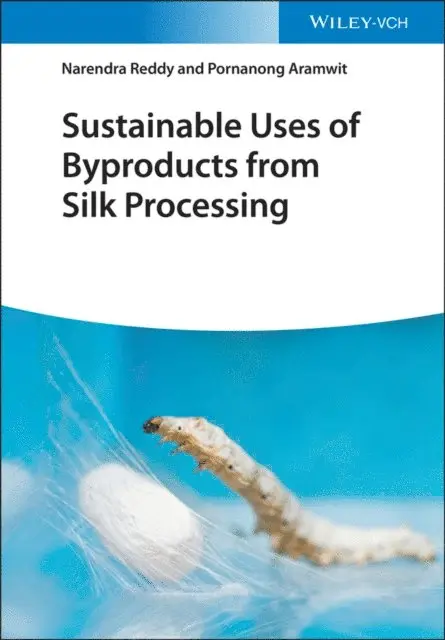
    Sustainable Uses of Byproducts from Silk Processing

    AvNarendra Reddy,Pornanong Aramwit

    Inbunden, Engelska, 2021

    1 249 kr

    Beställningsvara. Skickas inom 11-20 vardagar. Fri frakt över 249 kr.

    Beskrivning

    Sustainable Uses of Byproducts from Silk Processing Explore this authoritative guide to transforming the silk industry written by two experts in biopolymers and materials scienceSustainable Uses of Byproducts from Silk Processing delivers a detailed treatment of the properties and potential applications of silk sources, by-products, and waste. The book describes the composition, structure, processability, and potential applications of all of the different kinds of silk by-products. Highly relevant to those working in mulberry cultivation, silkworm rearing, and silk processing, the distinguished authors offer information on how to transform silk by-products into new materials, energy, fuel, fibers, composites, food, cosmetics, and feed.Using a valorisation approach to the silk protein sericin and its by-products and taking an application-oriented view of materials sources and wastes in the silk industry. Implementation of these techniques promises to further industries as diverse as cancer treatment, pharmaceuticals, nutraceuticals, and environmental cleanup.Readers will also benefit from the inclusion of:A thorough introduction to sericin, including its structure and properties, how to process it, and its various applicationsAn exploration of mulberry leaves, stems, and fruits, including their composition and properties, processing, and non-feed applicationsDiscussions of the various uses of silkworm pupae, including food and feed, pupae oil properties and applications, biodiesel, byproducts of biodiesel, and the extraction of chitin and proteins from the pupae shellAn examination of the applications of silkworm litterPerfect for protein chemists, biotechnologists, cosmetics industry professionals, and materials scientists, Sustainable Uses of Byproducts from Silk Processing will also earn a place in the libraries of polymer and cosmetic chemists who seek a one-stop reference for current and emerging sustainability practices in the silk industry.

    Produktinformation

    • Utgivningsdatum:2021-05-12
    • Mått:170 x 244 x 18 mm
    • Vikt:680 g
    • Format:Inbunden
    • Språk:Engelska
    • Antal sidor:256
    • Förlag:Wiley-VCH Verlag GmbH
    • ISBN:9783527347865

    Utforska kategorier

    • Biologi inom Naturvetenskap och teknik

    Mer om författaren

    Narendra Reddy, PhD, is Professor at the Centre for Incubation, Innovation, Research, and Consultancy in Bengaluru, India. He obtained his doctorate from the University of Nebraska-Lincoln in the United States in 2006. He has authored approximately 150 research publications and four books.Pornanong Aramwit, PhD, is Professor at the Faculty of Pharmaceutical Sciences and Director of Center of Excellence in Bioactive Resources for Innovative Clinical Applications at Chulalongkorn University in Thailand. She obtained her doctorate from the University of Wisconsin-Madison in the United States in 2001. She is a recipient of the National researchers Award in Chemistry and Pharmaceutical Area in 2016 and also TRF Senior Research Scholar in 2020 from the National Research Council of Thailand in 2016.

    Innehållsförteckning

    • Preface xi1 Sericin: Structure and Properties 11.1 Type of Silk Sericin 11.2 Localization of Silk Sericin 11.3 Molecular Mass of Sericin 21.3.1 Middle Silk Gland Sericin 21.3.2 Mulberry Cocoon sericin 21.3.3 Non‐mulberry Cocoon and Peduncle Sericin 51.4 Layers of Sericin 61.5 Sericin Amino Acid Components 61.5.1 Silk Gland of Mulberry Sericin 61.5.2 Sericin from Mulberry Cocoons 81.5.3 Sericin from Non‐mulberry Cocoons 121.6 Sericin Gene 141.7 Sericin Structure 161.8 Sericin Properties 191.8.1 Biophysical Properties 191.8.1.1 Water Solubility 191.8.1.2 Gelation 201.8.1.3 Thermal Stability 201.8.1.4 Ultraviolet (UV) protection 211.8.1.5 Adhesion Properties and Electrostatic Interaction 221.8.2 Biochemical Activity 221.8.2.1 Anti‐tyrosinase Activity 221.8.2.2 Anti‐elastase Activity 231.8.2.3 Antioxidant Activity 231.8.2.4 Anti‐lipid Peroxidation Activity 251.8.3 Biological Activity 251.8.3.1 Anti‐inflammatory Activity 251.8.3.2 Anti‐tumor Activity 271.8.3.3 Inducing Collagen Production 281.8.3.4 Antibacterial Activity 29References 322 Processing Sericin 392.1 Effects of Source and Extraction Method of Sericin on Its Benefits and Applications 392.1.1 Sericin Extraction 392.1.1.1 Water Extraction (WaterSS; HeatSS, AutoclaveSS) 392.1.1.2 Acid Extraction (AcidSS) 392.1.1.3 Alkali Extraction (AllkaliSS; Alkali‐L‐SS, Alkali‐H‐SS) 402.1.1.4 Urea Extraction (UreaSS) 402.1.1.5 Alcohol Extraction (AlcoholSS) 402.1.2 Effect of Source and Extraction on Sericin Properties 402.1.2.1 Molecular Weight of Sericin 402.1.2.2 Secondary Structure of the Sericin Protein 402.1.2.3 Phenolic contents 432.1.2.4 Antioxidant Activity 432.1.2.5 Anti‐tyrosinase Activity 442.1.2.6 Cytotoxicity 442.1.2.7 Cell Attachment, Cell Proliferation, and Collagen Production 442.1.2.8 Cell Protection 442.1.3 Benefit and Application of Extracted Mulberry Sericin and Non‐mulberry Sericin 452.1.3.1 Pharmaceutics and Cosmetics 452.1.3.2 Wound Healing 452.1.3.3 Tissue Engineering 472.1.3.4 Drug Delivery 472.2 Modification of Sericin Structure 482.3 Chemical Modification 482.4 Glutaraldehyde Cross‐linking 502.5 Dehydrothermal (DHT) Cross‐linking 512.6 Carbodiimide Cross‐linking 512.7 Dimethylolurea (DMU) Cross‐linking 532.8 Enzymatic Cross‐linking 532.9 Physical Modification 542.9.1 Photo‐Cross‐linking 542.10 Forms of Sericin Processing 552.10.1 Two‐dimensional Structure of Sericin 552.10.1.1 Hydrogel 552.10.1.2 Film 562.10.2 Three‐dimensional Structure of Sericin 562.10.2.1 Electrospinning Silk Sericin and Its Blends 562.10.3 Pure Sericin Electrospun Fibers 572.10.4 Sericin Blends with Natural Polymers 592.10.5 Sericin Blends with Synthetic Polymers 602.10.6 Blends with Poly(caprolactone) 652.11 Sericin from Wild Silks 662.12 Fibroin–Sericin Blends 692.12.1 Freeze‐drying 712.12.2 Salt Leaching 712.12.3 Gas Foaming 732.13 Biomaterials from Sericin and Sericin–Protein Blends 742.13.1 Pure Sericin Biomaterials 742.13.1.1 Sericin–Fibroin Blends 772.13.1.2 Sericin and Non‐sericin Protein Blends 782.13.2 Sericin Blend with Polysaccharides 812.13.2.1 Sericin–Alginate Blends 812.13.2.2 Sericin–Chitosan Blends 832.13.2.3 Sericin–Carboxymethyl Cellulose Blends 832.13.2.4 Binary and Ternary Sericin Blends with Miscellaneous Polysaccharides 852.14 Blends with Synthetic Polymers 892.15 Sericin–Lignin Blends 90References 913 Applications of Sericin 1013.1 Medical Application 1013.1.1 Antioxidant Properties 1013.1.2 Antibacterial Activity 1023.1.3 Wound Healing 1043.1.4 Antitumor Effect 1053.1.5 Antidiabetic Potential 1063.1.6 Metabolic Effects 1073.1.6.1 Gastrointestinal Tract 1073.1.6.2 Circulatory and Immune Systems 1083.1.6.3 Lipid Metabolism and Obesity 1093.1.7 Vehicle for Drug Delivery 1093.1.8 Supplement in Culture Media and Cryopreservation 1123.2 Cosmetic Applications 1133.3 Biotechnology Applications 1173.3.1 Tissue Engineering 1173.3.1.1 Skin Tissue Repair with Sericin‐Based Materials 1173.3.1.2 Sericin‐Based Materials for Bone and Cartilage Tissue Engineering 1193.3.1.3 Sericin‐Based Biomaterials for Other Tissues 1203.4 Miscellaneous Application 1213.4.1 Sericin‐Coated Material as an Air filter 1213.5 Conclusion 121References 1234 Non-silk Applications of Mulberry Plants 1314.1 Introduction 1314.2 Medicinal Applications of Mulberry Plant Extracts 1324.2.1 Polysaccharides 1324.2.2 Phenols and Flavanoids 1354.2.3 Pectins and Lignins 1404.2.4 Production of Paper 1424.2.5 Fermentation and Biogas Production 1444.2.6 Synthesis of Nanomaterials 1444.2.7 Environmental Remediation 1484.2.8 Composites 1504.2.9 Superabsorbents 151References 1535 Pupae and Its Applications 1575.1 Applications of Pupae Oil 1575.1.1 Extraction of Pupae Oil 1575.1.2 Medical Applications of Pupae Oil 1595.1.3 Biodiesel from Pupae Oil 1635.2 Proteins from Silkworm Pupae 1635.2.1 Medical Application of Pupae Peptides 1695.2.2 Nanoparticles from Pupae Proteins 1745.3 Pupae as Animal Feed 1765.3.1 Chitin and Chitosan from Silkworm Pupae 1815.4 Miscellaneous Applications 1845.4.1 Carbonization of Pupae 1845.4.2 Production of Lipids 1855.4.3 Anti‐diabetic Drug 1885.5 Environmental Remediation 189References 1896 Applications of Pupae Litter (excrement) 1956.1 Chlorophylline and its Derivatives 1956.2 Applications of Proteins in Litter 1976.3 Extracts from Litter 1986.4 Environmental Remediation Using Litter 1996.5 Conversion into Carbon 2036.6 Nanoparticles from Litter 209References 2117 Converting Silk Wastes into Composites, Energy Storage Devices, and Other Value-Added Materials 2137.1 Introduction 2137.2 Composites from Silk Wastes 2137.3 Reinforcement for Polypropylene (PP) Composites 2147.4 Green Composites from Silk Wastes 2197.5 Energy Applications 2217.5.1 Carbonization of Waste Silk 2217.6 Miscellaneous Applications 2257.6.1 Extraction of Amino Acids and Bioactive Compounds 2257.7 Fibers and Hydrogels 2267.8 Environmental Remediation 2277.9 Nutritious Food from Silkworm Eggs 229References 229Glossary 233Index 237