• Fri frakt över 249 kr
  • •
  • Snabba leveranser
  • •
  • Billiga böcker
Kundservice

Du är på sajten för privatpersoner.

Företag, bibliotek eller offentlig verksamhet?

Du handlar på classic.bokus.com, där alla dina funktioner finns intakta.
Till classic.bokus.com
Bokus logotyp. Gå till startsidan.
  • Erbjudanden
  • Nyheter
  • Student
  • Topplistor
  • Barn & ungdom
  • Bokus Play
  • E-böcker
  • Pocketböcker
  • Spel & pussel

10% rabatt på allt med kod NYSTART10 →

Sidfot

Mina sidor

    Hjälp

    • Kundservice
    • Vanliga frågor och svar
    • Frakt och leverans
    • Retur vid ångerrätt
    • Reklamera vara
    • Betalning
    • Köpvillkor
    • Allmänna villkor
    • Information om webbplatsens tillgänglighet

    Om Bokus

    • Om oss
    • Pressrum
    • För studenter
    • För företag
    • För bibliotek och offentlig verksamhet
    • För leverantörer
    • Hållbarhet

    Populärt

    • Aktuella erbjudanden
    • Presentkort
    • Studentlitteratur
    • Nya böcker
    • Topplistor
    • Signerade böcker
    • Engelska böcker

    Inspiration

    • Boktips
    • BookTok
    • Populära bokserier
    • Barnbokskaraktärer
    • Populära författare
    Logotyp för Bokus
    Följ oss på Facebook (extern länk)Följ oss på Instagram (extern länk)Följ oss på YouTube (extern länk)Följ oss på TikTok (extern länk)
    bokus @ CookiesAnpassa cookiesIntegritetspolicyKöpvillkor
    Till Citymail hemsida (extern länk)Till Budbee hemsida (extern länk)Till Postnord hemsida (extern länk)Till Schenker hemsida (extern länk)Till Early Bird hemsida (extern länk)Till Walleys hemsida (extern länk)
    1. Naturvetenskap och teknik
    2. Teknik och industri
    3. Elektronik och kommunikationer

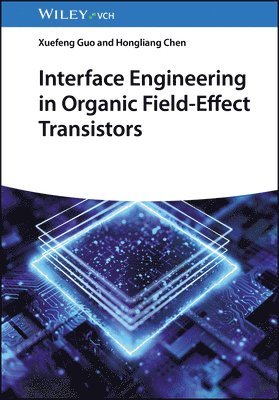
    Interface Engineering in Organic Field-Effect Transistors

    AvXuefeng Guo,Hongliang Chen

    Inbunden, Engelska, 2023

    1 602 kr

    Beställningsvara. Skickas inom 5-8 vardagar. Fri frakt över 249 kr.

    Beskrivning

    Interface Engineering in Organic Field-Effect Transistors Systematic summary of advances in developing effective methodologies of interface engineering in organic field-effect transistors, from models to experimental techniquesInterface Engineering in Organic Field-Effect Transistors covers the state of the art in organic field-effect transistors and reviews charge transport at the interfaces, device design concepts, and device fabrication processes, and gives an outlook on the development of future optoelectronic devices.This book starts with an overview of the commonly adopted methods to obtain various semiconductor/semiconductor interfaces and charge transport mechanisms at these heterogeneous interfaces. Then, it covers the modification at the semiconductor/electrode interfaces, through which to tune the work function of electrodes as well as reveal charge injection mechanisms at the interfaces.Charge transport physics at the semiconductor/dielectric interface is discussed in detail. The book describes the remarkable effect of SAM modification on the semiconductor film morphology and thus the electrical performance. In particular, valuable analyses of charge trapping/detrapping engineering at the interface to realize new functions are summarized.Finally, the sensing mechanisms that occur at the semiconductor/environment interfaces of OFETs and the unique detection methods capable of interfacing organic electronics with biology are discussed.Specific sample topics covered in Interface Engineering in Organic Field-Effect Transistors include: Noncovalent modification methods, charge insertion layer at the electrode surface, dielectric surface passivation methods, and covalent modification methodsCharge transport mechanism in bulk semiconductors, influence of additives on materials’ nucleation and morphology, solvent additives, and nucleation agentsNanoconfinement effect, enhancing the performance through semiconductor heterojunctions, planar bilayer heterostructure, ambipolar charge-transfer complex, and supramolecular arrangement of heterojunctionsDielectric effect in OFETs, dielectric modification to tune semiconductor morphology, surface energy control, microstructure design, solution shearing, eliminating interfacial traps, and SAM/SiO2 dielectricsA timely resource providing the latest developments in the field and emphasizing new insights for building reliable organic electronic devices, Interface Engineering in Organic Field-Effect Transistors is essential for researchers, scientists, and other interface-related professionals in the fields of organic electronics, nanoelectronics, surface science, solar cells, and sensors.

    Produktinformation

    • Utgivningsdatum:2023-08-23
    • Mått:170 x 244 x 20 mm
    • Vikt:871 g
    • Format:Inbunden
    • Språk:Engelska
    • Antal sidor:272
    • Förlag:Wiley-VCH Verlag GmbH
    • ISBN:9783527351459

    Utforska kategorier

    • Elektronik och kommunikationer inom Naturvetenskap och teknik
    • Maskinteknik och material inom Naturvetenskap och teknik

    Mer om författaren

    Xuefeng Guo received his PhD in 2004 from the Institute of Chemistry, Chinese Academy of Sciences, Beijing. From 2004 to 2007, he was a postdoctoral research scientist at the Columbia University Nanocenter. He joined the faculty as a professor under the “Peking 100-Talent” Program at Peking University in 2008. Hongliang Chen received his PhD in 2016 from the College of Chemistry and Molecular Engineering, Peking University. From 2016 to 2018, he worked as a research scientist in Dow Chemical Company. Then, he moved to Northwestern University in Evanston and worked as a postdoctoral research fellow from 2018 to 2021. He joined Zhejiang University as an assistant professor since June 2021.

    Innehållsförteckning

    • Preface ixAuthor Biographies xiList of Acronyms and Abbreviations xiii1 Introduction 11.1 Different Interfaces in OFETs 11.2 Brief Historic Overview of Interface Engineering in OFETs 31.3 Scope of the Book 32 Interfacial Modification Methods 72.1 Noncovalent Modification Methods 72.1.1 Charge Insertion Layer at the Electrode Surface 72.1.2 Dielectric Surface Passivation Methods 92.2 Covalent Modification Methods 122.2.1 SAM Modification of Electrodes 122.2.2 SAM Modification of Dielectrics 122.2.2.1 SAM/SiO2 Dielectrics 142.2.2.2 SAM/High-k Dielectrics 142.2.2.3 Self-Assembled Monolayer Field-Effect Transistors (SAMFETs) 282.3 Efforts in Developing New Methods 313 Semiconductor/Semiconductor Interface 333.1 Influence of Additives on a Material’s Nucleation and Morphology 373.1.1 Solvent Additives 373.1.2 Nucleating Agents 413.1.3 Template-Mediated Crystallization 433.1.4 Blending with Insulating Polymers 453.1.5 Blending with Polymer Elastomer: Nanoconfinement Effect 503.2 Enhancing the Performance Through Semiconductor Heterojunctions 553.2.1 Planar Bilayer Heterostructures 573.2.2 Molecular-Level Heterojunction 613.2.3 Supramolecular Arrangement of the Heterojunctions 643.3 Integrating Molecular Functionalities into Electrical Circuits 693.3.1 Charge-Trapping-Induced Memory Effect 693.3.2 Photochromism-Induced Switching Effect 724 Semiconductor/Electrode Interface 774.1 Work Function Tuning for Better Contact 794.1.1 SAM Modification 804.1.2 Charge Insertion Layer Modification 844.1.3 Polymer-Based Electrodes 894.1.4 Carbon Nanomaterial-Based Electrodes 924.1.5 Covalent Bond Formation at the Molecular Level 974.2 Installing Switching Effects at Semiconductor/Electrode Interface 1005 Semiconductor/Dielectric Interface 1035.1 Dielectric Modification to Tune Semiconductor Morphology 1055.1.1 Dielectric Surface Energy Control 1065.1.1.1 Modify with SAM 1065.1.1.2 Surface Modification with Polymers 1125.1.2 Dielectric Microstructure Design 1135.1.2.1 Roughness Effect 1145.1.2.2 Nano-fabrication Created Microstructure 1165.1.2.3 Self-assembled Morphology of Dielectric 1185.2 Eliminating Interfacial Traps 1205.2.1 Dielectric Surface Passivation (Treatment) Methods 1215.2.1.1 Polymer Encapsulation of Dielectrics 1225.2.1.2 Gap Dielectrics 1245.2.2 SAM/SiO2 Dielectrics 1265.2.2.1 Provide Efficient Insulating Barrier Height 1275.2.2.2 Control Surface Polarity and Carrier Density 1285.2.3 SAM/High-k Dielectrics 1315.2.3.1 Fundamentals of SAM-Modified High-k Dielectrics 1325.2.3.2 SAM/High-k Hybrid Dielectrics for Flexible Substrate 1345.2.4 Self-assembled Monolayer Field-Effect Transistors (SAMFETs) 1375.2.4.1 Molecule Design for SAMFETs 1375.2.4.2 Morphology Control of SAMFET 1395.3 Integrating New Functionalities 1415.3.1 Photoresponsive Dielectrics 1425.3.2 Other External Stimuli-Responsive Dielectrics 1445.3.2.1 Pressure Sensor 1455.3.2.2 Thermal Sensor 1475.3.2.3 Magnetic Sensor 1475.3.2.4 Multifunctional Sensor 1485.3.3 Integrating Memory Effect at the Dielectrics 1486 Semiconductor/Environment Interface 1556.1 Device Optimization to Improve Sensing Performance 1566.1.1 Monolayer Functionalization 1566.1.2 Bilayer Heterojunction Approach 1586.1.3 Remote Floating Gate 1596.2 OECT-Based and EGOFET-Based Sensors 1607 Interfacing Organic Electronics with Biology 1657.1 Integration of OFETs/OECTs with Nonelectrogenic Cells 1667.2 Integration of Flexible Bioelectronics with Electrogenic Cells 1707.3 Light/Cell/Device Interfaces 1748 Concluding Remarks and Outlook 1798.1 New Challenges in Molecular Design 1798.2 High-Quality OSC Films: Self-Assembly Control 1808.3 High-Performance Scalable Flexible Optoelectronics 1808.4 Exploration of Novel Structures: Organic/2D Heterostructures and Vertical Structures 1818.5 Instability: Stability in Aqueous Media and Thermal Stability in Hygienic Applications 1818.6 Multifunctional Sensor Systems 183References 185Index 251