• Fri frakt över 249 kr
  • •
  • Snabba leveranser
  • •
  • Billiga böcker
Kundservice

Du är på sajten för privatpersoner.

Företag, bibliotek eller offentlig verksamhet?

Du handlar på classic.bokus.com, där alla dina funktioner finns intakta.
Till classic.bokus.com
Bokus logotyp. Gå till startsidan.
  • Erbjudanden
  • Nyheter
  • Student
  • Topplistor
  • Barn & ungdom
  • Bokus Play
  • E-böcker
  • Pocketböcker
  • Spel & pussel

10% rabatt på allt med kod NYSTART10 →

Sidfot

Mina sidor

    Hjälp

    • Kundservice
    • Vanliga frågor och svar
    • Frakt och leverans
    • Retur vid ångerrätt
    • Reklamera vara
    • Betalning
    • Köpvillkor
    • Allmänna villkor
    • Information om webbplatsens tillgänglighet

    Om Bokus

    • Om oss
    • Pressrum
    • För studenter
    • För företag
    • För bibliotek och offentlig verksamhet
    • För leverantörer
    • Hållbarhet

    Populärt

    • Aktuella erbjudanden
    • Presentkort
    • Studentlitteratur
    • Nya böcker
    • Topplistor
    • Signerade böcker
    • Engelska böcker

    Inspiration

    • Boktips
    • BookTok
    • Populära bokserier
    • Barnbokskaraktärer
    • Populära författare
    Logotyp för Bokus
    Följ oss på Facebook (extern länk)Följ oss på Instagram (extern länk)Följ oss på YouTube (extern länk)Följ oss på TikTok (extern länk)
    bokus @ CookiesAnpassa cookiesIntegritetspolicyKöpvillkor
    Till Citymail hemsida (extern länk)Till Budbee hemsida (extern länk)Till Postnord hemsida (extern länk)Till Schenker hemsida (extern länk)Till Early Bird hemsida (extern länk)Till Walleys hemsida (extern länk)
    1. Naturvetenskap och teknik
    2. Teknik och industri
    3. Tillverkningsteknik

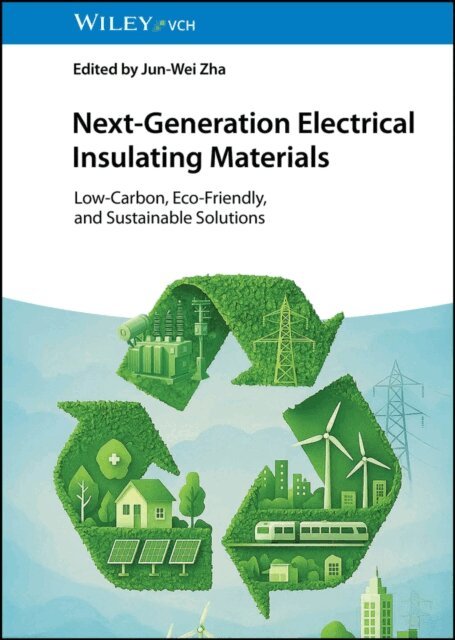
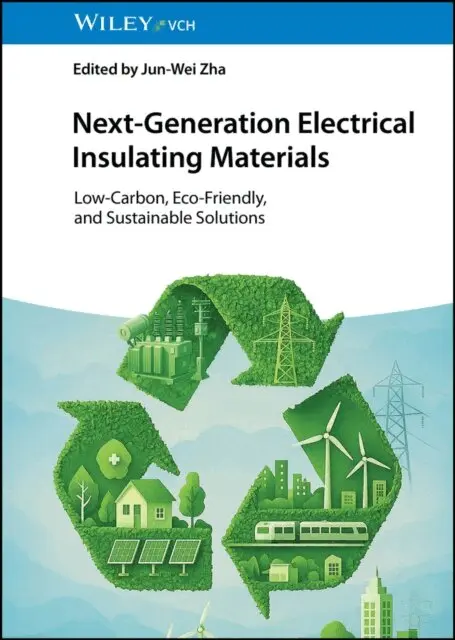
    Next-Generation Electrical Insulating Materials

    Low-Carbon, Eco-Friendly, and Sustainable Solutions

    AvJun-Wei Zha

    Inbunden, Engelska, 2026

    1 741 kr

    Beställningsvara. Skickas inom 5-8 vardagar. Fri frakt över 249 kr.

    Beskrivning

    Highlights milestone developments in degradable, recyclable, and self-healing insulating materials for the power industry The global transition toward low-carbon and sustainable energy systems has placed electrical insulating materials at the forefront of research and application. As essential components in electrical and electronic engineering, insulating materials determine not only the efficiency and reliability of power equipment but also its environmental footprint. Yet, traditional insulating systems face significant challenges—resource depletion, pollution, and limited recyclability—that are increasingly incompatible with global climate and sustainability goals. Next-Generation Electrical Insulating Materials:Low-Carbon, Eco-Friendly, and Sustainable Solutions systematically addresses solid, liquid, and gas insulating materials in the context of sustainability. Covering fundamental insulating, dielectric, thermal, and mechanical properties, contributions from leading experts explore recent breakthroughs in degradable, recyclable, and self-healing materials. The book provides detailed evaluations of material innovations and their practical implications for the safe operation of electrical systems. Dedicated chapters on plastics, resins, rubbers, paper, oils, and gases are accompanied by critical examinations of current challenges and a discussion of future directions of the field. Blending foundational theory and cutting-edge advances to illustrate how insulating materials can support the energy transition and drive innovation in sustainable power systems, Next-Generation Electrical Insulating Materials: Introduces a systematic framework linking material properties with low-carbon performance requirementsHighlights six categories of insulating materials with breakthrough developments in greener alternativesProvides multi-dimensional evaluation methods for optimizing material performance in real-world conditionsExamines synergistic improvements of green insulating materials in power equipmentOffers detailed prospects for innovation, from recyclable designs to advanced degradable materialsBoth an introductory resource and an advanced reference across multiple engineering disciplines, Next-Generation Electrical Insulating Materials:Low-Carbon, Eco-Friendly, and Sustainable Solutions is essential reading for graduate students, researchers, and engineers in electrical engineering, materials science, and polymer chemistry. It is well-suited for courses in Electrical Materials and Insulation Technology at master’s and doctoral levels, and is a valuable reference for professionals in the power, electronics, and chemical industries.
    Produktinformation

    • Utgivningsdatum:2026-04-22
    • Mått:170 x 244 x 15 mm
    • Vikt:680 g
    • Format:Inbunden
    • Språk:Engelska
    • Antal sidor:416
    • Förlag:Wiley-VCH Verlag GmbH
    • ISBN:9783527355709

    Utforska kategorier

    • Tillverkningsteknik inom Naturvetenskap och teknik
    • Elektronik och kommunikationer inom Naturvetenskap och teknik
    • Maskinteknik och material inom Naturvetenskap och teknik

    Mer om författaren

    Jun-Wei Zha is a Professor at the North China Electric Power University, China. His research focuses on the electrical and thermal properties of dielectric and insulating polymer materials. He has received multiple awards, including the first prize in Natural Science from the Ministry of Education and the Beijing Science and Technology Award. A Fellow of IET and Senior Member of IEEE, he contributes actively as an editor for several leading journals and serves on international technical committees and professional societies.

    Innehållsförteckning

    • Preface xv1 Overview of Development of Insulating Materials 1Wenye Zhang and Jun-Wei Zha1.1 Introduction 11.2 Historical Evolution of Insulating Materials 21.3 Modern Insulating Materials and Current Challenges 101.4 Toward Green and Smart Insulating Materials 141.5 Summary and Outlook 20References 202 Key Issues of Conventional Insulating Materials 27Yang Zhang and Jun-Wei Zha2.1 Introduction 272.2 Key Issues in Conventional Solid Insulation 282.3 Key Issues in Conventional Liquid Insulation 322.4 Key Issues in Conventional Gas Insulation 342.5 Eco-Cycling Requirements for Conventional Insulation Materials 36References 373 Characteristics and Types of Green Insulating Materials 41Baoquan Wan and Jun-Wei Zha3.1 Introduction 413.2 Green Solid Insulating Materials for Power Cables and Accessories 433.3 Green Liquid Insulating Materials for Transformers and Dielectric Fluids 473.4 Green Gaseous Insulating Materials for Switchgear and Gas-Insulated Equipment 513.5 Green Insulating Materials in Electronics and Specialty Applications 553.6 Conclusion and Outlook 58Acknowledgments 59References 594 Milestone of Insulating Plastics 65Wenye Zhang, Hongzhe Zhang, and Jun-Wei Zha4.1 Introduction 654.2 Development and Evolution of Traditional Insulating Plastics 664.3 Development of Next-Generation Insulating Plastics 754.4 Conclusion and Outlook 94References 955 Milestone of Insulating Resin 101Yang Zhang and Jun-Wei Zha5.1 Introduction 1015.2 Bio-Based Insulating Resins 1025.3 Self-Healing Insulating Resins 1095.4 Recyclable/Degradable Insulating Resins 1165.5 Conclusions and Outlook 126References 1276 Environmental Degradation and Novel Development of Electrical Silicone Rubber Materials 133Wang Xilin, Shen Zikui, Jia Zhidong, and Wang Liming6.1 Aging and Failure Issues of Silicone Rubber Materials Under Harsh Extreme Conditions 1336.2 Research and Development of Advanced Silicone Rubber Materials 1446.3 Conclusion and Outlook 156References 1567 The Evolution of Insulating Paper: Bio-Based and Circular Solutions for High-Performance Electrical Insulation 161Junwen Ren, Jiacheng Zhang, Zi Wang, Junxue Chen, and Lin Zhang7.1 The Enduring Legacy of Conventional Insulating Papers 1617.2 New-Generation Raw Materials: Advanced Bio-Based and Nanostructured Materials 1777.3 Green Manufacturing and Circular Economy Framework: From Material Innovation to Systemic Sustainability 1877.4 Application Frontiers and Future Perspectives of Aramid-Based Insulating Paper 197References 2088 Eco-Friendly Ester-Based Insulating Oils: Toward a Sustainable Future in Power Systems 211Feipeng Wang8.1 Introduction 2118.2 Types and Feedstocks 2158.3 Physicochemical and Electrical Properties 2218.4 Environmental and Sustainability Assessment 2308.5 Engineering Applications and Case Studies 2398.6 Future Directions and Research Needs 2478.7 Conclusion 256References 2609 Multi-Dimensional Evaluation, Optimization, and Operating Condition Evolution Characteristics of Eco-Friendly Insulating Gas Performance 269Song Xiao, Yi Li, and Shengyao Shi9.1 Introduction 2699.2 Multi-Dimensional Evaluation of Eco-Friendly Insulating Gases 2709.3 Eco-Friendly Gas-Insulation Synergy Mechanism and Formulation Optimization 2779.4 Eco-Friendly Insulating Gas State Evolution Mechanism 304References 31510 Synergistic Improvement of the Performance of Green Insulating Materials in Power Equipment 319Kangning Wu, Ge Zhao, and Jianying li10.1 Preface 31910.2 Modification Methods of Polypropylene 32010.3 Modification Methods of Epoxy 33610.4 Summary 35010.5 Conclusions 350References 35111 Prospects and Innovation of Green Insulating Materials 357Jun-Wei Zha and Baoquan Wan11.1 Introduction 35711.2 Solid Insulating Materials: Toward Sustainable Dielectrics 35811.3 Liquid Insulating Materials: Green Dielectric Fluids 36611.4 Gaseous Insulating Materials: Toward SF 6 -Free Solutions 36911.5 Innovation Pathways 37211.6 Conclusion and Perspectives 375References 377Index 381