• Fri frakt över 249 kr
  • •
  • Snabba leveranser
  • •
  • Billiga böcker
Kundservice

Du är på sajten för privatpersoner.

Företag, bibliotek eller offentlig verksamhet?

Du handlar på classic.bokus.com, där alla dina funktioner finns intakta.
Till classic.bokus.com
Bokus logotyp. Gå till startsidan.
  • Erbjudanden
  • Nyheter
  • Student
  • Topplistor
  • Barn & ungdom
  • Bokus Play
  • E-böcker
  • Pocketböcker
  • Spel & pussel

10% rabatt på allt med kod NYSTART10 →

Sidfot

Mina sidor

    Hjälp

    • Kundservice
    • Vanliga frågor och svar
    • Frakt och leverans
    • Retur vid ångerrätt
    • Reklamera vara
    • Betalning
    • Köpvillkor
    • Allmänna villkor
    • Information om webbplatsens tillgänglighet

    Om Bokus

    • Om oss
    • Pressrum
    • För studenter
    • För företag
    • För bibliotek och offentlig verksamhet
    • För leverantörer
    • Hållbarhet

    Populärt

    • Aktuella erbjudanden
    • Presentkort
    • Studentlitteratur
    • Nya böcker
    • Topplistor
    • Signerade böcker
    • Engelska böcker

    Inspiration

    • Boktips
    • BookTok
    • Populära bokserier
    • Barnbokskaraktärer
    • Populära författare
    Logotyp för Bokus
    Följ oss på Facebook (extern länk)Följ oss på Instagram (extern länk)Följ oss på YouTube (extern länk)Följ oss på TikTok (extern länk)
    bokus @ CookiesAnpassa cookiesIntegritetspolicyKöpvillkor
    Till Citymail hemsida (extern länk)Till Budbee hemsida (extern länk)Till Postnord hemsida (extern länk)Till Schenker hemsida (extern länk)Till Early Bird hemsida (extern länk)Till Walleys hemsida (extern länk)
    1. Naturvetenskap och teknik
    2. Teknik och industri
    3. Maskinteknik och material

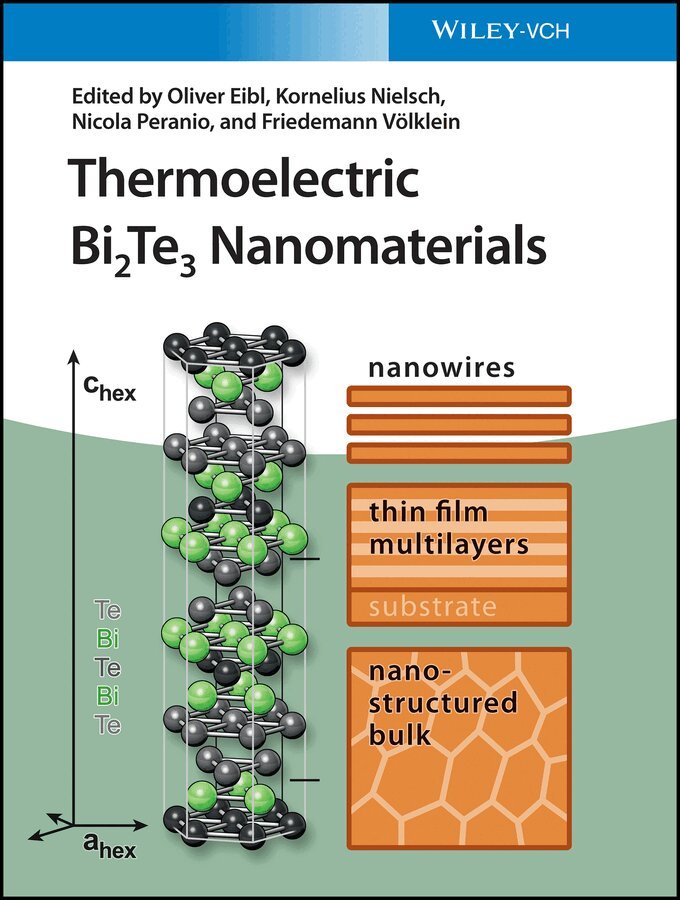
    Thermoelectric Bi2Te3 Nanomaterials

    AvOliver Eibl,Kornelius Nielsch

    E-bok
    Engelska, 2015

    1 783 kr

    Läs direkt i Bokus Reader – eller ladda ned till din enhet

    Beskrivning

    Edited by the initiators of a priority research program funded by the German Science Foundation and written by an international team of key players, this is the first book to provide an overview of nanostructured thermoelectric materials -- putting the new developments into perspective alongside conventional thermoelectrics.As such, it reviews the current state of research on thermoelectric Bi2Te3 nanomaterials, covering advanced methods of materials synthesis, characterization of materials structures and thermoelectric properties, as well as advances in the theory and modeling of transport properties. Nanomaterials-based thermoelectric devices are also discussed with respect to their properties, their suitability for different energy generation applications, and in light of their commercialization potential. An outlook on the chances, challenges and future directions of research rounds off the book, giving a straightforward account of the fundamental and technical problems - plus ways to overcome them.

    Produktinformation

    • Utgivningsdatum:2015-04-23
    • Språk:Engelska
    • Filformat:EPUB
    • Kopieringsskydd:LCP
    • ISBN:9783527672622
    • Förlag:John Wiley and Sons Ltd

    Utforska kategorier

    • Maskinteknik och material inom Naturvetenskap och teknik

    Mer om författaren

    Kornelius Nielsch is Professor for Experimental Physics at the Institute of Applied Physics of the University Hamburg, Germany, and coordinator of the German Priority Program of Thermoelectric Nanostructures, funded by the German Science Foundation (DFG). After his PhD obtained for a doctoral thesis carried out at Max Planck Institute of Microstructure Physics in Halle, Germany, he was postdoctoral associate at MIT, USA. From October 2003 to December 2008 he was leader of the a nanotechnology research group funded by the German Federal Ministry of Education and Research (BMBF) on Multifunctional Nanowires and Nanotubes at the Max Planck Institute in Halle. He received the State Research Prize for Basic Research from the State of Saxony-Anhalt in 2006. In the same year he was appointed Full Professor for Experimental Physics in Hamburg. Friedemann Volklein is Director of the Institute for Microtechnologies (IMtech) and Professor for Physical Technologies and Microsystem Technology at the RheinMain University of Applied Sciences in Wiesbaden. He received both his PhD and DSc degrees in Physics from the University of Jena, Germany. He specializes in solid-state physics of thin films and their applications in thermoelectric microsensors and microactuators. Before his move to Wiesbaden, he was head of the sensor department of the Institute for Photonic Technology (IPHT) Jena and senior scientist in the Physical Electronics Laboratory of the ETH Zurich, Switzerland. Oliver Eibl is Professor for Applied Physics at the University of Tuebingen. He spent fifteen years as researcher at Siemens Corporate Research in Munich and started his university career in Tubingen in 1999. His field of research is electron microscopy and applied materials science. He is author of more than 100 scientific papers and holds more than ten patents. He has reviewed numerous scientific papers and has acted as a referee for numerous scientific research proposals. Nicola Peranio is Research Scientist in Professor Eibl's group at the University of Tubingen. He received his Master degree from Karlsruhe Institute of Technology and his PhD from the University of Tubingen in 2008. In 2009 he obtained the Young Investigator Award from the German Thermoelectric Society (DTG) for his PhD thesis on Bi2Te3 bulk and nanomaterials.

    Innehållsförteckning

    • Preface XIIIList of Contributors XVIIAcknowledgments XXIII1 Old and New Things in Thermoelectricity 1Rudolf P. Huebener1.1 ThreeThermoelectric Effects 21.1.1 Seebeck Effect 21.1.2 Peltier Effect 31.1.3 Thomson Effect 31.2 Semiconductors 41.3 My Entry into Thermoelectricity 61.4 Peltier Cascades 91.5 Challenge of Materials Science 9References 10Part I: Synthesis of Nanowires, Thin Films, and Nanostructured Bulk 112 Electrodeposition of Bi2Te3-Based Thin Films and Nanowires 13William Töllner, Svenja Bäßler, Nicola Peranio, Eckhard Pippel, Oliver Eibl, and Kornelius Nielsch2.1 Introduction 132.2 Fundamentals of Bi2Te3-Based Electrodeposition 142.3 Electrodeposition of Bi2Te3 Thin Films 162.4 Electrodeposition of Thermoelectric Nanowires 212.4.1 Electrodeposition of Bi2Te3 Nanowires 212.4.2 Ternary Bi2Te3-Based Nanowires 282.5 Conclusion 31References 313 Bi2Te3 Nanowires by Electrodeposition in Polymeric Etched Ion Track Membranes: Synthesis and Characterization 33Oliver Picht, Janina Krieg, and Maria Eugenia Toimil-Molares3.1 Introduction 333.2 Synthesis of Bi2Te3 NWs with Controlled Size and Crystallography 363.2.1 Fabrication of Etched Ion-Track Membranes 363.2.1.1 Swift Heavy-Ion Irradiation 363.2.1.2 Chemical Etching 373.2.2 Electrodeposition of Bi2Te3 NWs 383.2.2.1 Experimental Setup 383.2.2.2 Electrodeposition of Bi2Te3 and Choice of the Electrolyte 403.2.2.3 Chronoamperometric Current–Time Curves 413.2.3 Morphological and Crystallographic Characterization of Bi2Te3 NWs 423.2.3.1 NWArrays 423.2.3.2 Morphology of Individual Nanowires as a Function of the Deposition Parameters 433.2.3.3 Adjusting the Nanowire Dimensions 443.2.3.4 Investigation of the Nanowire Crystallinity and Composition by TEM 453.2.3.5 Investigation of the Preferred Crystallographic Orientation of Wire Arrays by X-Ray Diffraction 493.3 Conclusions 50References 514 Fabrication and Comprehensive Structural and Transport Property Characterization of Nanoalloyed Nanostructured V2VI3 Thin Film Materials 55MarkusWinkler, Torben Dankwort, Ulrich Schürmann, Xi Liu, Jan D. König, Lorenz Kienle,Wolfgang Bensch, Harald Böttner, and Kilian Bartholomé4.1 Situation/State of the Art before the Start of Our Combined Research Project 554.2 Motivation for Research on V2VI3 Multilayered Structures 564.2.1 BinaryThin Films 584.2.2 Results Obtained for SL Structures 624.2.3 Results Obtained from aTheoretical Analysis of V2VI3 Binaries and Nanoscale SL Structures 664.3 Conclusion and Outlook 67Acknowledgments 69References 695 Structure and Transport Properties of Bi2Te3 Films 73GuoyuWang, Lynn Endicott, and Ctirad Uher5.1 Introduction 735.2 Structural Aspects of the Tetradymite-type Lattice 755.3 MBE Film Deposition 765.4 Structural Characterization of Bi2Te3 Films 785.5 Transport Properties of Films on Sapphire Substrates 855.6 Conclusion 95Acknowledgment 95References 956 Bulk-Nanostructured Bi2Te3-Based Materials: Processing, Thermoelectric Properties, and Challenges 99Vicente Pacheco, Henrik Görlitz, Nicola Peranio, Zainul Aabdin, and Oliver Eibl6.1 Success of ZT Enhancement in Nanostructured Bulk Materials 996.2 Methodology at Fraunhofer IFAM-DD: Previous Research 1006.3 High-Energy Ball Milling Technology, SPS Technology, and Thermoelectric Characterization 1026.4 Control of Crystallite Size and Mass Density 1036.4.1 Optimizing Ball Milling Parameters 1036.4.2 Optimizing SPS Parameters 1056.5 Nanostructure – Transport Properties – Correlations in Sintered Nanomaterials 1066.5.1 Transport Properties 1066.5.2 Nanostructure 1086.5.3 Crystallite Size–Lattice Thermal Conductivity Correlation 1106.5.4 Composition–Antisite Defect Density–Electric Transport Correlation 1116.5.5 Oxidized Secondary Phases–Oxidized Matrix–Electric Transport Correlation 1126.6 Summary and State of the Art 1136.7 Outlook Second Generation SPS Prepared Nanomaterials 114References 115Part II: Structure, Excitation, and Dynamics 1197 High Energy X-ray and Neutron Scattering on Bi2Te3 Nanowires, Nanocomposites, and BulkMaterials 121Benedikt Klobes, Dimitrios Bessas, and Raphaël P. Hermann7.1 Introduction 1217.2 Review of Published High-Energy X-ray and Neutron Scattering Studies on Bi2Te3 and Related Compounds 1227.3 Element Specific Lattice Dynamics in Bulk Bi2Te3 and Sb2Te3 1257.4 Nanostructure and Phonons in a Bi2Te3 Nanowire Array 1307.5 Nanocomposites and Speed of Sound 1347.6 Perspectives of High-Energy X-ray and Neutron Scattering 136Acknowledgments 136References 1378 Advanced Structural Characterization of Bi2Te3 Nanomaterials 141Nicola Peranio, Zainul Aabdin,Michael Dürrschnabel, and Oliver Eibl8.1 From Bulk to Nanomaterials 1418.2 Synthesis of Nanomaterials and Transport Measurements 1428.3 Relevance of Advanced Microscopy and Spectroscopy for Bi2Te3 Nanomaterials 1438.4 Nanostructure–Property Relations in Bulk and Nanomaterials 1478.4.1 Chemical Modulations and Structural Disorder in Commercial Bulk Materials 1478.4.2 Near Stoichiometric, Single Crystalline Nanowires for Transport in the Basal Plane 1508.4.3 Epitaxial and Nano-alloyedThin Films with Low Charge Carrier Densities and High Power Factors 1528.4.4 Highly Dense, Ultra-fine Nanostructured Bulk with Low Thermal Conductivities 1538.5 Simulation of Electron Transport and Electron Scattering in Bi2Te3-Based Materials 1558.5.1 Calculation of Electronic Transport Coefficients 1568.5.2 Calculation of High-Energy Electron Scattering in Bi2Te3-Based Materials 1588.6 Experimental Techniques and Simulation 161References 161Part III: Theory and Modeling 1659 Density-Functional Theory Study of Point Defects in Bi2Te3 167Adham Hashibon and Christian Elsässer9.1 Introduction 1679.2 Thermoelectric Properties 1689.3 The Lattice Structure of Bi2Te3 1739.4 Point Defects in Bi2Te3-Related Materials 1749.5 Concentration of Point Defects 1779.6 Calculation of Formation Energies from First Principles 1789.7 Recent DFT Results for the Point Defect Energies in Bi2Te3 1809.8 Summary and Outlook 183Acknowledgments 184References 18410 Ab Initio Description of Thermoelectric Properties Based on the Boltzmann Theory 187Nicki F. Hinsche, Martin Hölzer, Arthur Ernst, Ingrid Mertig, and Peter Zahn10.1 Introduction 18710.1.1 Low-Dimensional Thermoelectrics 18810.1.2 Phonon-Glass Electron-Crystal 18910.1.3 Phonon-Blocking and Electron-Transmitting Superlattices 19110.2 Transport Theory 19310.2.1 Linearized Boltzmann Equation and Relaxation Time Approximation 19310.2.2 Transport Coefficients 19410.3 Results 19710.3.1 Influence of Strain 19710.3.2 Superlattices 20310.3.3 Thermal Conductivity - Toward the Figure of Merit 20610.3.4 Lorenz Function of Superlattices 20810.3.5 Phonons 21110.4 Summary 213References 214Part IV: Transport PropertiesMeasurement Techniques 22311 Measuring Techniques for Thermal Conductivity and Thermoelectric Figure of Merit of V–VI Compound Thin Films and Nanowires 225F. Völklein, H. Reith, A. Meier, and M. Schmitt11.1 Introduction 22511.2 Methods for the Investigation of the In-plane Thermal Conductivity of Thin Films 22711.2.1 Steady-State Joule Heating Method for Determining the Thermal Conductivity and Emissivity of Electrically Conducting Films 22711.2.2 Microfabricated λ-Chips for Measurements of In-Plane Thermal Conductivity 23011.2.3 The λ-Chips for Transient Measurements of the In-Plane Thermal Conductivity and the Specific Heat Capacity of Thin Films 23511.3 Steady-State Measurements of the Cross-PlaneThermal Conductivity of Thin Films 23611.4 Investigation of Cross-PlaneThermal Conductivity of Nanowire Arrays 24311.5 Characterization ofThermal Conductivity and Thermoelectric Figure of Merit of Single Nanowires 24511.5.1 Design of the z-Chip 24511.5.2 Electrical Conductivity Measurement 24811.5.3 Thermopower Measurements 24811.5.4 Thermal Conductivity Measurement 250Acknowledgments 251References 25112 Development of a Thermoelectric Nanowire Characterization Platform (TNCP) for Structural and Thermoelectric Investigation of Single Nanowires 253ZhiWang, S. Hoda Moosavi,Michael Kroener, and PeterWoias12.1 Introduction 25312.2 TNCP Initial Design 25612.3 First and Second Generations of TNCP 25712.3.1 Design, Modeling, and Simulation 25712.3.2 Design Improvements and New Characteristics for the Second Generation Chip Design 25912.3.3 Fabrication 26212.4 Nanowire Assembly Utilizing Dielectrophoresis 26412.4.1 Theory 26412.4.2 Experimental Details 26712.4.2.1 Liquid Medium Selection 26712.4.2.2 Nanowire Assembly Process 26712.4.2.3 Acceleration ofWater Droplet Evaporation 26912.4.2.4 Recognition of Properly Assembled Nanowires 26912.4.2.5 Results and Discussion 27012.5 Ohmic Contact Generation 27112.5.1 SEM Electron Beam Induced Deposition (EBID) 27112.5.2 Shadow Mask Techniques 27512.5.2.1 Design and Fabrication 27512.5.2.2 Experimental Process 27712.6 Summary and Outlook 277References 279Appendix 283Index 287