Friedemann Völklein – författare
Visar alla böcker från författaren Friedemann Völklein. Handla med fri frakt och snabb leverans.
3 produkter
3 produkter
E-bok
Engelska, 20151 725 kr
Läs direkt efter köp
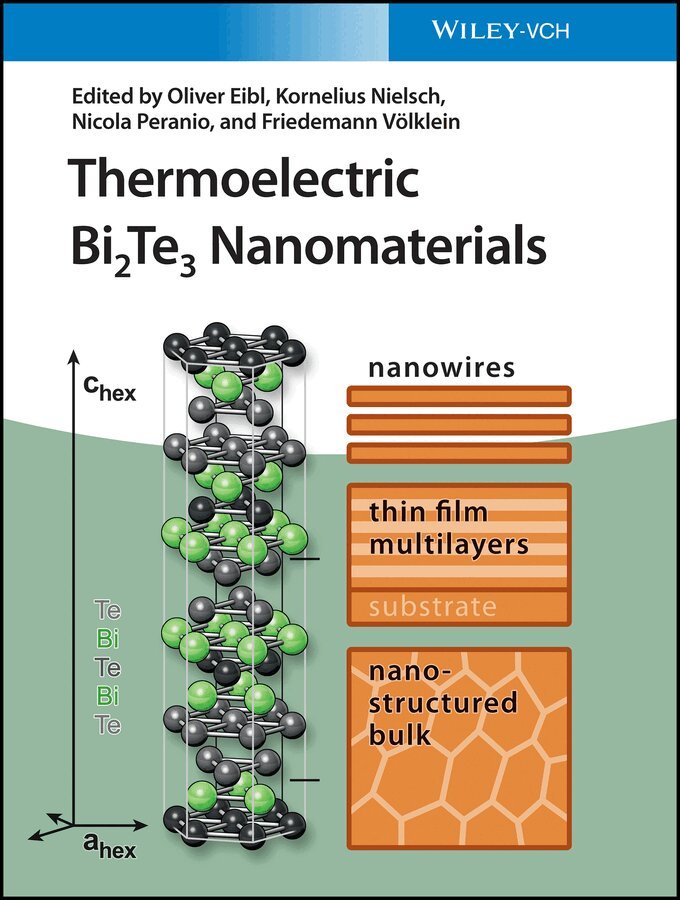
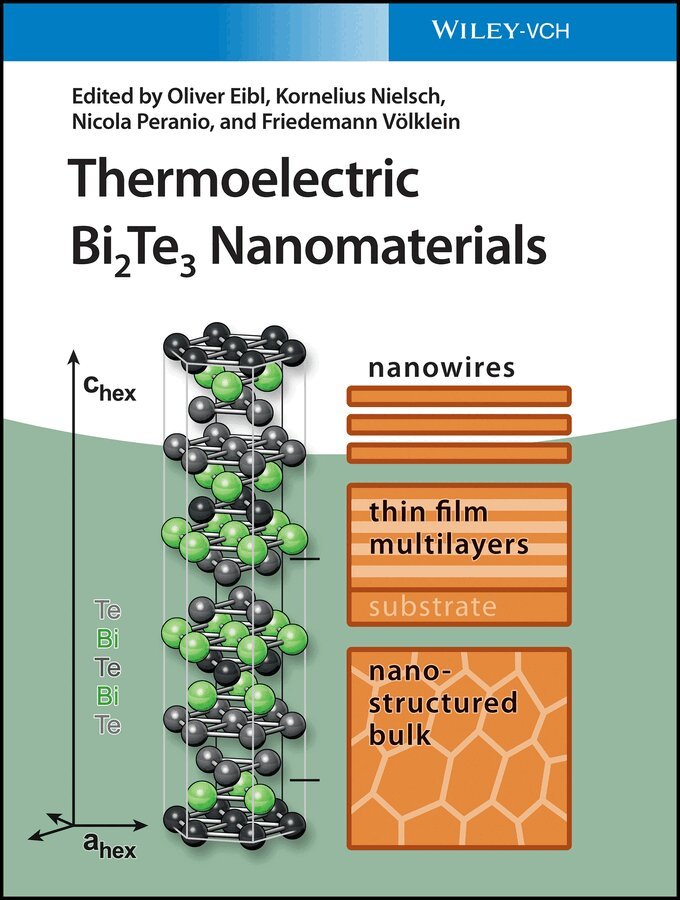
Edited by the initiators of a priority research program funded by the German Science Foundation and written by an international team of key players, this is the first book to provide an overview of nanostructured thermoelectric materials -- putting the new developments into perspective alongside conventional thermoelectrics.As such, it reviews the current state of research on thermoelectric Bi2Te3 nanomaterials, covering advanced methods of materials synthesis, characterization of materials structures and thermoelectric properties, as well as advances in the theory and modeling of transport properties. Nanomaterials-based thermoelectric devices are also discussed with respect to their properties, their suitability for different energy generation applications, and in light of their commercialization potential. An outlook on the chances, challenges and future directions of research rounds off the book, giving a straightforward account of the fundamental and technical problems - plus ways to overcome them.
E-bok
PDF, Engelska, 20151 725 kr
Läs direkt efter köp
Edited by the initiators of a priority research program funded by the German Science Foundation and written by an international team of key players, this is the first book to provide an overview of nanostructured thermoelectric materials -- putting the new developments into perspective alongside conventional thermoelectrics.As such, it reviews the current state of research on thermoelectric Bi2Te3 nanomaterials, covering advanced methods of materials synthesis, characterization of materials structures and thermoelectric properties, as well as advances in the theory and modeling of transport properties. Nanomaterials-based thermoelectric devices are also discussed with respect to their properties, their suitability for different energy generation applications, and in light of their commercialization potential. An outlook on the chances, challenges and future directions of research rounds off the book, giving a straightforward account of the fundamental and technical problems - plus ways to overcome them.
Inbunden, Tyska, 2006
660 kr
Skickas inom 10-15 vardagar
1.1 Von der Mikroelektronik zur Mikrosystemtechnik Es gibt zweifellos kein Gebiet der Wissenschaft und Technik des 20. Jahrhunderts, das eine vergleichbar stürmische Entwicklung erfahren hat wie die Mikroelektronik in den vergangenen 50 Jahren. Mit der Erfindung des Transistors (1948) und der Herstellung erster integrierter Schaltungen auf der Basis des Halbleitermaterials Silizium (1958) begann eine technische Revolution, die mit ihren Ergebnissen und Produkten inzwischen in fast alle Lebensbereiche unserer Gesellschaft hineinwirkt. Ohne die Erfolge der Mikroelektronik wäre die moderne Informations- und Kommunikationstechnik, die inzwischen die Berufswelt vieler Menschen wesentlich verändert hat, nicht denkbar. Das gilt auch für andere Bereiche wie z. B. die Me- zin-, die Verkehrs- und die Produktionstechnik. Der große technologische Fortschritt der Mikroelektronik beruht auf Miniaturisierung und Integration. Vor der Mikroelektronik wurden elektrische/elektronische Schaltungen aus - chanisch gefertigten Bauteilen wie Kondensatoren, Widerständen oder Elektronenröhren - sammengefügt und individuell abgeglichen. Aufgrund der Größe der Bauelemente war der Platzbedarf und das Gewicht hoch, die Packungs- und Funktionsdichte gering. Durch die - kroelektronik wandelte sich die Fertigung elektronischer Systeme grundlegend. Die B- elemente einer Schaltung wurden nun durch photolithographische Strukturierung und durch Schichttechnologien auf einem gemeinsamen Halbleiter-Substrat, dem Siliziumwafer, erzeugt.