• Fri frakt över 249 kr
  • •
  • Snabba leveranser
  • •
  • Billiga böcker
Kundservice

Du är på sajten för privatpersoner.

Företag, bibliotek eller offentlig verksamhet?

Du handlar på classic.bokus.com, där alla dina funktioner finns intakta.
Till classic.bokus.com
Bokus logotyp. Gå till startsidan.
  • Erbjudanden
  • Nyheter
  • Student
  • Topplistor
  • Barn & ungdom
  • Bokus Play
  • E-böcker
  • Pocketböcker
  • Spel & pussel

10% rabatt på allt med kod: NYSTART10 →

Sidfot

Mina sidor

    Hjälp

    • Kundservice
    • Vanliga frågor och svar
    • Frakt och leverans
    • Retur vid ångerrätt
    • Reklamera vara
    • Betalning
    • Köpvillkor
    • Allmänna villkor
    • Information om webbplatsens tillgänglighet

    Om Bokus

    • Om oss
    • Pressrum
    • För studenter
    • För företag
    • För bibliotek och offentlig verksamhet
    • För leverantörer
    • Hållbarhet

    Populärt

    • Aktuella erbjudanden
    • Presentkort
    • Studentlitteratur
    • Nya böcker
    • Topplistor
    • Signerade böcker
    • Engelska böcker

    Inspiration

    • Boktips
    • BookTok
    • Populära bokserier
    • Barnbokskaraktärer
    • Populära författare
    Logotyp för Bokus
    Följ oss på Facebook (extern länk)Följ oss på Instagram (extern länk)Följ oss på YouTube (extern länk)Följ oss på TikTok (extern länk)
    bokus @ CookiesAnpassa cookiesIntegritetspolicyKöpvillkor
    Till Citymail hemsida (extern länk)Till Budbee hemsida (extern länk)Till Postnord hemsida (extern länk)Till Schenker hemsida (extern länk)Till Early Bird hemsida (extern länk)Till Walleys hemsida (extern länk)
    1. Medicin
    2. Klinisk medicin och internmedicin
    3. Hematologi

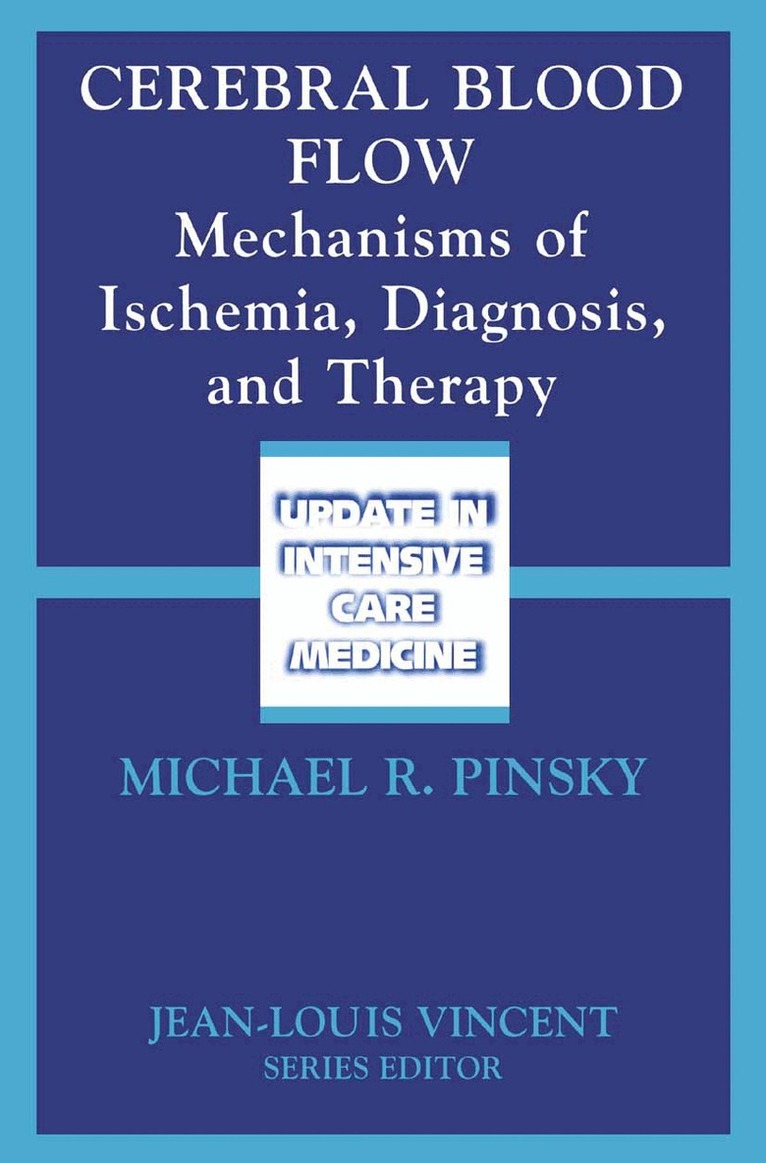
    Cerebral Blood Flow

    Mechanisms of Ischemia, Diagnosis, and Therapy

    AvMichael R. Pinsky,M. R. Pinsky

    Häftad, Engelska, 2002

    Del i serien Update in Intensive Care Medicine

    563 kr

    Beställningsvara. Skickas inom 10-15 vardagar. Fri frakt över 249 kr.

    Beskrivning

    Cerebral Blood Flow: Quantifying Consciousness Although the heart may be the source of energy needed to generate blood flow,and other organs absolutely essential for normal living,the brain is the reason we are alive. The collected book chapters are aimed at addressing this most fundamental organ and its blood flow. These papers reflect detailed descriptions of similar topics presented over a two-day period as part of the 5th International Symposium on Applied Physiology of the Peripheral Circulation held in Pittsburgh, Pennsylvania, in June 2000. The symposium and this volume were organized into four distinct groupings that follow in a logical fashion. The initial papers focus on the basic unique physiology and pathophysiology of the cerebral circulation, including a historical reviewof the means to measure cerebral blood flow and its implications of the past 30 years. Dr. Walter D. Obrist was one of the original investigators to use radiolabeled markers to assess cerebral blood flow. His equations and initial studies form an impressive introduction to where we are now. As with much of the body's special organs, the brain too has many circulatory features unique to itself.These include the unique blood-brain barrier function ofthe endothelium, local neural regulation control, and intracranial pressure effects. These special issues,plus genetic factors that may predispose individuals to developing cere­ bral aneurysm, make up the initial section of the monograph.

    Produktinformation

    • Utgivningsdatum:2002-03-22
    • Mått:155 x 235 x 18 mm
    • Vikt:499 g
    • Format:Häftad
    • Språk:Engelska
    • Serie:Update in Intensive Care Medicine
    • Antal sidor:312
    • Förlag:Springer-Verlag Berlin and Heidelberg GmbH & Co. KG
    • ISBN:9783540426844

    Utforska kategorier

    • Hematologi inom Medicin
    • Hjärt- och kärlsjukdomar inom Medicin

    Innehållsförteckning

    • Section 1. Physiology and Pathophysiology.- 1. History of Cerebral Blood Flow Assessment.- 2. Neural Regulation of the Cerebral Circulation.- 3. Role of Endothelium in Regulation of the Brain Microcirculation.- 4. Molecular Pathogenetics of Cerebral Aneurysms: Current Concepts and Future Directions.- Section 2. Ischemic Brain Injury.- 5. Triggering Events in Ischemic Brain Injury.- 6. Ischemic Mechanisms in Traumatic Brain Injury.- 7. Coupling and Compartmentation of Cerebral Blood Flow and Metabolism.- 8. The Genetic Control of Ischemic Neuronal Cell Death.- 9. Cerebral Resuscitation from Temporary Complete Global Brain Ischemia.- 10. The Ischemic Penumbra: Pathophysiology and Therapeutic Implications.- Section 3. Assessment of Cerebral Blood Flow.- 11. The Assessment of Determinants of Cerebral Oxygenation and Microcirculation.- 12. Computed Tomography, Angiography, and Perfusion Imaging of Acute Stroke.- 13. The Use of Xenon/CT Cerebral Blood Flow Studies in Acute Stroke.- 14. Advances in Imaging in Ischemic Stroke.- 15. Assessment of Cerebrovascular Pathophysiology.- 16. Cerebral Blood Flow Measurement with Positron Emission Tomography.- Section 4. Current Status of Clinical Trials in Acute Stroke.- 17. Thrombolysis for Acute Stroke.- 18. Neuroprotective Stroke Trials: A Ten Year Dry Season.- 19. Interventional Neuroradiology in Acute Ischemic Stroke: Extracranial and Intracranial Angioplasty and Stenting.- 20. Therapeutic Moderate Hypothermia and Fever.- 21. Cerebral Hemodynamics and Stroke Risk in Patients with Complete Carotid Artery Occlusion. Is There a Role for Cerebral Revascularization?.