• Fri frakt över 249 kr
  • •
  • Snabba leveranser
  • •
  • Billiga böcker
Kundservice

Du är på sajten för privatpersoner.

Företag, bibliotek eller offentlig verksamhet?

Du handlar på classic.bokus.com, där alla dina funktioner finns intakta.
Till classic.bokus.com
Bokus logotyp. Gå till startsidan.
  • Erbjudanden
  • Nyheter
  • Student
  • Topplistor
  • Barn & ungdom
  • Bokus Play
  • E-böcker
  • Pocketböcker
  • Spel & pussel

10% rabatt på allt med kod: NYSTART10 →

Sidfot

Mina sidor

    Hjälp

    • Kundservice
    • Vanliga frågor och svar
    • Frakt och leverans
    • Retur vid ångerrätt
    • Reklamera vara
    • Betalning
    • Köpvillkor
    • Allmänna villkor
    • Information om webbplatsens tillgänglighet

    Om Bokus

    • Om oss
    • Pressrum
    • För studenter
    • För företag
    • För bibliotek och offentlig verksamhet
    • För leverantörer
    • Hållbarhet

    Populärt

    • Aktuella erbjudanden
    • Presentkort
    • Studentlitteratur
    • Nya böcker
    • Topplistor
    • Signerade böcker
    • Engelska böcker

    Inspiration

    • Boktips
    • BookTok
    • Populära bokserier
    • Barnbokskaraktärer
    • Populära författare
    Logotyp för Bokus
    Följ oss på Facebook (extern länk)Följ oss på Instagram (extern länk)Följ oss på YouTube (extern länk)Följ oss på TikTok (extern länk)
    bokus @ CookiesAnpassa cookiesIntegritetspolicyKöpvillkor
    Till Citymail hemsida (extern länk)Till Budbee hemsida (extern länk)Till Postnord hemsida (extern länk)Till Schenker hemsida (extern länk)Till Early Bird hemsida (extern länk)Till Walleys hemsida (extern länk)
    1. Samhälle och politik
    2. Politik och statsskick

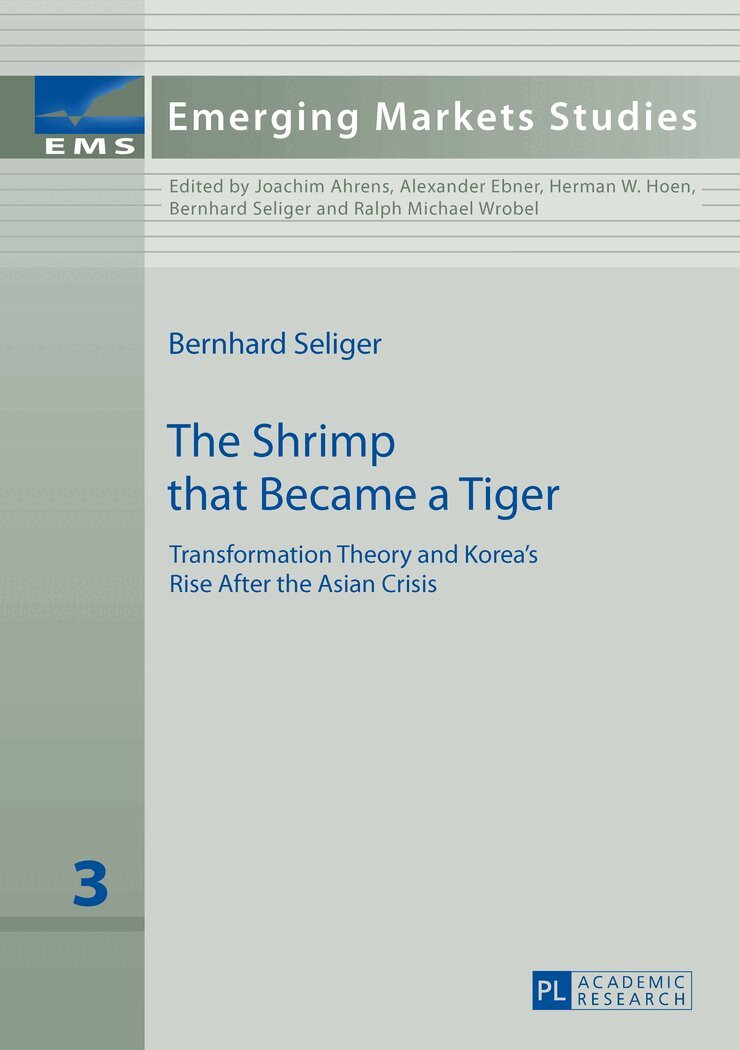
    Shrimp that Became a Tiger

    Transformation Theory and Korea’s Rise After the Asian Crisis

    AvBernhard Seliger

    Inbunden, Engelska, 2013

    Del 3 i serien Emerging Markets Studies

    944 kr

    Beställningsvara. Skickas inom 5-8 vardagar. Fri frakt över 249 kr.

    Beskrivning

    South Korea underwent a dramatic change in the last one and a half decades, from being considered a «tiger in trouble» in the wake of the Asian crisis to a showcase of economic development. The judgment of 1998 was itself a complete reversal of the previous enthusiastic reviews of world record-high growth for several decades, from the 1960s to the 1990s. Korea, once considered a shrimp between two mighty whales, Japan and China, veritably made a jump to become a tiger. And, after the steep decline of 1998, this tiger again showed its claws. This book deals not with the causes of the crisis in retrospect, but rather with the implications for the development of a new economic model in South Korea. It argues that the crisis and the following institutional change can best be understood by applying the theory of economic transformation.

    Produktinformation

    • Utgivningsdatum:2013-07-30
    • Mått:148 x 210 x 24 mm
    • Vikt:550 g
    • Format:Inbunden
    • Språk:Engelska
    • Serie:Emerging Markets Studies
    • Antal sidor:353
    • Upplaga:13001
    • Förlag:Peter Lang AG
    • ISBN:9783631607381

    Utforska kategorier

    • Politik och statsskick inom Samhälle och politik
    • Nationalekonomi inom Ekonomi och Ledarskap
    • Internationell ekonomi inom Ekonomi och Ledarskap

    Mer om författaren

    Bernhard J. Seliger is the resident representative of the Hanns Seidel Foundation in Korea. In 2007, he habilitated at the University of Witten/Herdecke. From 2004 to 2006 he was guest professor at the Graduate School of Public Administration of Seoul National University and at the Graduate School of International Area Studies of Hankuk University of Foreign Studies. From 1998 to 2002 he was Assistant Professor at the Graduate School of International Area Studies of Hankuk University of Foreign Studies. He received his doctorate in 1998 at the University of Kiel.

    Innehållsförteckning

    • Contents: The institutional challenge to transition theory – Toward a more general theory of transformation – The Korean Financial and economic crisis – Central Bank independence in Korea – FDI and cognitive models – External institutions and the international integration of Korea – From Ethnocentrism and Cultural Nationalism to Globalization and Hallyu (Korean Wave).