• Fri frakt över 249 kr
  • •
  • Snabba leveranser
  • •
  • Billiga böcker
Kundservice

Du är på sajten för privatpersoner.

Företag, bibliotek eller offentlig verksamhet?

Du handlar på classic.bokus.com, där alla dina funktioner finns intakta.
Till classic.bokus.com
Bokus logotyp. Gå till startsidan.
  • Erbjudanden
  • Nyheter
  • Student
  • Topplistor
  • Barn & ungdom
  • Bokus Play
  • E-böcker
  • Pocketböcker
  • Spel & pussel

10% rabatt på allt med kod: NYSTART10 →

Sidfot

Mina sidor

    Hjälp

    • Kundservice
    • Vanliga frågor och svar
    • Frakt och leverans
    • Retur vid ångerrätt
    • Reklamera vara
    • Betalning
    • Köpvillkor
    • Allmänna villkor
    • Information om webbplatsens tillgänglighet

    Om Bokus

    • Om oss
    • Pressrum
    • För studenter
    • För företag
    • För bibliotek och offentlig verksamhet
    • För leverantörer
    • Hållbarhet

    Populärt

    • Aktuella erbjudanden
    • Presentkort
    • Studentlitteratur
    • Nya böcker
    • Topplistor
    • Signerade böcker
    • Engelska böcker

    Inspiration

    • Boktips
    • BookTok
    • Populära bokserier
    • Barnbokskaraktärer
    • Populära författare
    Logotyp för Bokus
    Följ oss på Facebook (extern länk)Följ oss på Instagram (extern länk)Följ oss på YouTube (extern länk)Följ oss på TikTok (extern länk)
    bokus @ CookiesAnpassa cookiesIntegritetspolicyKöpvillkor
    Till Citymail hemsida (extern länk)Till Budbee hemsida (extern länk)Till Postnord hemsida (extern länk)Till Schenker hemsida (extern länk)Till Early Bird hemsida (extern länk)Till Walleys hemsida (extern länk)
    1. Filosofi och religion
    2. Filosofi

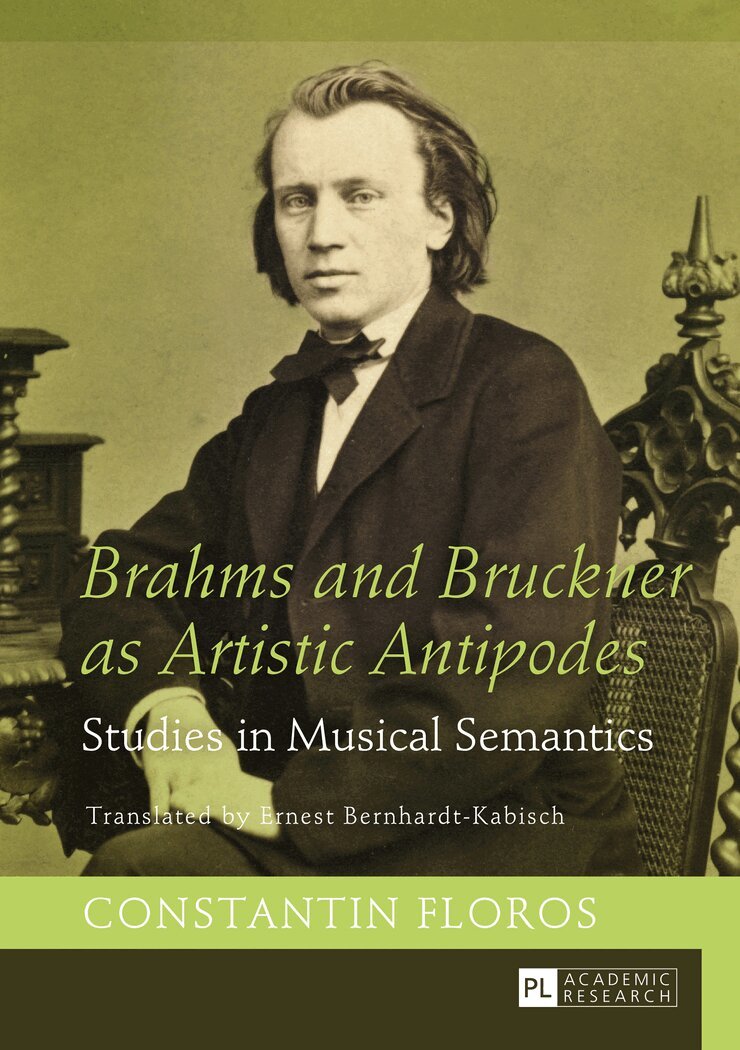
    Brahms and Bruckner as Artistic Antipodes

    Studies in Musical Semantics

    AvConstantin Floros

    Inbunden, Engelska, 2015

    934 kr

    Beställningsvara. Skickas inom 5-8 vardagar. Fri frakt över 249 kr.

    Beskrivning

    In the last third of the 19th century Brahms and Bruckner were regarded as antipodes. Is this perception really true to the historical reality or had their contemporaries overestimated the «dimension of their distance», as argued later? Both wrote autonomously conceived music, both held on to traditional forms, and both rejected program music. To find an answer to this question, part I tries to elucidate Brahms’ relation to Bruckner in its biographic, historical, artistic and art-theoretical aspects. At the center of the second part, whose subject is Brahms’ early work, is the question whether Brahms was indeed an autonomously working composer. The topic of the third part is a taboo of Bruckner research: Bruckner’s relation to program music. «The second and third part of the study achieve new insights. With a consistent analysis of biographic data and, simultaneously, a careful scrutiny of musical facts (increased experience in assessing the music of the 19th century), Floros gains convincing interpretations.»(Friedrich Heller about the German edition of the book) «The book is the result of Floros’s intensive study of Mahler, during which he found hitherto undiscovered clues to the interpretation of Brahms’s and Bruckner’s work. Most of the borrowings discussed confirm differences between the two composers in both ideologies and musical heritage. Long thought to be ‘absolute’ music, Bruckner’s compositions carry significant semantic meaning when the composer desired.» (Musical Borrowing)

    Produktinformation

    • Utgivningsdatum:2015-07-09
    • Mått:148 x 210 x 22 mm
    • Vikt:500 g
    • Format:Inbunden
    • Språk:Engelska
    • Antal sidor:311
    • Förlag:Peter Lang AG
    • ISBN:9783631660348
    • Översättare:Ernest Bernhardt-Kabisch

    Utforska kategorier

    • Filosofi inom Filosofi och religion
    • Musikhistoria inom Kultur
    • Tonsättare och låtskrivare inom Kultur

    Mer om författaren

    Constantin Floros is professor emeritus of Musicology at the University of Hamburg. Among his monographs are volumes on the origin of Gregorian neumes, about Gustav Mahler, Anton Bruckner, Johannes Brahms, Ludwig van Beethoven, the Symphony of the 19th Century, Alban Berg and György Ligeti.Ernest Bernhardt-Kabisch is professor emeritus of English and Comparative Literature at Indiana University, Bloomington (IND.). He has translated several books by Constantin Floros.

    Recensioner i media

    «The second and third part of the study achieve new insights. With a consistent analysis of biographic data and, simultaneously, a careful scrutiny of musical facts (increased experience in assessing the music of the 19th century), Floros gains convincing interpretations.» (Friedrich Heller about the German edition of the book)«The book is the result of Floros’s intensive study of Mahler, during which he found hitherto undiscovered clues to the interpretation of Brahms’s and Bruckner’s work. Most of the borrowings discussed confirm differences between the two composers in both ideologies and musical heritage. Long thought to be ‘absolute’ music, Bruckner’s compositions carry significant semantic meaning when the composer desired.» (Mucical Borrowing)

    Innehållsförteckning

    • Contents: A Radical Historical, Art-Theoretical and Artistic Contrast – Art and Personality – The Conflict – Art-Theoretical Controversies – The Unknown Brahms: An Autonomous Composer? «Young Kreisler» – Schumann’s Essay «Neue Bahnen»: A New Interpretation – Schumann and Brahms – Brahms’ Variations op. 9 and op. 23 – «Benedictus qui venit in nomine Domini» – Bruckner and the Program Music – The «Tonal Symbol of the Cross» – The program of the Romantic Symphony – The program of the Eighth Symphony – The legend of «german Michel».