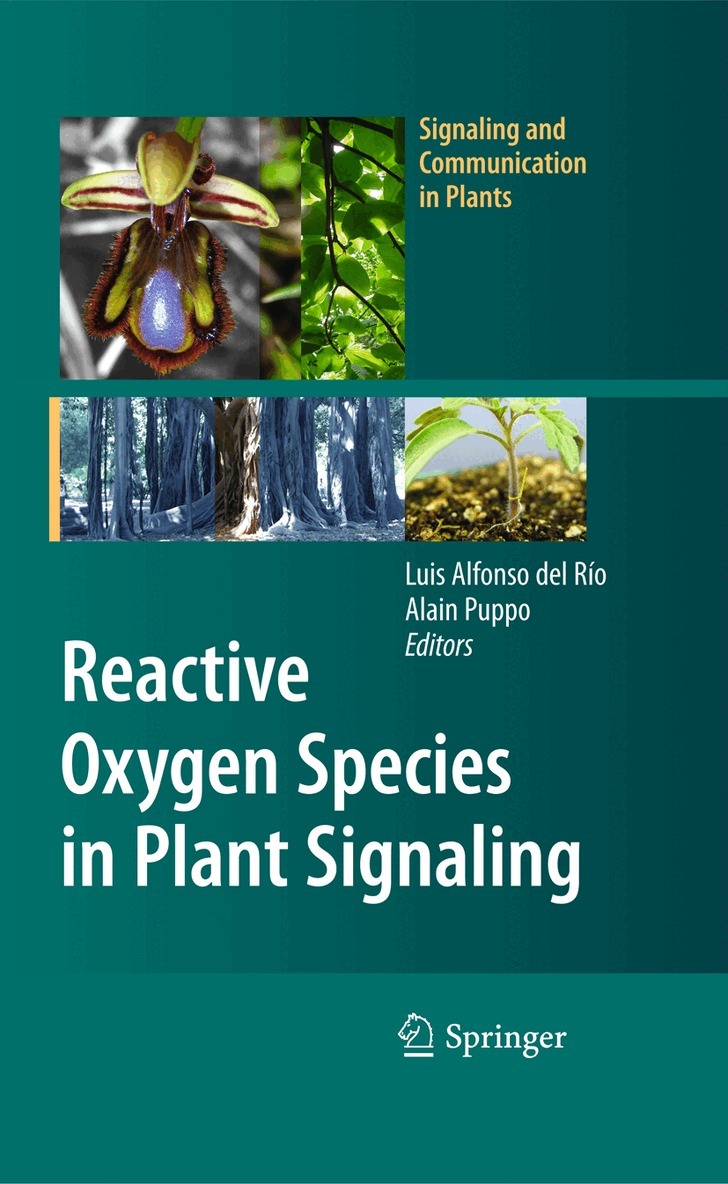
Inbunden, Engelska, 2009
Reactive Oxygen Species in Plant Signaling
Av Luis A. del Río, Alain Puppo
1643 kr
Beställningsvara. Skickas inom 10-15 vardagar. Fri frakt över 249 kr.
Beskrivning
Oxygen (O ) appeared in significant amounts in the Earth’s atmosphere over 2. 2 2 billion years ago, largely due to the evolution of photosynthesis by cyanobacteria (Halliwell 2006). The O molecule is a free radical, as it has two impaired electrons 2 that have the same spin quantum number. This spin restriction makes O prefer to 2 accept its electrons one at a time, leading to the generation of the so-called reactive oxygen species (ROS). The chemical nature of these species dictates that they can create damage in cells. This has contributed to the creation of the “oxidative stress” concept; in this view, ROS are unavoidable toxic products of O metabolism and 2 aerobic organisms have evolved antioxidant defences to protect against this tox- ity (Halliwell 1981; Fridovich 1998). Indeed, even in present-day plants, which are full of antioxidants, much of the protein synthetic activity of chloroplasts is used to replace oxidatively damaged D1 and other proteins (Halliwell 2006). Yet, the use of the “oxidative stress” term implies that ROS exert their effects through indiscriminate widespread inactivation of cellular functions. In this context, ROS must not be able to react with lipids, proteins or nucleic acids in order to avoid any damage to vital cellular components. However, genetic evidence has suggested that, in planta, purely physicoche- cal damage may be more limited than previously thought (Foyer and Noctor 2005).
Produktinformation
- Utgivningsdatum: 2009-07-08
- Mått: 155 x 235 x 21 mm
- Vikt: 548 g
- Format: Inbunden
- Språk: Engelska
- Serie: Signaling and Communication in Plants
- Antal sidor: 246
- Upplaga: 2009
- Förlag: Springer-Verlag Berlin and Heidelberg GmbH & Co. KG
- ISBN: 9783642003899
Utforska kategorier
Betyg & recensioner
0 recensioner
Inga recensioner tillgängliga.