Luis A. del Río – författare
Visar alla böcker från författaren Luis A. del Río. Handla med fri frakt och snabb leverans.
9 produkter
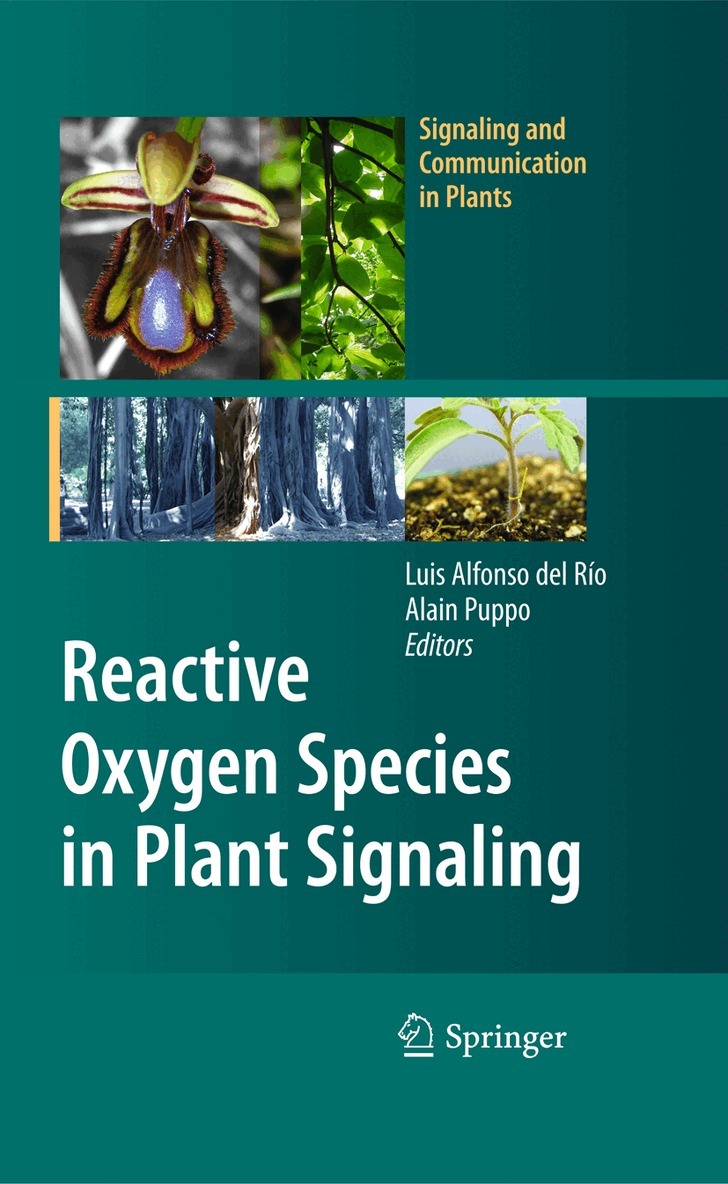
Reactive Oxygen Species in Plant Signaling
Av Luis A. del Río, Alain Puppo
Inbunden, 2009
1643 kr
Lägg i varukorg
Oxygen (O ) appeared in significant amounts in the Earth’s atmosphere over 2. 2 2 billion years ago, largely due to the evolution of photosynthesis by cyanobacteria (Halliwell 2006). The O molecule is a free radical, as it has two impaired electrons 2 that have the same spin quantum number. This …
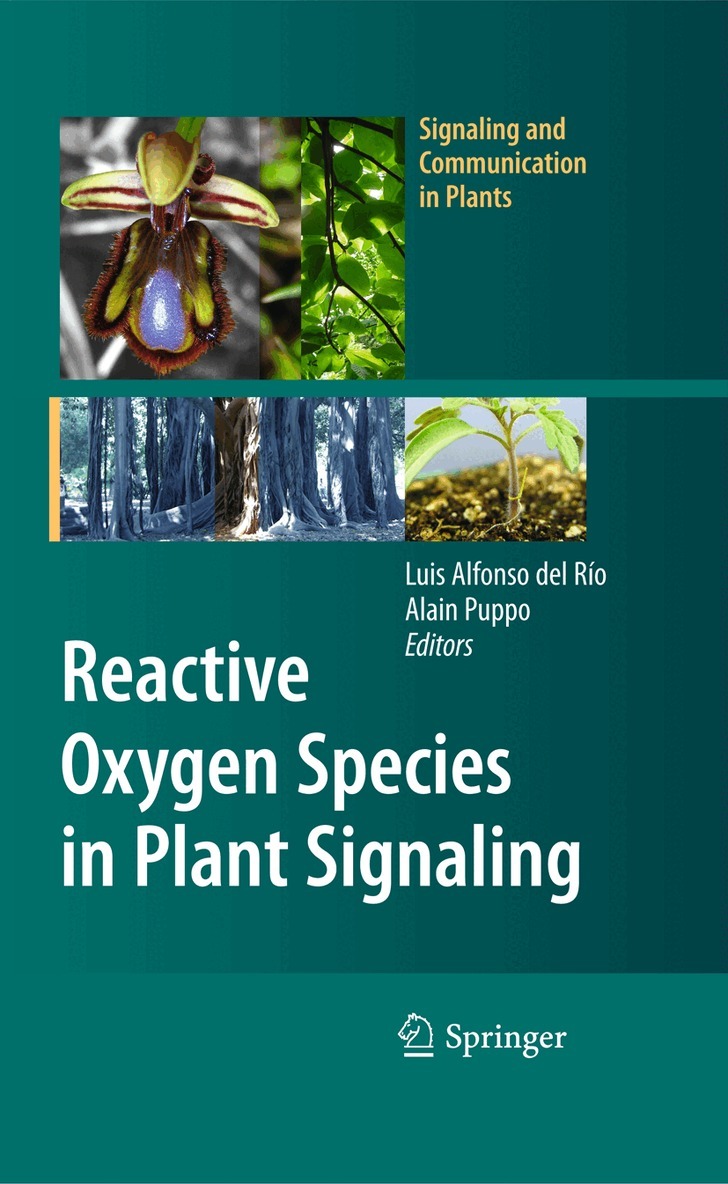
Reactive Oxygen Species in Plant Signaling
Av Alain Puppo, Luis A. del Rio
E-bok, 2009
2111 kr
Lägg i varukorg
Oxygen (O ) appeared in significant amounts in the Earth’s atmosphere over 2. 2 2 billion years ago, largely due to the evolution of photosynthesis by cyanobacteria (Halliwell 2006). The O molecule is a free radical, as it has two impaired electrons 2 that have the same spin quantum number. This …
Reactive Oxygen Species in Plant Signaling
Av Luis A. del Río, Alain Puppo
Häftad, 2011
1643 kr
Lägg i varukorg
Oxygen (O ) appeared in significant amounts in the Earth’s atmosphere over 2. 2 2 billion years ago, largely due to the evolution of photosynthesis by cyanobacteria (Halliwell 2006). The O molecule is a free radical, as it has two impaired electrons 2 that have the same spin quantum number. This …
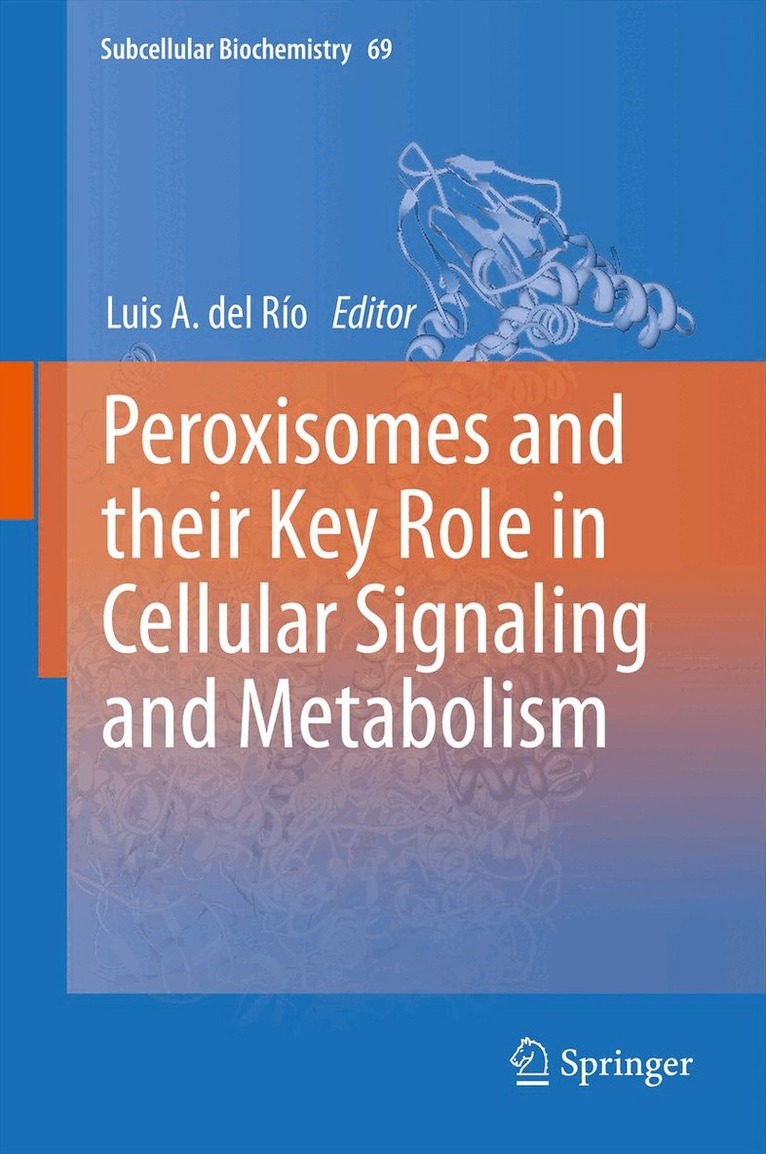
Peroxisomes and their Key Role in Cellular Signaling and Metabolism
Inbunden, 2013
1643 kr
Lägg i varukorg
Peroxisomes are a class of ubiquitous and dynamic single membrane-bounded cell organelles, devoid of DNA, with an essentially oxidative type of metabolism. In recent years it has become increasingly clear that peroxisomes are involved in a range of important cellular functions in almost all …
Peroxisomes and their Key Role in Cellular Signaling and Metabolism
E-bok, 2013
2174 kr
Lägg i varukorg
Peroxisomes are a class of ubiquitous and dynamic single membrane-bounded cell organelles, devoid of DNA, with an essentially oxidative type of metabolism. In recent years it has become increasingly clear that peroxisomes are involved in a range of important cellular functions in almost all …
Peroxisomes and their Key Role in Cellular Signaling and Metabolism
Häftad, 2015
1693 kr
Lägg i varukorg
Peroxisomes are a class of ubiquitous and dynamic single membrane-bounded cell organelles, devoid of DNA, with an essentially oxidative type of metabolism. In recent years it has become increasingly clear that peroxisomes are involved in a range of important cellular functions in almost all …
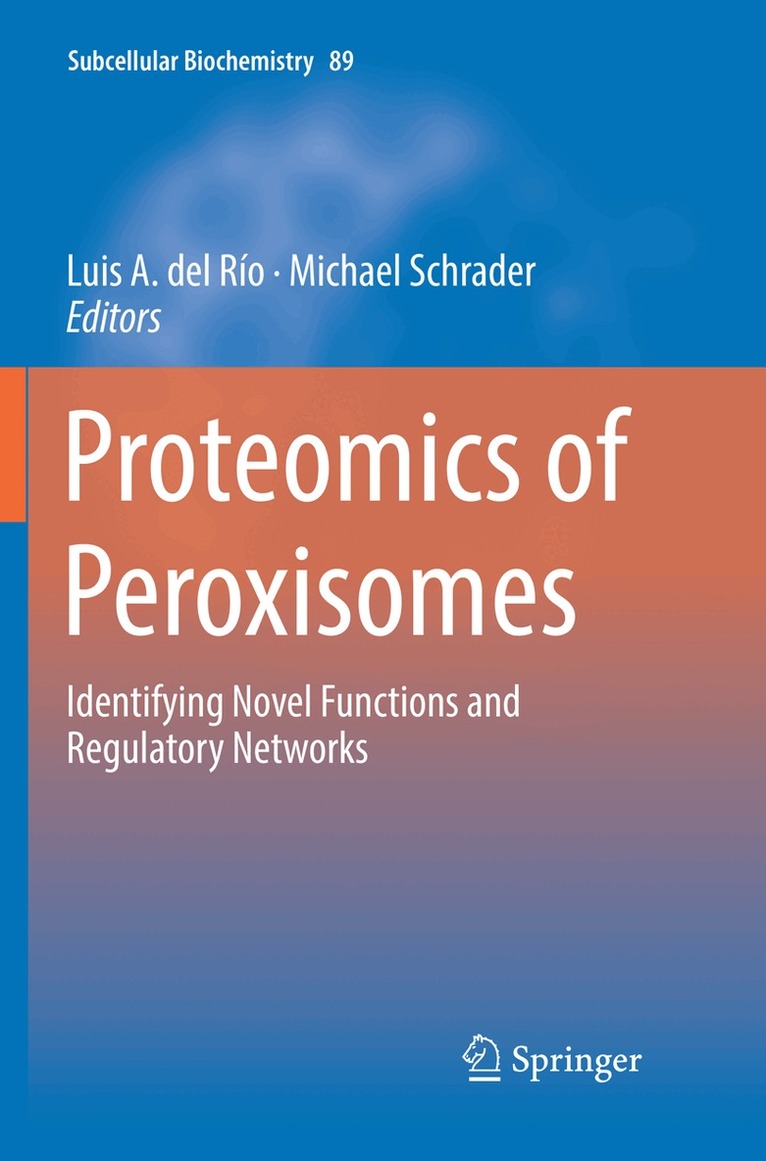
Proteomics of Peroxisomes
Identifying Novel Functions and Regulatory Networks
Av Luis A. del Río, Michael Schrader
Inbunden, 2018
2734 kr
Lägg i varukorg
This new edited volume in the Springer Subcellular Biochemistry Series presents a comprehensive, state-of-the-art overview of the proteomics of peroxisomes derived from mammalian, Drosophila, fungal, and plant origin, and contains contributions from leading experts in the field. The development of …
Proteomics of Peroxisomes
Identifying Novel Functions and Regulatory Networks
Av Michael Schrader, Luis A. del Rio
E-bok, 2018
3684 kr
Lägg i varukorg
This new edited volume in the Springer Subcellular Biochemistry Series presents a comprehensive, state-of-the-art overview of the proteomics of peroxisomes derived from mammalian, Drosophila , fungal, and plant origin, and contains contributions from leading experts in the field. The development of …
Proteomics of Peroxisomes
Identifying Novel Functions and Regulatory Networks
Av Luis A. del Río, Michael Schrader
Häftad, 2018
2734 kr
Lägg i varukorg
This new edited volume in the Springer Subcellular Biochemistry Series presents a comprehensive, state-of-the-art overview of the proteomics of peroxisomes derived from mammalian, Drosophila, fungal, and plant origin, and contains contributions from leading experts in the field. The development of …