Häftad, Engelska, 2012
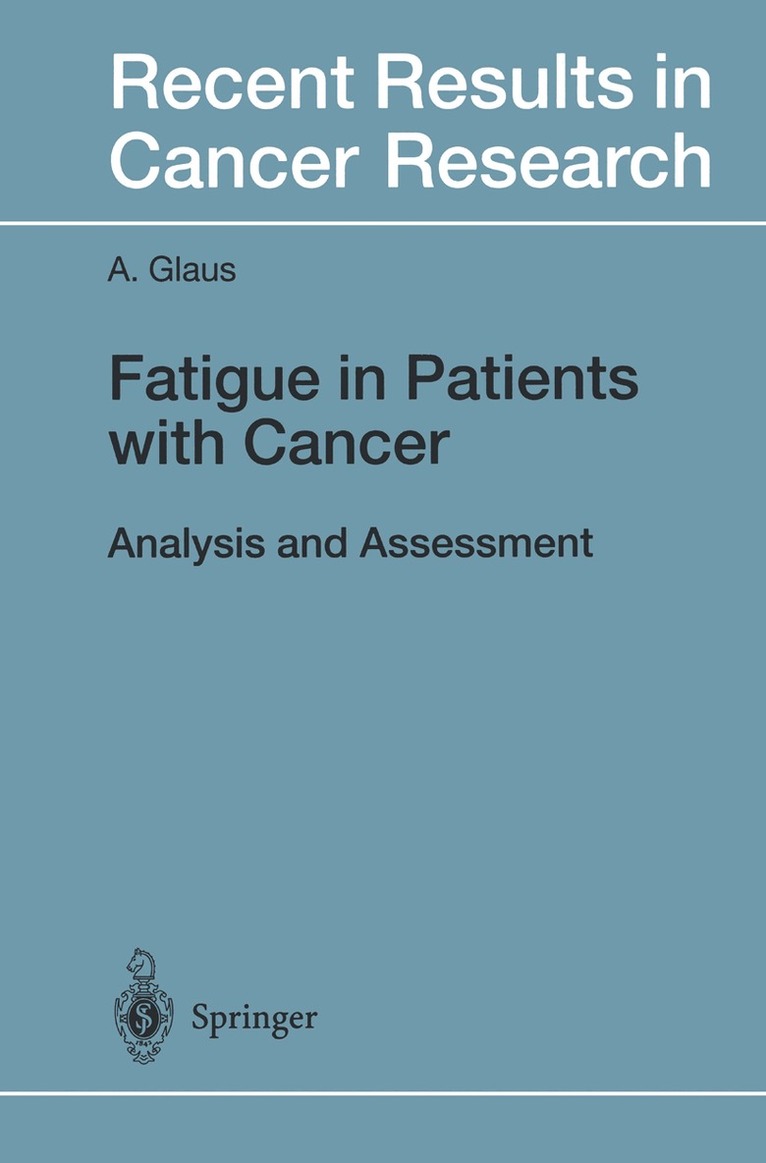
Fatigue in Patients with Cancer
Av Agnes Glaus
569 kr
Beställningsvara. Skickas inom 10-15 vardagar. Fri frakt över 249 kr.
Beskrivning
Current literature shows that there is a gap in our knowledge about how tired ness/fatigue in cancer patients should be defined and measured. Existing fa tigue-related research in cancer patients shows conceptual and measurement differences (Piper 1993). There is no continuum of tiredness/fatigue in univer sal use. What do patients mean if they fill in a visual analogue scale indicating that they feel "very tired"? Is it an indicator of general well-being, and thus an 1993)? Most articles estimate of general quality of life (Hiirny and Bernhard written by English authors use the word fatigue to identify extreme tired ness. It could be said that in the English language, tiredness that is perceived as unusual, continuing distress is fatigue rather than tiredness. In the German language, tiredness (Mudigkeit) is not primarily a term for distress attributed to disease or unusual effort. But tiredness becomes a distressing phenomenon when it no longer regulates a healthy balance between rest and activity but represents unusual, abnormal or excessive whole-body tiredness that is dis proportionate to or unrelated to activity or excessive exertion (Piper 1993). As there is no word for fatigue in the German language, the definition "extreme, unusual tiredness" (in German: extreme, unubliche Mudigkeit), is used to explain the term "fatigue:' This clarification is needed to ensure that future fatigue research conducted in German-speaking countries can be com pared with such research carried out elsewhere.
Produktinformation
- Utgivningsdatum: 2012-05-19
- Mått: 155 x 235 x 11 mm
- Vikt: 295 g
- Format: Häftad
- Språk: Engelska
- Serie: Recent Results in Cancer Research
- Antal sidor: 172
- Förlag: Springer-Verlag Berlin and Heidelberg GmbH & Co. KG
- ISBN: 9783642514685
Betyg & recensioner
0 recensioner
Inga recensioner tillgängliga.