E-bok, Engelska, 2012
Mobility in Space and Time
Av Nicole Pohl
755 kr
Läs direkt i Bokus Reader – eller ladda ned till din enhet (PDF kräver ofta zoom och scroll på små skärmar).
Beskrivning
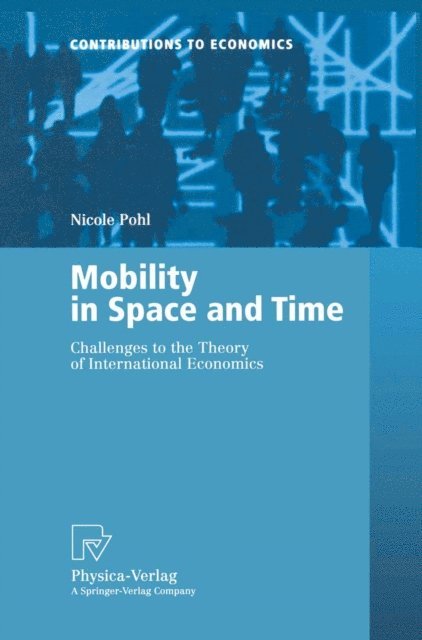
The pure theory of international economics operates within a methodological framework of (static) equilibrium modelling. This sets a number of restrictions to its capability to explain empirical economic phenomena. A huge part of the scientific discourse takes place within this equilibrium framework. This is also true for new approaches like e.g. the New Economic Geography and models operating with market structures of oligopoly. This is why it is a courageous effort to try to cross the apparently unalterable borders set by equilibrium modelling. Most certainly this cannot be an end in itself. Especially the pure theory of international economics is still in many fields lacking adequate possibilities to deal with phenomena in space and time. These two dimensions have in common that they make the introduction of specific facets of movement, change, evolution - and therefore "mobility" - possible. Besides this "dynamic" component a point of view that includes space and time challenges us to find new possibilities to model heterogeneous agents. If these ideas are not so revolutionary in their content, the attempt to introduce them into a formal model is a big challenge. Moreover, it poses the question about the role of a theory of "international" economics in such a wider framework.
Produktinformation
- Utgivningsdatum: 2012-12-06
- Språk: Engelska
- Filformat: PDF
- Kopieringsskydd: LCP
- ISBN: 9783642576089
- Förlag: Physica-Verlag HD
Utforska kategorier
Betyg & recensioner
0 recensioner
Inga recensioner tillgängliga.