• Fri frakt över 249 kr
  • •
  • Snabba leveranser
  • •
  • Billiga böcker
Kundservice

Du är på sajten för privatpersoner.

Företag, bibliotek eller offentlig verksamhet?

Du handlar på classic.bokus.com, där alla dina funktioner finns intakta.
Till classic.bokus.com
Bokus logotyp. Gå till startsidan.
  • Erbjudanden
  • Nyheter
  • Student
  • Topplistor
  • Barn & ungdom
  • Bokus Play
  • E-böcker
  • Pocketböcker
  • Spel & pussel

Må bättre, för mindre! Upp till 50% rabatt på hälsoböcker

Sidfot

Mina sidor

    Hjälp

    • Kundservice
    • Vanliga frågor och svar
    • Frakt och leverans
    • Retur vid ångerrätt
    • Reklamera vara
    • Betalning
    • Köpvillkor
    • Allmänna villkor
    • Information om webbplatsens tillgänglighet

    Om Bokus

    • Om oss
    • Pressrum
    • För studenter
    • För företag
    • För bibliotek och offentlig verksamhet
    • För leverantörer
    • Hållbarhet

    Populärt

    • Aktuella erbjudanden
    • Presentkort
    • Studentlitteratur
    • Nya böcker
    • Topplistor
    • Signerade böcker
    • Engelska böcker

    Inspiration

    • Boktips
    • BookTok
    • Populära bokserier
    • Barnbokskaraktärer
    • Populära författare
    Logotyp för Bokus
    Följ oss på Facebook (extern länk)Följ oss på Instagram (extern länk)Följ oss på YouTube (extern länk)Följ oss på TikTok (extern länk)
    bokus @ CookiesAnpassa cookiesIntegritetspolicyKöpvillkor
    Till Citymail hemsida (extern länk)Till Budbee hemsida (extern länk)Till Postnord hemsida (extern länk)Till Schenker hemsida (extern länk)Till Early Bird hemsida (extern länk)Till Walleys hemsida (extern länk)
    1. Naturvetenskap och teknik
    2. Matematik och naturvetenskap
    3. Kemi
    4. Organisk kemi

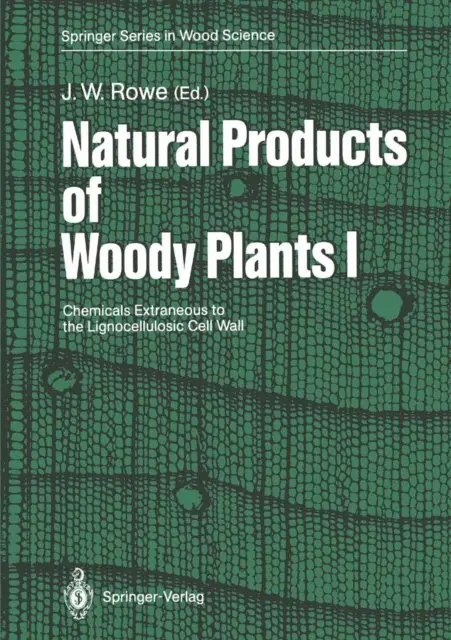
    Natural Products of Woody Plants

    Chemicals Extraneous to the Lignocellulosic Cell Wall

    AvJohn W. Rowe

    E-bok
    PDF, Engelska, 2012

    2 049 kr

    Läs direkt i Bokus Reader – eller ladda ned till din enhet (PDF kräver ofta zoom och scroll på små skärmar).

    Beskrivning

    Wood as found in trees and bushes was of primary importance to ancient humans in their struggle to control their environment. Subsequent evolution through the Bronze and Iron Ages up to our present technologically advanced society has hardly diminished the importance of wood. Today, its role as a source of paper products, furniture, building materials, and fuel is still of major significance. Wood consists of a mixture of polymers, often referred to as lignocellulose. The cellulose micro fibrils consist of an immensely strong, linear polymer of glucose. They are associated with smaller, more complex polymers composed of various sugars called hemicelluloses. These polysaccharides are embedded in an amorphous phenylpropane polymer, lignin, creating a remarkably strong com­ posite structure, the lignocellulosic cell wall. Wood also contains materials that are largely extraneous to this lignocellulosic cell wall. These extracellular substances can range from less than 1070 to about 35% of the dry weight of the wood, but the usual range is 2% -10%. Among these components are the mineral constituents, salts of calcium, potassium, sodium, and other metals, particularly those present in the soil where the tree is growing. Some of the extraneous components of wood are too insoluble to be ex­ tracted by inert solvents and remain to give extractive-free wood its color; very often these are high-molecular-weight polyphenolics.

    Produktinformation

    • Utgivningsdatum:2012-12-06
    • Språk:Engelska
    • Filformat:PDF
    • Kopieringsskydd:LCP
    • ISBN:9783642740756
    • Förlag:Springer Berlin Heidelberg

    Utforska kategorier

    • Organisk kemi inom Naturvetenskap och teknik
    • Biovetenskap inom Naturvetenskap och teknik
    • Biokemi inom Naturvetenskap och teknik