• Fri frakt över 249 kr
  • •
  • Snabba leveranser
  • •
  • Billiga böcker
Kundservice

Du är på sajten för privatpersoner.

Företag, bibliotek eller offentlig verksamhet?

Du handlar på classic.bokus.com, där alla dina funktioner finns intakta.
Till classic.bokus.com
Bokus logotyp. Gå till startsidan.
  • Erbjudanden
  • Nyheter
  • Student
  • Topplistor
  • Barn & ungdom
  • Bokus Play
  • E-böcker
  • Pocketböcker
  • Spel & pussel

10% rabatt på allt med kod: NYSTART10 →

Sidfot

Mina sidor

    Hjälp

    • Kundservice
    • Vanliga frågor och svar
    • Frakt och leverans
    • Retur vid ångerrätt
    • Reklamera vara
    • Betalning
    • Köpvillkor
    • Allmänna villkor
    • Information om webbplatsens tillgänglighet

    Om Bokus

    • Om oss
    • Pressrum
    • För studenter
    • För företag
    • För bibliotek och offentlig verksamhet
    • För leverantörer
    • Hållbarhet

    Populärt

    • Aktuella erbjudanden
    • Presentkort
    • Studentlitteratur
    • Nya böcker
    • Topplistor
    • Signerade böcker
    • Engelska böcker

    Inspiration

    • Boktips
    • BookTok
    • Populära bokserier
    • Barnbokskaraktärer
    • Populära författare
    Logotyp för Bokus
    Följ oss på Facebook (extern länk)Följ oss på Instagram (extern länk)Följ oss på YouTube (extern länk)Följ oss på TikTok (extern länk)
    bokus @ CookiesAnpassa cookiesIntegritetspolicyKöpvillkor
    Till Citymail hemsida (extern länk)Till Budbee hemsida (extern länk)Till Postnord hemsida (extern länk)Till Schenker hemsida (extern länk)Till Early Bird hemsida (extern länk)Till Walleys hemsida (extern länk)
    1. Ekonomi och Ledarskap
    2. Nationalekonomi

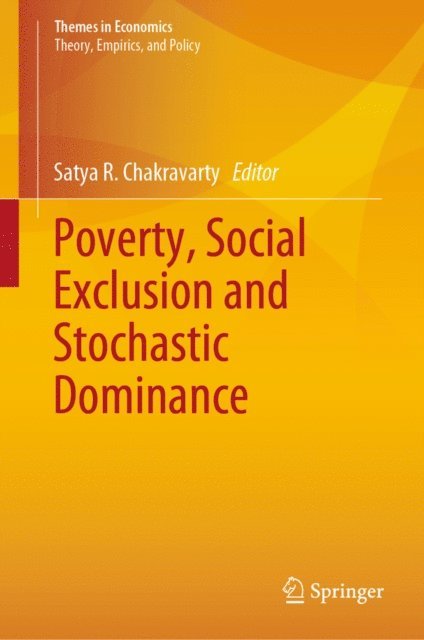
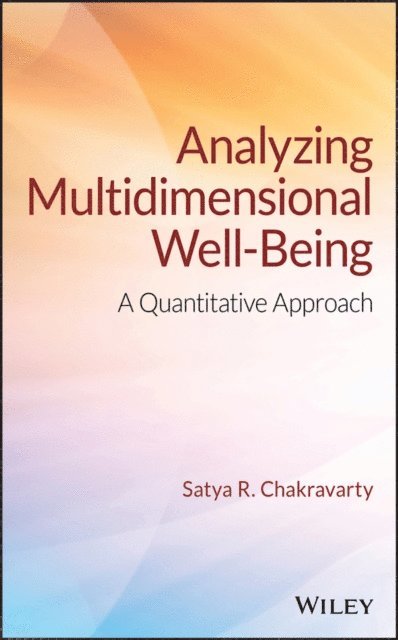
    Ethical Social Index Numbers

    AvSatya R. Chakravarty

    Häftad, Engelska, 2011

    1 086 kr

    Beställningsvara. Skickas inom 10-15 vardagar. Fri frakt över 249 kr.

    Fler format och utgåvor

    E-bok

    1 416 kr

    Beskrivning

    In this book we are concerned with income profile based ethical social index numbers. An ethical index is designed from an explicit social evaluation function with a specific purpose in mind. For example, an ethical relative inequality index determines the fraction of total income that could be saved without any welfare loss if society distri­ buted incomes equally. Ethical indices contrast with descriptive indices which are de­ rived without using any concept of social welfare. Needless to say, ethical indices are not meant to supplant descriptive indices, rather they are constructed with different aims. We begin Chapter 1 with a formal discussion on the concept of a social evaluation function. In the main body of this chapter we consider the problem of ranking income profiles using a social evaluation function. In Chapter 2 we set about analyzing alter­ native approaches to the measurement of inequality. In Chapter 3 we focus our attention on the Gini index, the most frequently used index of inequality, and its extensions. In Chapter 4 we formulate the notion of an ethical distance function that measures welfare of one population relative to another. Chapter 5 is devoted to quantifications and discussions of alternative definitions of relative deprivation put forward by Runci­ man(1966).

    Produktinformation

    • Utgivningsdatum:2011-12-06
    • Mått:170 x 242 x 18 mm
    • Vikt:564 g
    • Format:Häftad
    • Språk:Engelska
    • Antal sidor:309
    • Förlag:Springer-Verlag Berlin and Heidelberg GmbH & Co. KG
    • ISBN:9783642755040

    Utforska kategorier

    • Nationalekonomi inom Ekonomi och Ledarskap
    • Matematisk statistik inom Naturvetenskap och teknik

    Innehållsförteckning

    • 1: On Quasi-Orderings of Income Profiles.- 1.1 Introduction.- 1.2 Social Evaluation (Welfare) Functions and their Arguments.- 1.3 Some Definitions.- 1.4 The Lorenz Quasi-Ordering.- 1.5 Some Alternative Quasi-Orderings.- 1.6 Concluding Remarks.- 2: Ethical Indices of Inequality.- 2.1 Introduction.- 2.2 Postulates for the Selection of an Index of Inequality.- 2.3 Cardinally Significant Ethical Indices of Relative Inequality.- 2.4 Cardinally Significant Ethical Indices of Absolute and Intermediate Inequality.- 2.5 Inequality as an Ordinal Concept.- 2.6 Decomposition of Inequality Indices by Population Subgroups and by Factor Components.- 2.7 Concluding Remarks.- 3: The Gini Indices of Inequality.- 3.1 Introduction.- 3.2 A Formal Definition of the Lorenz Curve for a Continuum of Population.- 3.3 A General Definition of the Lorenz Curve.- 3.4 An Extension of the Gini Index of Relative Inequality.- 3.5 Alternative Generalisations of the Gini Index.- 3.6 Empirical Estimation of Inequality Indices from Grouped Data.- 3.7 Concluding Remarks.- 4: Ethical Indices of Distance Between Income Profiles.- 4.1 Introduction.- 4.2 Ethically Coherent Distance Functions.- 4.3 A Characterisation Theorem.- 4.4 Concluding Remarks.- 5: The Measurement of Relative Deprivation.- 5.1 Introduction.- 5.2 A Simple Index of Relative Deprivation and the Implied Welfare Ordering.- 5.3 Ethical Indices of Relative Deprivation.- 5.4 Concluding Remarks.- 6: Ethically Flexible Indices of Poverty.- 6.1 Introduction.- 6.2 Properties for an Index of Poverty.- 6.3 Relative Indices of Poverty.- 6.4 Absolute Indices of Poverty.- 6.5 Concluding Remarks.- 7: Additively Decomposable Indices of Poverty.- 7.1 Introduction.- 7.2 Decomposability.- 7.3 Additively Decomposable Indices of Poverty.- 7.4 Empirical Estimationof Poverty Indices from Grouped Data.- 7.5 Concluding Remarks.- 8: Measurement of Tax Progressivity and Horizontal Inequity.- 8.1 Introduction.- 8.2 Indices of Local Progression.- 8.3 An Ethical Index of Global Tax Progressivity.- 8.4 Ethical Indices for the Measurement of Horizontal Inequity.- 8.5 Alternative Indices of Tax Progressivity and Horizontal Inequity.- 8.6 Concluding Remarks.- 9: Ethical Indices of Income Mobility.- 9.1 Introduction.- 9.2 Ethical Indices of Relative Mobility.- 9.3 Alternative Concepts of Mobility.- 9.4 Concluding Remarks.- Extended Bibliography.