Häftad, Engelska, 2011
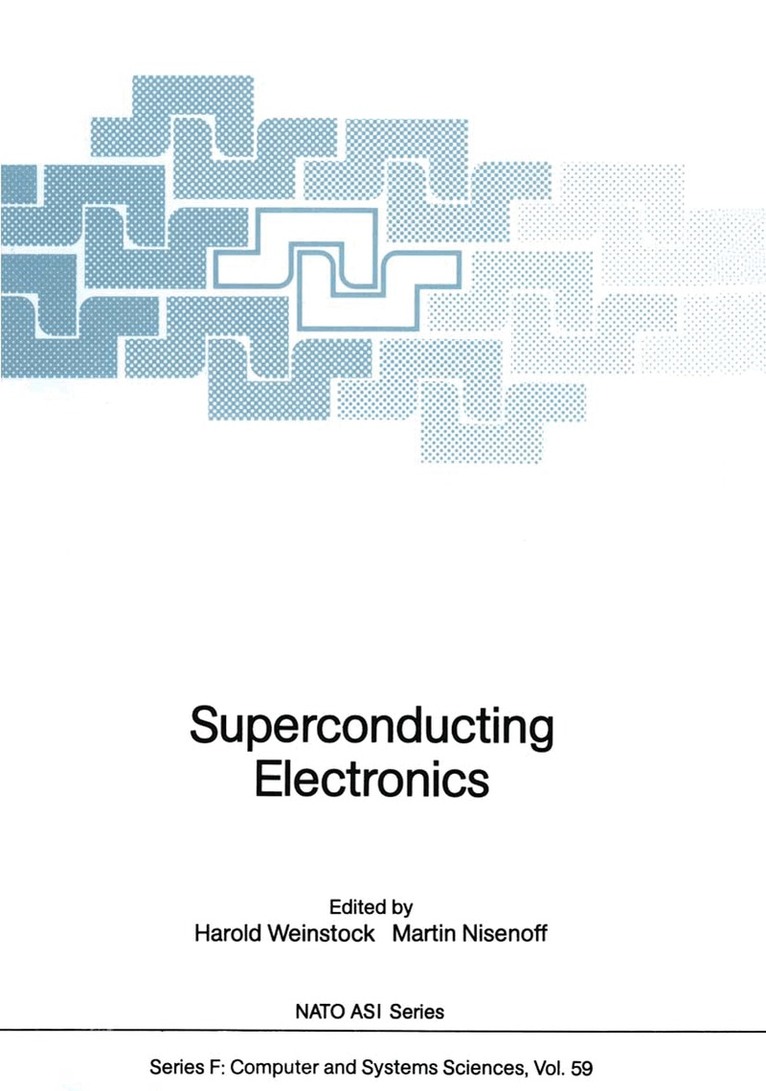
Superconducting Electronics
Av Harold Weinstock, Martin Nisenoff
1111 kr
Skickas inom 10-15 vardagar
Beskrivning
The genesis of the NATO Advanced Study Institute (ASI) upon which this volume is based, occurred during the summer of 1986 when we came to the realization that there had been significant progress during the early 1980's in the field of superconducting electronics and in applications of this technology. Despite this progress, there was a perception among many engineers and scientists that, with the possible exception of a limited number of esoteric fundamental studies and applications (e.g., the Josephson voltage standard or the SQUID magnetometer), there was no significant future for electronic systems incorporating superconducting elements. One of the major reasons for this perception was the aversion to handling liquid helium or including a closed-cycle helium liquefier. In addition, many critics felt that IBM's cancellation of its superconducting computer project in 1983 was "proof" that superconductors could not possibly compete with semiconductors in high-speed signal processing. From our perspective, the need for liquid helium was outweighed by improved performance, i. e., higher speed, lower noise, greater sensitivity and much lower power dissipation. For many commercial, medical, scientific and military applications, these attributes can lead to either enhanced capability (e.g., compact real-time signal processing) or measurements that cannot be made using any other technology (e.g., SQUID magnetometry to detect neuromagnetic activity).
Produktinformation
- Utgivningsdatum: 2011-12-08
- Mått: 170 x 242 x 25 mm
- Vikt: 781 g
- Format: Häftad
- Språk: Engelska
- Antal sidor: 441
- Förlag: Springer-Verlag Berlin and Heidelberg GmbH & Co. KG
- Serie: NATO ASI Subseries F:
- ISBN: 9783642838873
Utforska kategorier
Betyg & recensioner
0 recensioner
Inga recensioner tillgängliga.