• Fri frakt över 249 kr
  • •
  • Snabba leveranser
  • •
  • Billiga böcker
Kundservice

Du är på sajten för privatpersoner.

Företag, bibliotek eller offentlig verksamhet?

Du handlar på classic.bokus.com, där alla dina funktioner finns intakta.
Till classic.bokus.com
Bokus logotyp. Gå till startsidan.
  • Erbjudanden
  • Nyheter
  • Student
  • Topplistor
  • Barn & ungdom
  • Bokus Play
  • E-böcker
  • Pocketböcker
  • Spel & pussel

Må bättre, för mindre! Upp till 50% rabatt på hälsoböcker

Sidfot

Mina sidor

    Hjälp

    • Kundservice
    • Vanliga frågor och svar
    • Frakt och leverans
    • Retur vid ångerrätt
    • Reklamera vara
    • Betalning
    • Köpvillkor
    • Allmänna villkor
    • Information om webbplatsens tillgänglighet

    Om Bokus

    • Om oss
    • Pressrum
    • För studenter
    • För företag
    • För bibliotek och offentlig verksamhet
    • För leverantörer
    • Hållbarhet

    Populärt

    • Aktuella erbjudanden
    • Presentkort
    • Studentlitteratur
    • Nya böcker
    • Topplistor
    • Signerade böcker
    • Engelska böcker

    Inspiration

    • Boktips
    • BookTok
    • Populära bokserier
    • Barnbokskaraktärer
    • Populära författare
    Logotyp för Bokus
    Följ oss på Facebook (extern länk)Följ oss på Instagram (extern länk)Följ oss på YouTube (extern länk)Följ oss på TikTok (extern länk)
    bokus @ CookiesAnpassa cookiesIntegritetspolicyKöpvillkor
    Till Citymail hemsida (extern länk)Till Budbee hemsida (extern länk)Till Postnord hemsida (extern länk)Till Schenker hemsida (extern länk)Till Early Bird hemsida (extern länk)Till Walleys hemsida (extern länk)
    1. Djur och Natur
    2. Naturböcker
    3. Växtböcker

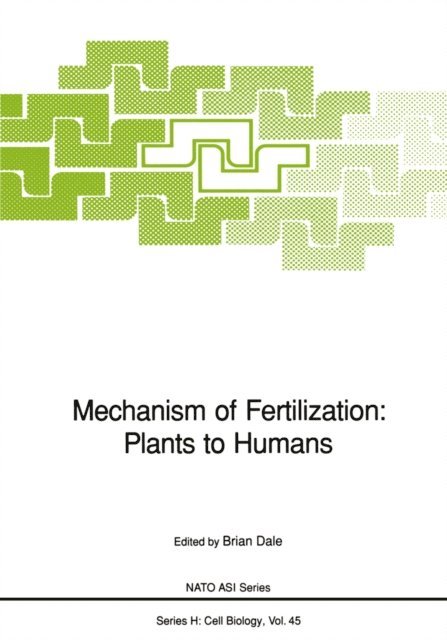
    Mechanism of Fertilization: Plants to Humans

    AvBrian Dale,Brian Dale

    Häftad, Engelska, 2011

    Del i serien Nato ASI Subseries H:

    1 119 kr

    Beställningsvara. Skickas inom 10-15 vardagar. Fri frakt över 249 kr.

    Beskrivning

    The majority of scientists interested in fertilization and early developmental processes will undoubtably have encountered the works of Alberto Monroy at some time in their careers. Alberto's contribution to this field spans oogenesis to embryogenesis, where he used physiological, biochemical and morphological tools to answer a number of basic problems in cell biology. This multi-disciplinary approach, together with his remarkable intellectual flexibility and humour has had an enormous impact on this field and all those fortunate enough to have worked with him. The chapters in this book have been divided into four sections. The initial presentations revolve around late events of gameteogenesis, that lead to a physiologically mature gamete. Probably the most exciting area for research at the moment is the identification of the cytoplasmic mechanisms responsible for the meiotic arrest of oocytes and the factors responsible for initiating their maturation (Chapters 3 and 4). Less is known about the physiological changes in the male gamete in preparation for fertilization and this may be identified as a major area for future research. Although comparable data for the plant kingdom is presently restricted to studies on marine algae, new techniques for isolating angiosperm gametes (Chapters 1 and 17) promise rapid advances in this field. The second section looks at the events and molecules involved in gamete recognition, binding and fusion. One of the most controversial topics is when does sperm-egg fusion actually occur (Chapter 14).

    Produktinformation

    • Utgivningsdatum:2011-12-30
    • Mått:170 x 242 x 40 mm
    • Vikt:1 230 g
    • Format:Häftad
    • Språk:Engelska
    • Serie:Nato ASI Subseries H:
    • Antal sidor:708
    • Förlag:Springer-Verlag Berlin and Heidelberg GmbH & Co. KG
    • ISBN:9783642839672

    Utforska kategorier

    • Växtböcker inom Djur och Natur
    • Botanik inom Naturvetenskap och teknik
    • Cellbiologi inom Naturvetenskap och teknik

    Innehållsförteckning

    • General Introduction.- Late Stages in Gametogenesis.- 1 Isolation and characterization of the angiosperm gamete.- 2 The Cytoskeleton during pollen tube growth and sperm cell formation.- 3 The Cytostatic Factor (CSF) that causes metaphase arrest in amphibian eggs.- 4 Intrafollicular mechanisms mediating oocyte maturation.- 5 Tyrosine phosphorylation of MPF and membrane proteins during meiotic maturation of starfish oocytes.- 6 Protein synthesis and protein phosphorylation as regulators of MPF activity.- 7 Control of recruitment of preantral follicles in mammalian ovaries.- 8 Ultrastructure and AG staining of echinoderm spermatogenesis.- 9 Cell specific gene expression in mouse testis.- 10 Regulation of sperm motility by osmotic pressure.- 11 Dynamic changes in the perinuclear matrix during spermiogenesis and sperm maturation in the mouse.- 12 Reactive oxygen species and human sperm function.- Sperm Egg Interaction.- 13 Fertilization in Fucus: exploring the gamete cell surfaces with monoclonal antibodies.- 14 Gamete interaction and the initiation of egg activation in sea urchins.- 15 Self-incompatibility in Brassica: The nature and role of female glycoproteins.- 16 Induction of the acrosome reaction in starfish.- 17 New data and concepts in angiosperm fertilization.- 18 Structure and function of egg-associated peptides of sea urchins.- 19 Sperm-egg interaction in bivalves.- 20 Gamete interaction in ascidians: sperm binding and penetration through the vitelline coat.- 21 Cellular and molecular elements of mammalian fertilization.- 22 Micromanipulation in the study of sperm-egg interactions.- 23 Human sperm-oocyte fusion.- 24 Micro-insemination sperm transfer (M.I.S.T.) into human oocytes and embryos.- 25 Abnormalities of the human embryonic zona pellucida.- Egg Activation.- 26 The roles of intermembrane calcium in polarizing and activating eggs.- 27 Polyspermy blocks in fucoid algae and the occurence of polyspermy in Nature.- 28 How does a sperm activate a sea urchin egg?.- 29 The behaviour of sperm cells in cereal wide hybrids.- 30 Calcium signals during fertilization and ooplasmic segregation in the ascidian egg.- 31 Soluble sperm factors, electrical events and egg activation.- 32 Can the handling of oocytes influence the success of therapeutic in vitro fertilization?.- 33 Is the egg activation-induced intracellular pH increase necessary for the embryonic development of Xenopus laevis (Anuran Amphibian)?.- 34 The distribution and exocytosis of cortical granules in the mammal.- 35 Receptors, G-proteins and activation of the amphibian egg.- 36 Electrical maturation of the mouse oocyte.- 37 The contribution of Discoglossus pictus fertilization in the study of amphibian sperm-egg interaction.- Cytoplasmic Segregation in the Early Embryo.- 38 Intracellular signalling during fertilization and polarization in Fucoid algae.- 39 Mechanism of dorsoventral axis determination in the ascidian embryo.- 40 The insect oocyte: fertilization, activation and cytoplasmic dynamics.- 41 Fertilization in Ctenophores.- 42 The sea urchin egg: an old and new model.- 43 Collagen-binding proteins in sea urchin eggs and embryos.- 44 Evidence which supports the presence of stored messenger ribonucleoprotein (mRNP) in the unfertilized eggs of Fucus serratus.- 45 Dorsal specification in the fertilized frog egg.- 46 The cytoskeleton and polyspermy in sea urchin eggs.- 47 Cell differentiation in the mouse preimplantation embryo.- 48 Fertilization and sex determination in the Rhizocephala (Cirripedia, Crustacea).