• Fri frakt över 249 kr
  • •
  • Snabba leveranser
  • •
  • Billiga böcker
Kundservice

Du är på sajten för privatpersoner.

Företag, bibliotek eller offentlig verksamhet?

Du handlar på classic.bokus.com, där alla dina funktioner finns intakta.
Till classic.bokus.com
Bokus logotyp. Gå till startsidan.
  • Erbjudanden
  • Nyheter
  • Student
  • Topplistor
  • Barn & ungdom
  • Bokus Play
  • E-böcker
  • Pocketböcker
  • Spel & pussel

10% rabatt på allt med kod: NYSTART10 →

Sidfot

Mina sidor

    Hjälp

    • Kundservice
    • Vanliga frågor och svar
    • Frakt och leverans
    • Retur vid ångerrätt
    • Reklamera vara
    • Betalning
    • Köpvillkor
    • Allmänna villkor
    • Information om webbplatsens tillgänglighet

    Om Bokus

    • Om oss
    • Pressrum
    • För studenter
    • För företag
    • För bibliotek och offentlig verksamhet
    • För leverantörer
    • Hållbarhet

    Populärt

    • Aktuella erbjudanden
    • Presentkort
    • Studentlitteratur
    • Nya böcker
    • Topplistor
    • Signerade böcker
    • Engelska böcker

    Inspiration

    • Boktips
    • BookTok
    • Populära bokserier
    • Barnbokskaraktärer
    • Populära författare
    Logotyp för Bokus
    Följ oss på Facebook (extern länk)Följ oss på Instagram (extern länk)Följ oss på YouTube (extern länk)Följ oss på TikTok (extern länk)
    bokus @ CookiesAnpassa cookiesIntegritetspolicyKöpvillkor
    Till Citymail hemsida (extern länk)Till Budbee hemsida (extern länk)Till Postnord hemsida (extern länk)Till Schenker hemsida (extern länk)Till Early Bird hemsida (extern länk)Till Walleys hemsida (extern länk)
    1. Ekonomi och Ledarskap
    2. Företagsekonomi
    3. Affärsförhandlingar

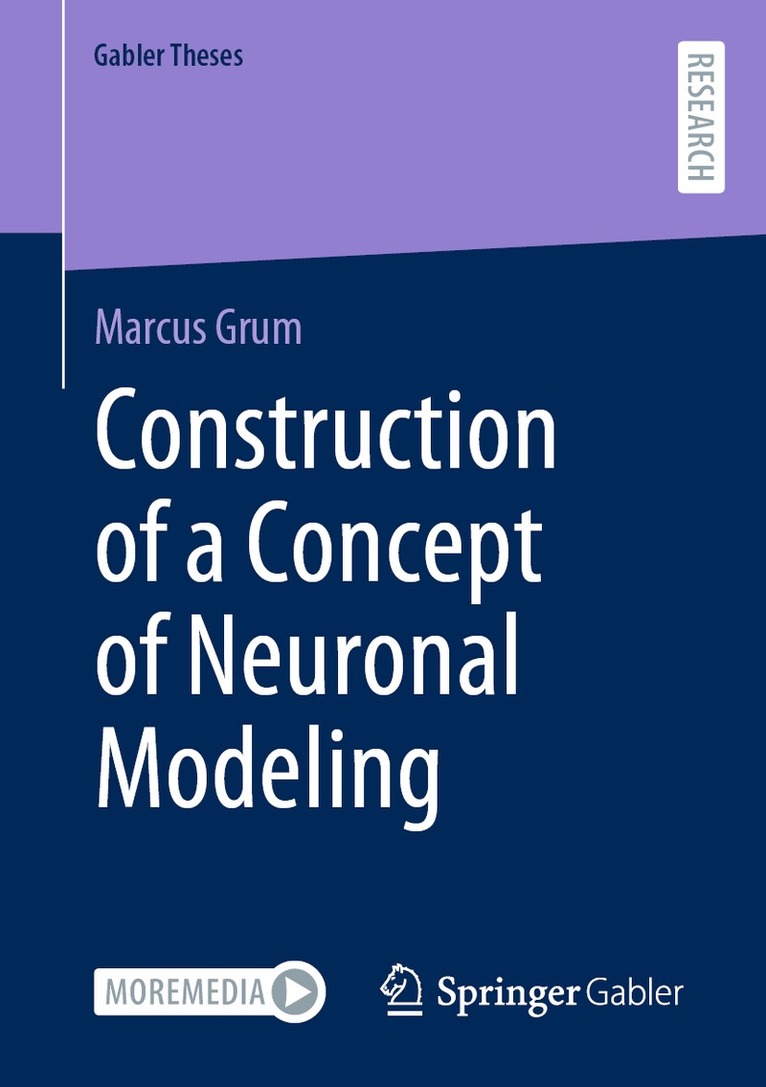
    Construction of a Concept of Neuronal Modeling

    AvMarcus Grum

    Häftad, Engelska, 2022

    Del i serien Gabler Theses

    1 563 kr

    Beställningsvara. Skickas inom 10-15 vardagar. Fri frakt över 249 kr.

    Fler format och utgåvor

    E-bok

    1 947 kr

    Beskrivning

    The business problem of having inefficient processes, imprecise process analyses and simulations as well as non-transparent artificial neuronal network models can be overcome by an easy-to-use modeling concept. With the aim of developing a flexible and efficient approach to modeling, simulating and optimizing processes, this paper proposes a flexible Concept of Neuronal Modeling (CoNM). The modeling concept, which is described by the modeling language designed and its mathematical formulation and is connected to a technical substantiation, is based on a collection of novel sub-artifacts. As these have been implemented as a computational model, the set of CoNM tools carries out novel kinds of Neuronal Process Modeling (NPM), Neuronal Process Simulations (NPS) and Neuronal Process Optimizations (NPO). The efficacy of the designed artifacts was demonstrated rigorously by means of six experiments and a simulator of real industrial production processes.

    Produktinformation

    • Utgivningsdatum:2022-02-26
    • Mått:148 x 210 x 49 mm
    • Vikt:1 144 g
    • Format:Häftad
    • Språk:Engelska
    • Serie:Gabler Theses
    • Antal sidor:848
    • Förlag:Springer Fachmedien Wiesbaden
    • ISBN:9783658359980

    Utforska kategorier

    • Affärsförhandlingar inom Ekonomi och Ledarskap
    • Affärsapplikationer inom Data och IT

    Mer om författaren

    About the authorDr.-Ing. Marcus Grum conducts research on neural networks and knowledge processing. The explainable and ethically justifiable integration of artificial intelligence into economic contexts is a major challenge and the subject of his research. He has worked on numerous research and customer projects in the areas of knowledge management, business process management, and artificial intelligence. He graduated from the studies of computer science as well as economics at the University of Potsdam, the Technical University of Berlin and the Humboldt University of Berlin.

    Innehållsförteckning

    • Introduction.- Problem Analysis and Problem Statement.- Objectives and Methodology.- Design.- Implementation.- Demonstration.- Evaluation.- Concluding Remark.