Häftad, Engelska, 2016
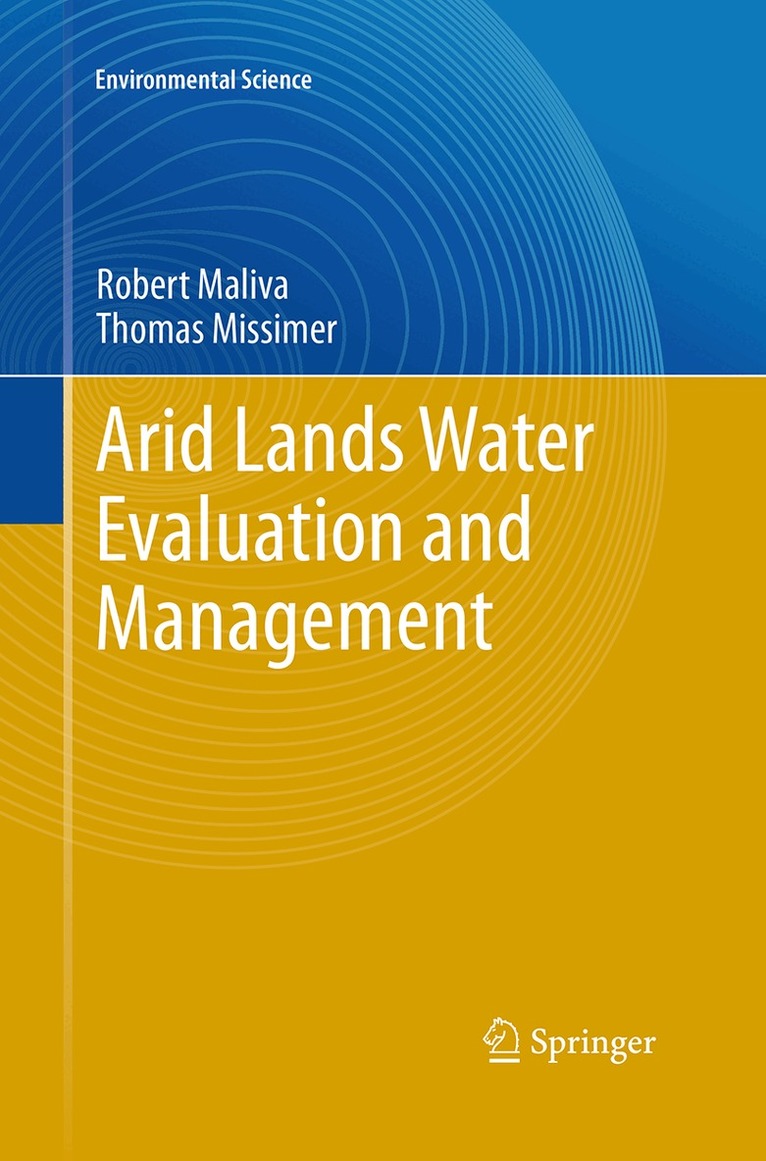
Arid Lands Water Evaluation and Management
Av Robert Maliva, Thomas Missimer
2385 kr
Beställningsvara. Skickas inom 11-20 vardagar. Fri frakt över 249 kr.
Beskrivning
A large part of the global population lives in arid lands which have low rainfall and often lack the water required for sustainable population and economic growth. This book presents a comprehensive description of the hydrogeology and hydrologic processes at work in arid lands. It describes the techniques that can be used to assess and manage the water resources of these areas with an emphasis on groundwater resources, including recent advances in hydrologic evaluation and the differences between how aquifer systems behave in arid lands versus more humid areas. Water management techniques are described and summarized to show how a more comprehensive approach to water management is required in these areas, including the need to be aware of cultural sensitivities and conditions unique to many arid regions. The integration of existing resources with the addition of new water sources, such as desalination of brackish water and seawater, along with reusing treated wastewater, will be required to meet future water supply needs. Also, changing climatic conditions will force water management systems to be more robust so that future water supply demands can be met as droughts become more intense and rainfall events become more intense. A range of water management techniques are described and discussed in order to illustrate the methods for integrating these measures within the context of arid lands conditions.
Produktinformation
- Utgivningsdatum: 2016-08-23
- Mått: 155 x 235 x undefined mm
- Vikt: 1 638 g
- Format: Häftad
- Språk: Engelska
- Serie: Environmental Science and Engineering
- Antal sidor: 1 076
- Förlag: Springer-Verlag Berlin and Heidelberg GmbH & Co. KG
- ISBN: 9783662521908
Utforska kategorier
Betyg & recensioner
0 recensioner
Inga recensioner tillgängliga.