• Fri frakt över 249 kr
  • •
  • Snabba leveranser
  • •
  • Billiga böcker
Kundservice

Du är på sajten för privatpersoner.

Företag, bibliotek eller offentlig verksamhet?

Du handlar på classic.bokus.com, där alla dina funktioner finns intakta.
Till classic.bokus.com
Bokus logotyp. Gå till startsidan.
  • Erbjudanden
  • Student
  • Topplistor
  • Barn & ungdom
  • Bokus Play
  • E-böcker
  • Ljudböcker
  • Pocketböcker
  • Spel och pussel

Pocketfynda! Hundratals böcker för 49 kr/st →

Sidfot

Mina sidor

    Hjälp

    • Kundservice
    • Vanliga frågor och svar
    • Frakt och leverans
    • Retur vid ångerrätt
    • Reklamera vara
    • Betalning
    • Köpvillkor
    • Allmänna villkor
    • Information om webbplatsens tillgänglighet

    Om Bokus

    • Om oss
    • Pressrum
    • För studenter
    • För företag
    • För bibliotek och offentlig verksamhet
    • För leverantörer
    • Hållbarhet

    Populärt

    • Aktuella erbjudanden
    • Presentkort
    • Studentlitteratur
    • Nya böcker
    • Topplistor
    • Signerade böcker
    • Engelska böcker

    Inspiration

    • Boktips
    • BookTok
    • Barnbokskaraktärer
    • Populära författare
    Logotyp för Bokus
    Följ oss på Facebook (extern länk)Följ oss på Instagram (extern länk)Följ oss på YouTube (extern länk)Följ oss på TikTok (extern länk)
    bokus @ CookiesAnpassa cookiesIntegritetspolicyKöpvillkor
    Till Citymail hemsida (extern länk)Till Budbee hemsida (extern länk)Till Postnord hemsida (extern länk)Till Schenker hemsida (extern länk)Till Early Bird hemsida (extern länk)Till Walleys hemsida (extern länk)
    1. Naturvetenskap och teknik
    2. Teknik och industri
    3. Elektronik och kommunikationer

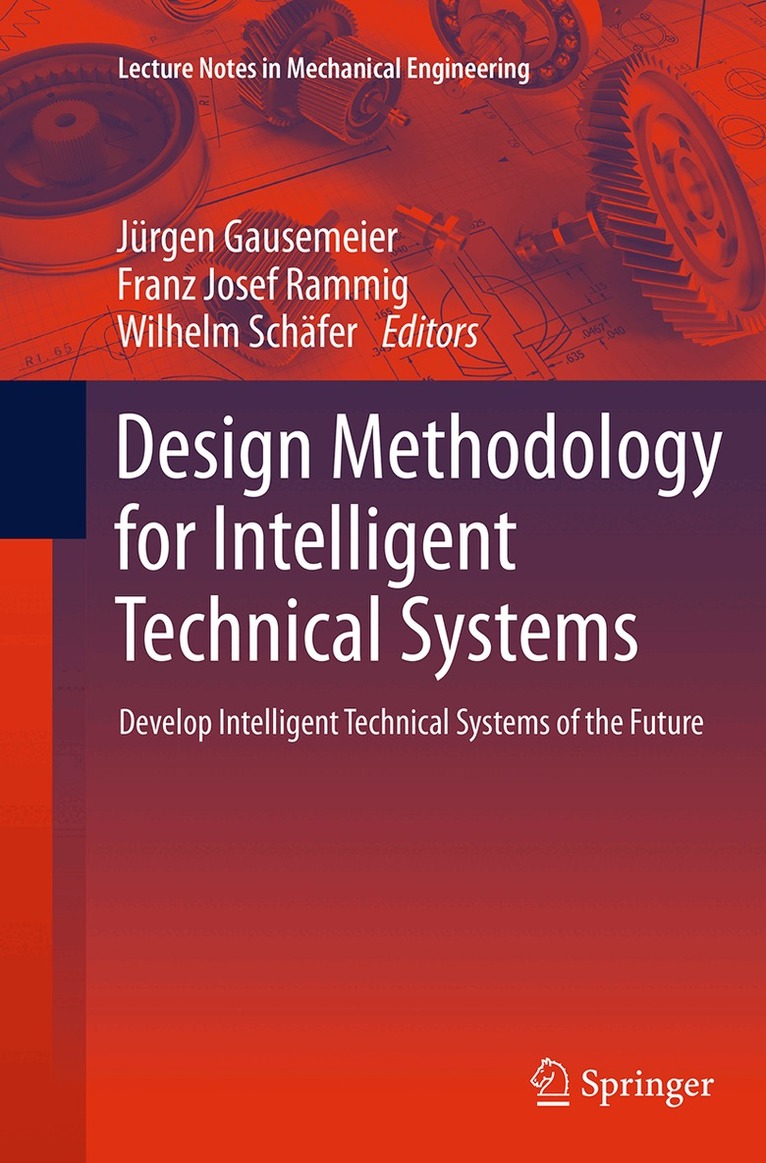
    Design Methodology for Intelligent Technical Systems

    Develop Intelligent Technical Systems of the Future

    AvJürgen Gausemeier,Franz Josef Rammig

    Häftad, Engelska, 2016

    Del i serien Lecture Notes in Mechanical Engineering

    1 078 kr

    Beställningsvara. Skickas inom 10-15 vardagar. Fri frakt över 249 kr.

    Beskrivning

    Intelligent technical systems, which combine mechanical, electrical and software engineering with control engineering and advanced mathematics, go far beyond the state of the art in mechatronics and open up fascinating perspectives. Among these systems are so-called self-optimizing systems, which are able to adapt their behavior autonomously and flexibly to changing operating conditions. Self-optimizing systems create high value for example in terms of energy and resource efficiency as well as reliability.  The Collaborative Research Center 614 "Self-optimizing Concepts and Structures in Mechanical Engineering" pursued the long-term aim to open up the active paradigm of self-optimization for mechanical engineering and to enable others to develop self-optimizing systems.  This book is directed to researchers and practitioners alike. It provides a design methodology for the development of self-optimizing systems consisting of a reference process, methods, and tools. The reference process is divided into two phases the domain-spanning conceptual design and the domain-specific design and development. For the conceptual design a holistic approach is provided. Domain-specific methods and tools developed especially for the design and development of self-optimizing systems are described and illustrated by application examples. This book will enable the reader to identify the potential for self-optimization and to develop self-optimizing systems independently.

    Produktinformation

    • Utgivningsdatum:2016-08-27
    • Mått:155 x 235 x 21 mm
    • Vikt:569 g
    • Format:Häftad
    • Språk:Engelska
    • Serie:Lecture Notes in Mechanical Engineering
    • Antal sidor:358
    • Förlag:Springer-Verlag Berlin and Heidelberg GmbH & Co. KG
    • ISBN:9783662522967

    Utforska kategorier

    • Elektronik och kommunikationer inom Naturvetenskap och teknik
    • Teknik: allmänt inom Naturvetenskap och teknik
    • Maskinteknik och material inom Naturvetenskap och teknik

    Innehållsförteckning

    • The Paradigm of Self-Optimization.- Examples of Self-Optimizing Systems.- Development of Self-Optimizing Systems.- Methods for the Domain-Spanning Conceptual Design.- Methods for the Design and Development.- Summary and Outlook.