Häftad, Engelska, 2024
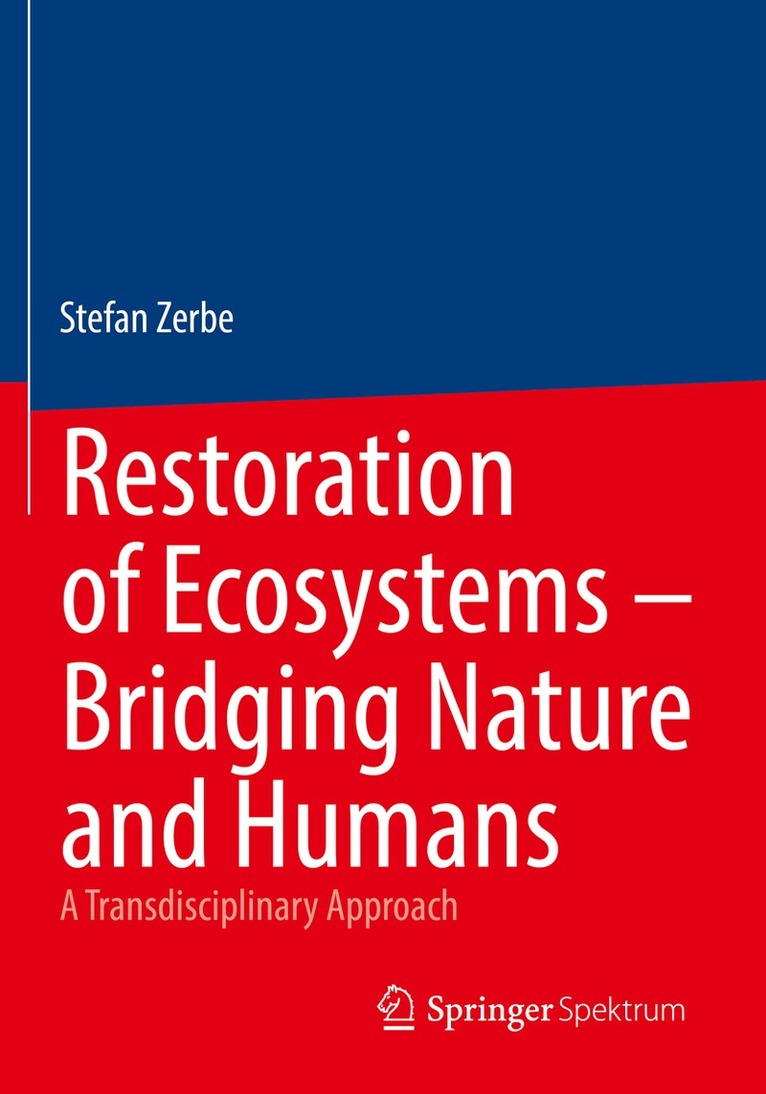
Restoration of Ecosystems – Bridging Nature and Humans
Av Stefan Zerbe
1425 kr
Beställningsvara. Skickas inom 10-15 vardagar. Fri frakt över 249 kr.
Beskrivning
In this interdisciplinary textbook, which bridges the gap between the natural and social sciences both, the scientific principles of restoration ecology and practical aspects of ecosystem restoration are comprehensively presented. The diversity of land-use types with a focus on Central Europe is highlighted and case studies of practical restoration projects are presented. The textbook offers students who deal with the environment as well as scientists and practitioners a profound and up-to-date, but also critical overview of the state of knowledge. This book opens up the broad spectrum of degraded ecosystems of Central European natural and cultural landscapes. In further chapters, marine ecosystems and their restoration as well as development potentials and the limits of restoration are discussed in more detail. The ecological fundamentals are expanded through an interdisciplinary perspective taking into account environmental ethics, sociology, anthropology, and economics. In additionto an up-to-date overview of the various areas and fields of activity in restoration ecology and ecosystem restoration, the textbook provides a valuable basis for studies, science, and practice. The students also receive assistance in searching for literature and critical fact analysis, and the lecturers on teaching formats and interdisciplinary approaches to discussion in restoration ecology.
Produktinformation
- Utgivningsdatum: 2024-02-16
- Mått: 168 x 240 x 40 mm
- Vikt: 1 231 g
- Format: Häftad
- Språk: Engelska
- Antal sidor: 723
- Förlag: Springer Fachmedien Wiesbaden
- ISBN: 9783662656600
- Originaltitel: Renaturierung von Ökosystemen im Spannungsfeld von Mensch und Umwelt
Utforska kategorier
Betyg & recensioner
0 recensioner
Inga recensioner tillgängliga.