• Fri frakt över 249 kr
  • •
  • Snabba leveranser
  • •
  • Billiga böcker
Kundservice

Du är på sajten för privatpersoner.

Företag, bibliotek eller offentlig verksamhet?

Du handlar på classic.bokus.com, där alla dina funktioner finns intakta.
Till classic.bokus.com
Bokus logotyp. Gå till startsidan.
  • Erbjudanden
  • Nyheter
  • Student
  • Topplistor
  • Barn & ungdom
  • Bokus Play
  • E-böcker
  • Pocketböcker
  • Spel & pussel

10% studentrabatt med kod TERM26

Sidfot

Mina sidor

    Hjälp

    • Kundservice
    • Vanliga frågor och svar
    • Frakt och leverans
    • Retur vid ångerrätt
    • Reklamera vara
    • Betalning
    • Köpvillkor
    • Allmänna villkor
    • Information om webbplatsens tillgänglighet

    Om Bokus

    • Om oss
    • Pressrum
    • För studenter
    • För företag
    • För bibliotek och offentlig verksamhet
    • För leverantörer
    • Hållbarhet

    Populärt

    • Aktuella erbjudanden
    • Presentkort
    • Studentlitteratur
    • Nya böcker
    • Topplistor
    • Signerade böcker
    • Engelska böcker

    Inspiration

    • Boktips
    • BookTok
    • Populära bokserier
    • Barnbokskaraktärer
    • Populära författare
    Logotyp för Bokus
    Följ oss på Facebook (extern länk)Följ oss på Instagram (extern länk)Följ oss på YouTube (extern länk)Följ oss på TikTok (extern länk)
    bokus @ CookiesAnpassa cookiesIntegritetspolicyKöpvillkor
    Till Citymail hemsida (extern länk)Till Budbee hemsida (extern länk)Till Postnord hemsida (extern länk)Till Schenker hemsida (extern länk)Till Early Bird hemsida (extern länk)Till Walleys hemsida (extern länk)
    1. Medicin
    2. Klinisk medicin och internmedicin
    3. Sjukdomar och rubbningar
    4. Onkologi

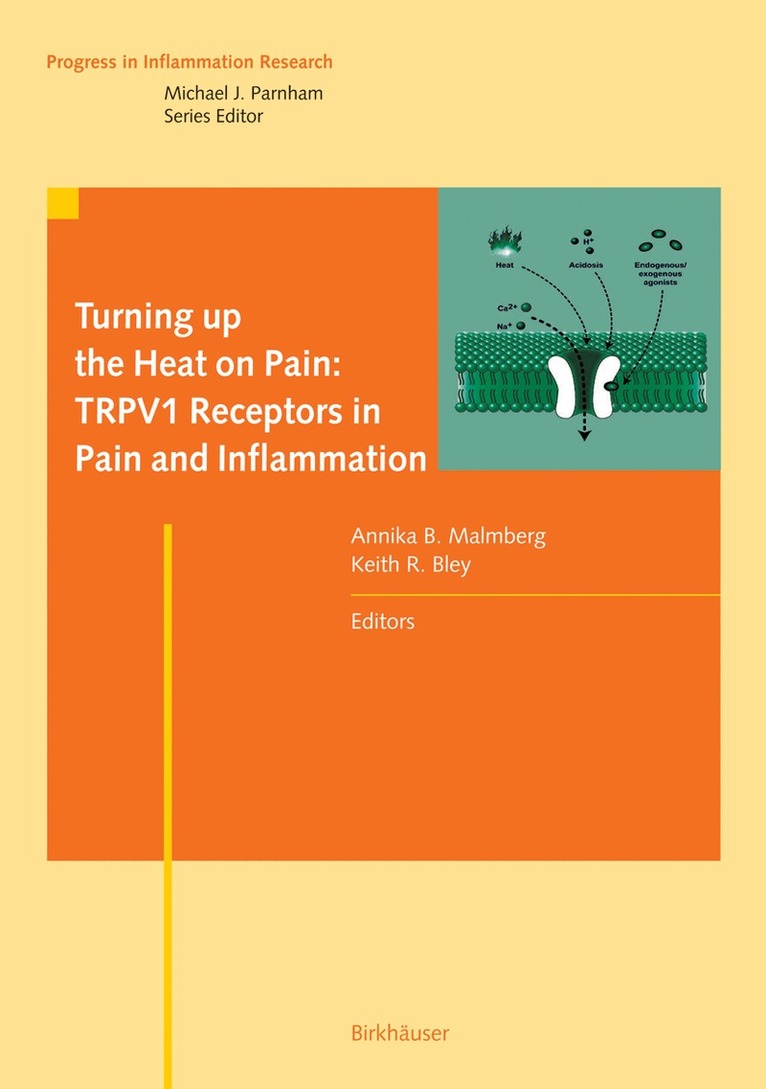
    Turning up the Heat on Pain: TRPV1 Receptors in Pain and Inflammation

    AvKeith R. Bley,Annika B. Malmberg

    E-bok
    PDF, Engelska, 2006

    2 105 kr

    Läs direkt i Bokus Reader – eller ladda ned till din enhet (PDF kräver ofta zoom och scroll på små skärmar).
    Beskrivning

    Despite tremendous advances in the understanding of the sensory nervous system which have accompanied the recent explosive growth of the neurosciences, rema- ably few innovative medicines directed towards pain and inflammation are ava- able. Indeed, many patients are still prescribed analgesic and anti-inflammatory medications that were identified long ago as components of herbal remedies. Si- larly, potential new medicines in clinical evaluation based on capsaicin and the c- saicin receptor are both grounded firmly on folk traditions and yet rely upon the most contemporary techniques of drug discovery and delivery. The first formal report of the pain-relieving properties of capsaicin appeared in 1850 [1]. However, for centuries before this, capsaicin-containing extracts had been used as folk medicines in cultures with access to pepper plants, much in the same way as poppy or willow-bark extracts were. Despite widespread use, it was not until 1878 that the selective action of capsaicin on the sensory nervous system was r- ognized [2]. In Chapter 1 of this volume, Janos Szolcsányi reviews this early research, which culminated with the seminal studies of Nicholas Jansco and his c- leagues in Hungary in the 1940s. Since then, capsaicin and related vanilloid c- pounds have played a prominent role in analgesia and inflammation investigations because of their ability to selectively activate a subpopulation of sensory neurons and produce sensations of pain and localized erythema.

    Produktinformation

    • Utgivningsdatum:2006-01-17
    • Språk:Engelska
    • Filformat:PDF
    • Kopieringsskydd:LCP
    • ISBN:9783764373795
    • Förlag:Birkhauser Basel

    Utforska kategorier

    • Onkologi inom Medicin
    • Smärta och smärtbehandling inom Medicin
    • Farmakologi inom Medicin