Inbunden, Engelska, 2013
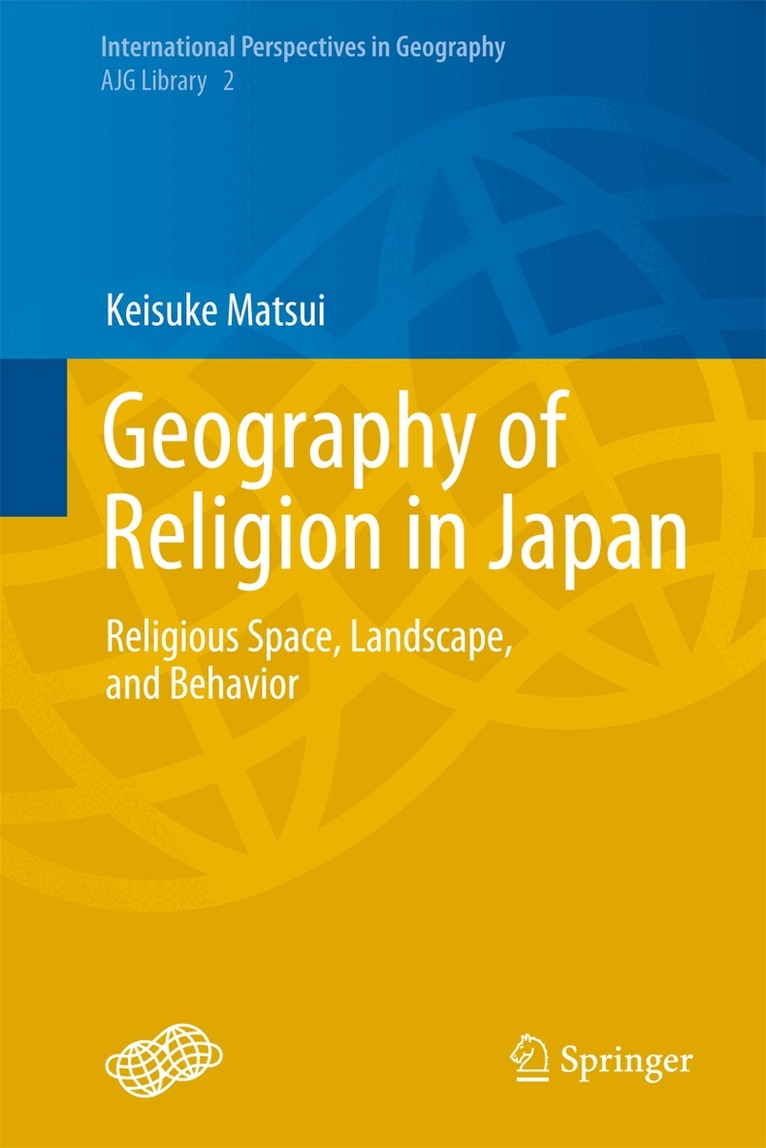
Geography of Religion in Japan
Religious Space, Landscape, and Behavior
Del i serien International Perspectives in Geography
1082 kr
Beställningsvara. Skickas inom 10-15 vardagar. Fri frakt över 249 kr.
Beskrivning
This book discusses modern aspects of Japanese religion in terms of cultural geography. To understand the function of religion, it is essential to examine it in the context of local societies. One of the distinguishing characteristics of Japanese religion is its diversity; indeed, it is often remarked that “Japan is a museum of religions.” In this work, the author clarifies some geographical aspects of the complex situation of Japanese religion. Chapter 1 discusses the trend of geographical studies of religion in Japan, of which four types can be identified. Chapter 2 focuses on certain characteristics of Japanese religious traditions by discussing tree worship and the landscape of sacred places. Chapter 3 clarifies regional divisions in the catchment areas of Japanese Shintoism by analyzing the distribution of certain types of believers. The author discusses two case studies: the Kasama Inari Shrine and the Kanamura Shrine. Chapter 4 discusses some modern aspects of sacred places andtourism through two case studies. The first part of the chapter focuses on changes in the types of businesses at the Omotesando of the Naritasan Shinshoji-Monzenmachi, and the following sections examine the revitalization of the local community through the promotion of religious tourism.
Produktinformation
- Utgivningsdatum: 2013-12-27
- Mått: 155 x 235 x 18 mm
- Vikt: 437 g
- Format: Inbunden
- Språk: Engelska
- Serie: International Perspectives in Geography
- Antal sidor: 199
- Upplaga: 2014
- Förlag: Springer Verlag, Japan
- ISBN: 9784431545491
Utforska kategorier
Recensioner i media
"This is a data-rich study that shows the complexities of faith in local settings in Japan not only spatially, but temporally as well-as new global forces, like the possibility of receiving World Heritage Site Status, transform the way people understand local manifestations of the sacred as a cultural resource. This is ... for serious researchers interested in Japanese religion, sacred geography, and pilgrimage and religious tourism." (Mark MacWilliams, Religious Studies Review, Vol. 42 (1), March, 2016)
Betyg & recensioner
0 recensioner
Inga recensioner tillgängliga.