• Fri frakt över 249 kr
  • •
  • Snabba leveranser
  • •
  • Billiga böcker
Kundservice

Du är på sajten för privatpersoner.

Företag, bibliotek eller offentlig verksamhet?

Du handlar på classic.bokus.com, där alla dina funktioner finns intakta.
Till classic.bokus.com
Bokus logotyp. Gå till startsidan.
  • Erbjudanden
  • Nyheter
  • Student
  • Topplistor
  • Barn & ungdom
  • Bokus Play
  • E-böcker
  • Pocketböcker
  • Spel & pussel

10% rabatt på allt med kod NYSTART10 →

Sidfot

Mina sidor

    Hjälp

    • Kundservice
    • Vanliga frågor och svar
    • Frakt och leverans
    • Retur vid ångerrätt
    • Reklamera vara
    • Betalning
    • Köpvillkor
    • Allmänna villkor
    • Information om webbplatsens tillgänglighet

    Om Bokus

    • Om oss
    • Pressrum
    • För studenter
    • För företag
    • För bibliotek och offentlig verksamhet
    • För leverantörer
    • Hållbarhet

    Populärt

    • Aktuella erbjudanden
    • Presentkort
    • Studentlitteratur
    • Nya böcker
    • Topplistor
    • Signerade böcker
    • Engelska böcker

    Inspiration

    • Boktips
    • BookTok
    • Populära bokserier
    • Barnbokskaraktärer
    • Populära författare
    Logotyp för Bokus
    Följ oss på Facebook (extern länk)Följ oss på Instagram (extern länk)Följ oss på YouTube (extern länk)Följ oss på TikTok (extern länk)
    bokus @ CookiesAnpassa cookiesIntegritetspolicyKöpvillkor
    Till Citymail hemsida (extern länk)Till Budbee hemsida (extern länk)Till Postnord hemsida (extern länk)Till Schenker hemsida (extern länk)Till Early Bird hemsida (extern länk)Till Walleys hemsida (extern länk)
    1. Naturvetenskap och teknik
    2. Matematik och naturvetenskap
    3. Matematik
    4. Matematisk statistik

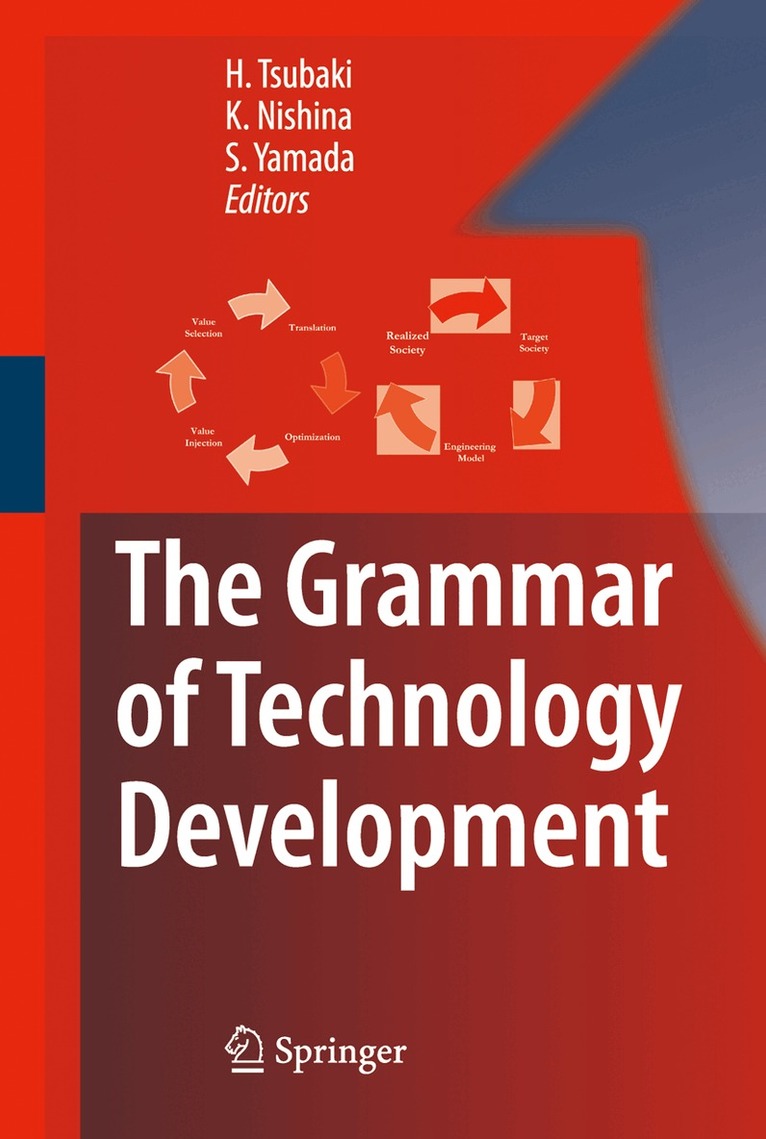
    Grammar of Technology Development

    AvHiroe Tsubaki,Ken Nishina

    Häftad, Engelska, 2010

    1 623 kr

    Beställningsvara. Skickas inom 10-15 vardagar. Fri frakt över 249 kr.

    Beskrivning

    This book includes the keynote lecture and fourteen selected papers that - scribe a general guideline and supporting concepts and tools for conceiving technology development as a grammar. Recent advances in scienti?c and - gineering ?elds call for new disciplines, tools, and concepts. For example, advances in computer simulation require new approaches to statistical te- niques to utilize computer simulation e?ciently for technology development. Thepaperscollectedinthisbookfocusonsuchnewapproachesbasedonthese practicalrequirements.Theeditorsarecon?dentthiscollectionwillcontribute to the acceleration of technology development through the application of the grammar of technology presented here. The title of this book is in?uenced by Karl Pearson’s book The Grammar of Science, published in 1892, which brought him recognition as a giant and pioneer of statistics. His book introduced a grammar of science with a - scription of the roles of statistical treatments. While science at times has been misunderstood as not being amenable to a standardized approach, one of the contributions of Pearson’s book was that it o?ered a standardized - proach to science. As his book demonstrated, behind the great innovations of science, there exists a universal approach.

    Produktinformation

    • Utgivningsdatum:2010-10-21
    • Mått:155 x 235 x 13 mm
    • Vikt:365 g
    • Format:Häftad
    • Språk:Engelska
    • Antal sidor:221
    • Förlag:Springer Verlag, Japan
    • ISBN:9784431998365

    Utforska kategorier

    • Matematisk statistik inom Naturvetenskap och teknik
    • Teknik: allmänt inom Naturvetenskap och teknik

    Innehållsförteckning

    • Fusion of Digital Engineering and Statistical Approach Akira Takahashi . . . . . . . . . . . . . . . . . . . . . . . . . . . . . . . . . . . . . . . . . . . . . . . . . 1 Part I Systematic Approaches to Technology Development The Grammar of Technology Development Hiroe Tsubaki . . . . . . . . . . . . . . . . . . . . . . . . . . . . . . . . . . . . . . . . . . . . . . . . . . . 15 Informed Systems Approach Andrzej P. Wierzbicki . . . . . . . . . . . . . . . . . . . . . . . . . . . . . . . . . . . . . . . . . . . . 23 Combinatorial Usage of QFDE and LCA for Environmentally Conscious Design Tomohiko Sakao, Kazuhiko Kaneko, Keijiro Masui, Hiroe Tsubaki . . . . . . 45 Communication Gap Management Towards a Fertile Community Naohiro Matsumura . . . . . . . . . . . . . . . . . . . . . . . . . . . . . . . . . . . . . . . . . . . . . . 61 Verification of Process Layout CAE System TPS-LAS at Toyota Hirohisa Sakai, Kakuro Amasaka. . . . . . . . . . . . . . . . . . . . . . . . . . . . . . . . . . . 71 Part II (DE)2: Design of Experiments in Digital Engineering A Grammar of Design of Experiments in Computer Simulation Shu Yamada. . . . . . . . . . . . . . . . . . . . . . . . . . . . . . . . . . . . . . . . . . . . . . . . . . . . . 85 Uniform Design in Computer and Physical Experiments Kai-Tai Fang, Dennis K. J. Lin . . . . . . . . . . . . . . . . . . . . . . . . . . . . . . . . . . . 105 Adapting Response Surface Methodology for Computer and Simulation Experiments G. Geoffrey Vining . . . . . . . . . . . . . . . . . . . . . . . . . . . . . . . . . . . . . . . . . . . . . . . 127 SQC and Digital Engineering Mutsumi Yoshino, Ken Nishina . . . . . . . . . . . . . . . . . . . . . . . . .. . . . . . . . . . . 135 Application of DOE to Computer-Aided Engineering Ken Nishina, Mutsumi Yoshino . . . . . . . . . . . . . . . . . . . . . . . . . . . . . . . . . . . . 153 Part III Statistical Methods for Technology Development A Hybrid Approach for Performance Evaluation of Web-Legacy Client/Server Systems Naoki Makimoto, Hiroyuki Sakata . . . . . . . . . . . . . . . . . . . . . . . . . . . . . . . . . . 165 Polynomial Time Perfect Sampler for Discretized Dirichlet Distribution Tomomi Matsui, Shuji Kijima . . . . . . . . . . . . . . . . . . . . . . . . . . . . . . . . . . . . . 179 The Optimal Receiver in a Chip-Synchronous Direct-Sequence Spread-Spectrum Communication System Nobuoki Eshima . . . . . . . . . . . . . . . . . . . . . . . . . . . . . . . . . . . . . . . . . . . . . . . . . 201 Visualizing Similarity among Estimated Melody Sequences from Musical Audio Hiroki Hashiguchi . . . . . . . . . . . . . . . . . . . . . . . . . . . . . . . . . . . . . . . . . . . . . . . . 213