• Fri frakt över 249 kr
  • •
  • Snabba leveranser
  • •
  • Billiga böcker
Kundservice

Du är på sajten för privatpersoner.

Företag, bibliotek eller offentlig verksamhet?

Du handlar på classic.bokus.com, där alla dina funktioner finns intakta.
Till classic.bokus.com
Bokus logotyp. Gå till startsidan.
  • Erbjudanden
  • Student
  • Topplistor
  • Barn & ungdom
  • Bokus Play
  • E-böcker
  • Ljudböcker
  • Pocketböcker
  • Spel och pussel

5% studentrabatt – använd koden KURSBOK27 →

Sidfot

Mina sidor

    Hjälp

    • Kundservice
    • Vanliga frågor och svar
    • Frakt och leverans
    • Retur vid ångerrätt
    • Reklamera vara
    • Betalning
    • Köpvillkor
    • Allmänna villkor
    • Information om webbplatsens tillgänglighet

    Om Bokus

    • Om oss
    • Pressrum
    • För studenter
    • För företag
    • För bibliotek och offentlig verksamhet
    • För leverantörer
    • Hållbarhet

    Populärt

    • Aktuella erbjudanden
    • Presentkort
    • Studentlitteratur
    • Nya böcker
    • Topplistor
    • Signerade böcker
    • Engelska böcker

    Inspiration

    • Boktips
    • BookTok
    • Barnbokskaraktärer
    • Populära författare
    Logotyp för Bokus
    Följ oss på Facebook (extern länk)Följ oss på Instagram (extern länk)Följ oss på YouTube (extern länk)Följ oss på TikTok (extern länk)
    bokus @ CookiesAnpassa cookiesIntegritetspolicyKöpvillkor
    Till Citymail hemsida (extern länk)Till Budbee hemsida (extern länk)Till Postnord hemsida (extern länk)Till Schenker hemsida (extern länk)Till Early Bird hemsida (extern länk)Till Walleys hemsida (extern länk)
    1. Samhälle och politik
    2. Samhälle och kultur
    3. Sociala grupper och identitet

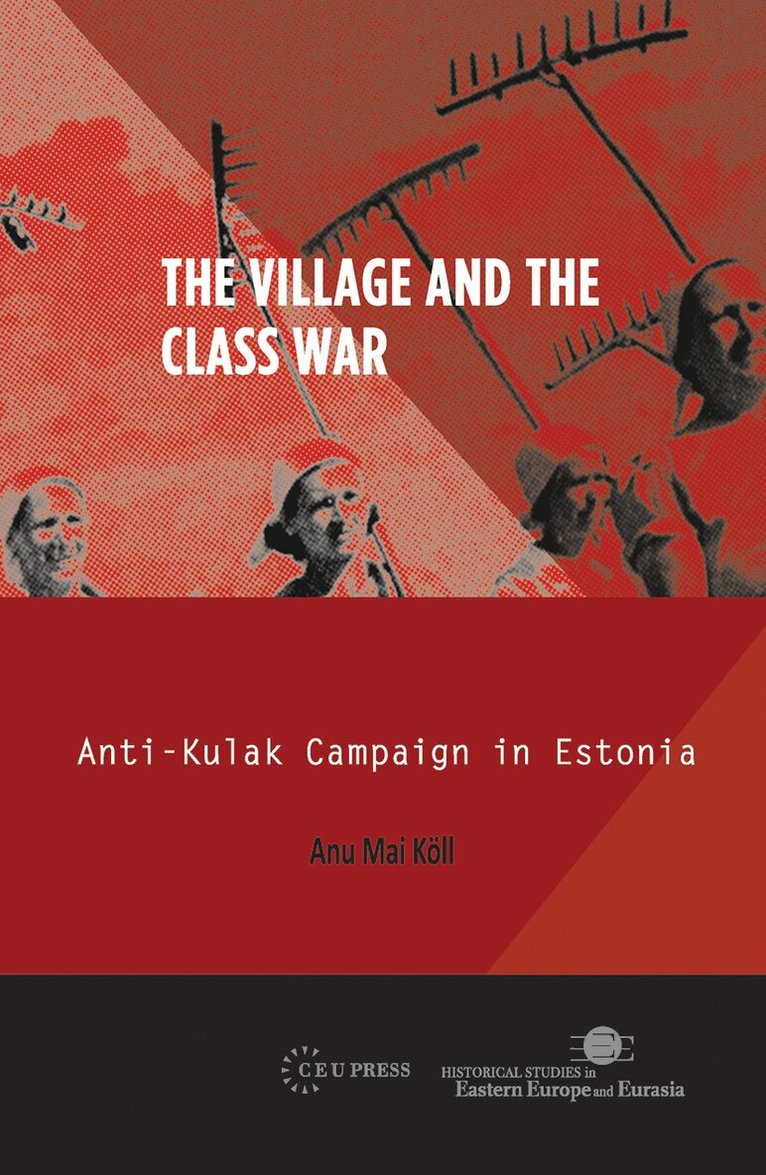
    Village and the Class War

    Anti-Kulak Campaign in Estonia 1944-49

    AvAnu Mai Kõll

    Inbunden, Engelska, 2013

    Del i serien Historical Studies in Eastern Europe and Eurasia - CEU Press

    1 711 kr

    Beställningsvara. Skickas inom 10-15 vardagar. Fri frakt över 249 kr.

    Beskrivning

    Before collectivization of agriculture in Estonia, “kulaks” (better-off farmers) were persecuted and many of them were finally deported in March 1949. This book is situated on the local level; the aim is to understand what these processes meant from the perspective of the Estonian rural population, a kind of study that has been missing so far. Analyzes the mechanisms of repression, applying new aspects. Repression was mainly conducted through a bureaucratic process where individual denunciations were not even necessary. The main tool of persecution was a screening of the rural population with the help of records, censuses and local knowledge, in order to identify, or invent, “kulak families”. Moreover, in the Estonian sources, the World War II history of each individual was a crucial part of screenings. The prisoners of war of the Red Army, held in camps in Estonia, played an unexpected part in this campaign. Another result is a so far neglected wave of peaceful resistance as the kulak identifications were challenged in 1947-48. This has not been addressed in the existing literature. The results mainly answer the question “how” this process worked, whereas the question ”why” finds hypothetical responses in the life trajectories of actors.

    Produktinformation

    • Utgivningsdatum:2013-03-30
    • Mått:152 x 229 x 27 mm
    • Vikt:700 g
    • Format:Inbunden
    • Språk:Engelska
    • Serie:Historical Studies in Eastern Europe and Eurasia - CEU Press
    • Antal sidor:296
    • Förlag:Central European University Press
    • ISBN:9786155225147

    Utforska kategorier

    • Sociala grupper och identitet inom Samhälle och politik

    Mer om författaren

    Anu Mai Kõll is Professor of Baltic History and Director of the Centre for Baltic and East European Studies at Södertörn University, Sweden.

    Recensioner i media

    "The blurb on the dust jacket of this important study of collectivization in Estonia in 1947-1949 lauds it for contributing to Baltic history by showing how everyday Estonians also participated as subjects in Stalinist terror. This Anu Mai Kõll indeed does, and very effectively; she also looks at how and why so many ordinary people participated in the brutality. But more important is the book's contribution to the growing historiography of collectivization, particularly collectivization beyond the classic case of the Soviet 1930s."

    Innehållsförteckning

    • List of Tables and Graphs, List of Photographs, Preface, 1. The Land Question in Estonia 1.1. Agriculture and the First Soviet Year 1940–41 1.2. Nazi Occupation 1941–1944 1.3. Reconstruction of Soviet Estonia 1.4. Estonians Living in the Soviet Union 1.5. Land Reform 1944–45 1.6. The Anti-kulak Campaign, 1947–49 1.7. Deportation 1.8. The Aim of the Book 1.9. Organization of the Book 2. Soviet Repression as a Special Case of State Violence 2.1. Research into Violence in the Soviet System 2.2. Kulaks and Collectivisation in 1929–32 2.3. The Estonian Anti-kulak Campaign 2.4. Comparing Anti-kulak Campaigns in 1929–32 and 1947–49 2.5. Aspects Pursued in this Local Study 2.6. The Soviet Estonian Archives 3. The Anti-kulak Campaign 3.1. Seizing Power 3.2. Local Authorities 3.3. The Land Reform 3.4. Persecution of the Kulaks Begins 3.5. Was there Freedom of Action? 3.6. The Kulak Taxes 3.7. The Exclusion of Kulaks 3.8. From Campaign to Deportation 3.9. Liquidation of the Kulaks 3.10. The Extent of Local Participation 4. Inventing Kulaks 4.1. The Process 4.2. The Voices of Kulaks 4.3. The Appeals 4.4. Retroactive Soviet Law 4.5. Negotiations Concerning Exploitation 4.6. Negotiations Concerning Prisoners of War 4.7. The Political Criteria 4.8. Kulak Strategies 4.9. Negotiation as Participation 4.10. The Result of Negotiations: Kulak Declarations. 5. Participation at the Local Level 5.1. The Local Nomenklatura 5.2. The Cadre Policy 5.3. The Reluctant Henchman 5.4. The Ambitious Bureaucrat 5.5. The Tender Wolf 5.6. Persecute or Perish 5.7. Persecution as a Social Process 5.8. Communist Party and Councils in Viljandi County 5.9. The Security Forces 5.10. Why did Local People Participate? 6. Epilogue of March 1949 6.1. Rapid Collectivisation 6.2. Division of the Spoils 6.3. Stepping Out of Line 6.4. Not on the Deportation List 6.5. A Normal Stalinist Purge 6.6. The Purge of ECP in 1950 6.7. Lessons of the Campaign 7. The Grammar of Terror 7.1. Responsibility and Participation 7.2. Participation and Discourse 7.3. Participation in a Bureaucratic Procedure 7.4. Participants—How did They Get There? 7.5. Openness and Legitimacy 7.6. The Importance of War 7.7. A Grammar of Terror? Appendixes, Bibliography, Index.