• Fri frakt över 249 kr
  • •
  • Snabba leveranser
  • •
  • Billiga böcker
Kundservice

Du är på sajten för privatpersoner.

Företag, bibliotek eller offentlig verksamhet?

Du handlar på classic.bokus.com, där alla dina funktioner finns intakta.
Till classic.bokus.com
Bokus logotyp. Gå till startsidan.
  • Erbjudanden
  • Nyheter
  • Student
  • Topplistor
  • Barn & ungdom
  • Bokus Play
  • E-böcker
  • Pocketböcker
  • Spel & pussel

10% rabatt på allt med kod: NYSTART10 →

Sidfot

Mina sidor

    Hjälp

    • Kundservice
    • Vanliga frågor och svar
    • Frakt och leverans
    • Retur vid ångerrätt
    • Reklamera vara
    • Betalning
    • Köpvillkor
    • Allmänna villkor
    • Information om webbplatsens tillgänglighet

    Om Bokus

    • Om oss
    • Pressrum
    • För studenter
    • För företag
    • För bibliotek och offentlig verksamhet
    • För leverantörer
    • Hållbarhet

    Populärt

    • Aktuella erbjudanden
    • Presentkort
    • Studentlitteratur
    • Nya böcker
    • Topplistor
    • Signerade böcker
    • Engelska böcker

    Inspiration

    • Boktips
    • BookTok
    • Populära bokserier
    • Barnbokskaraktärer
    • Populära författare
    Logotyp för Bokus
    Följ oss på Facebook (extern länk)Följ oss på Instagram (extern länk)Följ oss på YouTube (extern länk)Följ oss på TikTok (extern länk)
    bokus @ CookiesAnpassa cookiesIntegritetspolicyKöpvillkor
    Till Citymail hemsida (extern länk)Till Budbee hemsida (extern länk)Till Postnord hemsida (extern länk)Till Schenker hemsida (extern länk)Till Early Bird hemsida (extern länk)Till Walleys hemsida (extern länk)
    1. Historia och arkeologi
    2. Historia
    3. Forntidens historia

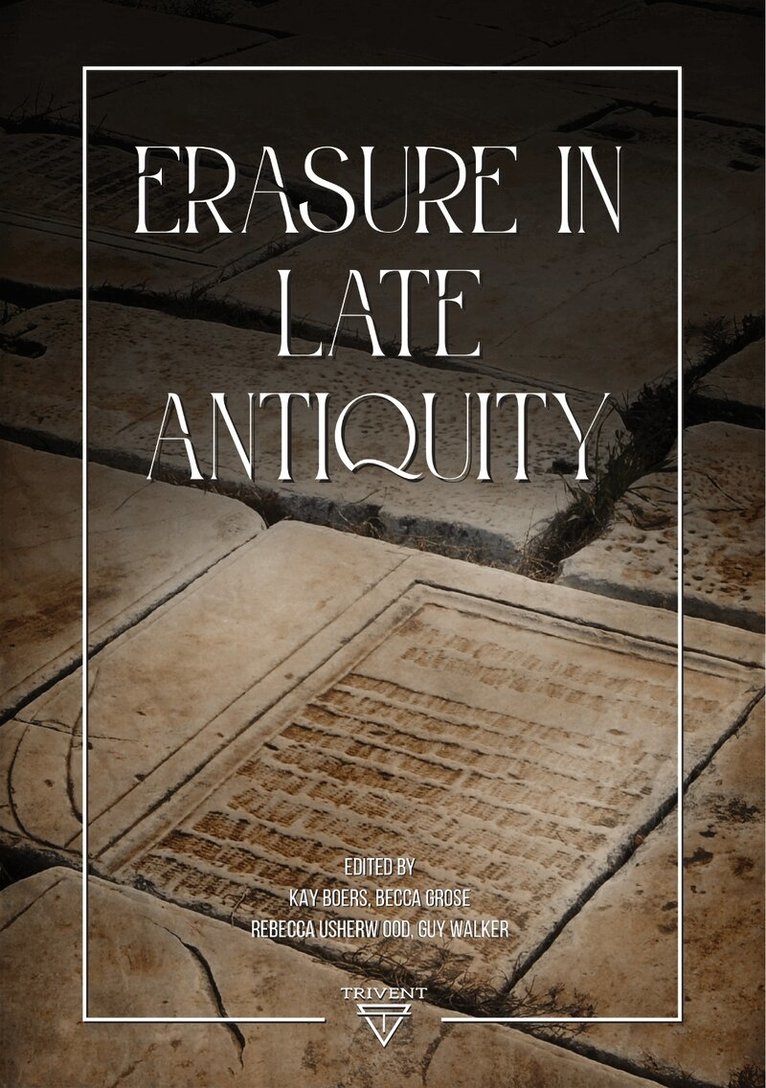
    Erasure in Late Antiquity

    AvKay Boers,Becca Grose

    Inbunden, Engelska, 2024

    Del i serien Sylloge - Library of Late Antique and Byzantine Studies

    1 008 kr

    Beställningsvara. Skickas inom 5-8 vardagar. Fri frakt över 249 kr.

    Beskrivning

    Erasure was, paradoxically, a conspicuous phenomenon in Late Antiquity. This is evidenced by the practices associated with so-called damnatio memoriae, changes in physical space, and broad processes of religious and cultural change. While the theme of erasure is attracting increased interest across a wide range of disciplines, there have been few attempts to consider erasure as a more general phenomenon, to study it from a multidisciplinary perspective and to ask what, if anything, was unique about erasure in Late Antiquity?This volume, edited by Kay Boers, Becca Grose, Rebecca Usherwood, and Guy Walker, brings together eight essays, each reflecting on the phenomenon of erasure and the various methodologies used in its investigation. Taking a broad theoretical, chronological, and thematic scope, the contributions to this volume reflect on the processes of erasure, and the strategies, agencies, and authorities behind them. Collectively, the contributions seek to understand erasure as a flexible and diverse phenomenon that is identifiable in various discursive fields of late antique visual, material, and textual cultures.

    Produktinformation

    • Utgivningsdatum:2024-06-30
    • Mått:148 x 210 x undefined mm
    • Format:Inbunden
    • Språk:Engelska
    • Serie:Sylloge - Library of Late Antique and Byzantine Studies
    • Antal sidor:293
    • Förlag:Trivent Publishing
    • ISBN:9786156696250

    Utforska kategorier

    • Forntidens historia inom Historia och arkeologi
    • Medeltiden inom Historia och arkeologi

    Mer om författaren

    Kay Boers is employed as Lecturer in Ancient and Medieval History at Utrecht University and is a board member of the Utrecht University Centre for Medieval Studies (UUCMS). His PhD thesis focused on the rhetoricity of citizens and citizenship in seventh-century Hispania. His current research focuses on the global seventh century and investigates the political and religious debates of this period from a comparative and transregional perspective with a heavy emphasis on the relation between (inter)text and community.Becca Grose is a social and cultural historian of Late Antiquity and the early Middle Ages, with a particular interest in how the materiality of written texts can tell us more about the relationships and societies of the people who wrote them. She has held posts at Royal Holloway and York, and is currently a visiting fellow in the ""Migration und Mobilität in Spätantike und Frühmittelalter"" research group at the Universität Tübingen.Rebecca Usherwood is Assistant Professor in Late Antique and Early Byzantine Studies in the Classics department of Trinity College Dublin. Her research is concerned with emperors in the third and fourth centuries CE, particularly local understandings and reactions to imperial power as conceived and communicated centrally. Her first monograph, Political Memory and the Constantinian Dynasty: Fashioning Disgrace, was published by Palgrave-Macmillan in 2022. She is also a series editor for Liverpool University Press' Women in Ancient Cultures series. Guy Walker is a civil servant and independent researcher. He completed his PhD, funded by the Irish Research Council, at Trinity College Dublin in 2021. His thesis explores the influence of Neoplatonism on the Dionysiaca of Nonnus of Panopolis; in particular, how philosophical schemas from Homeric literary criticism were retooled and 'remixed' in order to generate new meanings. His research interests include the intersection of philosophy and poetry, ancient literary criticism, and Late Antique Greek poetry.

    Innehållsförteckning

    • AcknowledgmentsIntroduction by Kay Boers, Becca Grose, Rebecca Usherwood, Guy WalkerChapter 1. The Erasure of Humanity in Late Antique Christian Narratives of Punishment - Kelly HolobChapter 2. Elision as Erasure: The Three Hebrews and the Magi on Fourth-Century Christian Sarcophagi - Miriam A. HayChapter 3. Contesting the Erasure of Paganism: Claudian and Christianization at the Court of Honorius - Benjamin KybettChapter 4. Epigraphic Erasures beyond Damnatio Memoriae: Iconoclasm and "Grammatoclasm" in Late Antiquity - Anna M. SitzChapter 5. Spolia and Epigraphical Erasure at the Church of Mary in Ephesus - Mali SkotheimChapter 6. Erasing the Ethereal: Christian Attempts at Delegitimizing Ghosts - Ryan DensonChapter 7. Conspicuous Absences in Late Antique Gallic Funerary Texts, VI-VII Centuries CE: Errors, Erasures, or Inscribing Uncertainty? - Becca GroseChapter 8. Concluding Reflections: Erasures and Rewritings in Space and Time - Mark HumphriesNotes on Contributors