• Fri frakt över 249 kr
  • •
  • Snabba leveranser
  • •
  • Billiga böcker
Kundservice

Du är på sajten för privatpersoner.

Företag, bibliotek eller offentlig verksamhet?

Du handlar på classic.bokus.com, där alla dina funktioner finns intakta.
Till classic.bokus.com
Bokus logotyp. Gå till startsidan.
  • Erbjudanden
  • Nyheter
  • Student
  • Topplistor
  • Barn & ungdom
  • Bokus Play
  • E-böcker
  • Pocketböcker
  • Spel & pussel

10% rabatt på allt med kod: NYSTART10 →

Sidfot

Mina sidor

    Hjälp

    • Kundservice
    • Vanliga frågor och svar
    • Frakt och leverans
    • Retur vid ångerrätt
    • Reklamera vara
    • Betalning
    • Köpvillkor
    • Allmänna villkor
    • Information om webbplatsens tillgänglighet

    Om Bokus

    • Om oss
    • Pressrum
    • För studenter
    • För företag
    • För bibliotek och offentlig verksamhet
    • För leverantörer
    • Hållbarhet

    Populärt

    • Aktuella erbjudanden
    • Presentkort
    • Studentlitteratur
    • Nya böcker
    • Topplistor
    • Signerade böcker
    • Engelska böcker

    Inspiration

    • Boktips
    • BookTok
    • Populära bokserier
    • Barnbokskaraktärer
    • Populära författare
    Logotyp för Bokus
    Följ oss på Facebook (extern länk)Följ oss på Instagram (extern länk)Följ oss på YouTube (extern länk)Följ oss på TikTok (extern länk)
    bokus @ CookiesAnpassa cookiesIntegritetspolicyKöpvillkor
    Till Citymail hemsida (extern länk)Till Budbee hemsida (extern länk)Till Postnord hemsida (extern länk)Till Schenker hemsida (extern länk)Till Early Bird hemsida (extern länk)Till Walleys hemsida (extern länk)
    1. Historia och arkeologi
    2. Historia
    3. Historia: särskilda händelser och ämnen
    4. Socialhistoria och kulturhistoria

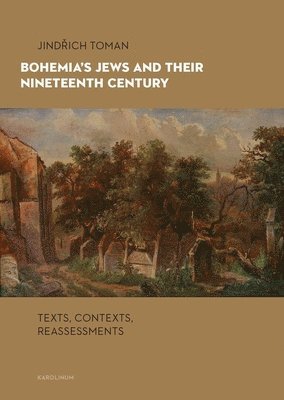
    Bohemia's Jews and Their Nineteenth Century

    Texts, Contexts, Reassessments

    AvJindrich Toman

    Häftad, Engelska, 2023

    321 kr

    Beställningsvara. Skickas inom 5-8 vardagar. Fri frakt över 249 kr.

    Beskrivning

    Bohemian Jewish culture and literature during the underexamined 1820s to 1880s.This book on Jewish culture and literature focuses on the “quiet” decades of the nineteenth century, a scarcely written-about period of time in Bohemian Jewish history. Using a myriad of sources, including travelers’ accounts, poems, essays, short stories, guides, and newspaper articles, the volume explores Jewish expression, Jewish-Czech relations, and the changing attitudes toward Jews between the 1820s and 1880s. It offers close readings of writers like Karel Havlíćek Borovský, Ján Kollár, Siegfried Kapper, and Jan Neruda, as well as lesser-known authors and sources. Combining skillful sustained analysis, judicious argumentation, and elegant writing, the book is a truly enriching reading experience.

    Produktinformation

    • Utgivningsdatum:2023-07-20
    • Mått:165 x 235 x 38 mm
    • Vikt:626 g
    • Format:Häftad
    • Språk:Engelska
    • Antal sidor:335
    • Förlag:Karolinum,Nakladatelstvi Univerzity Karlovy,Czech Republic
    • ISBN:9788024652887

    Utforska kategorier

    • Socialhistoria och kulturhistoria inom Historia och arkeologi
    • Sociala grupper och identitet inom Samhälle och politik
    • Litteraturvetenskap inom Skönlitteratur

    Mer om författaren

    Jindřich Toman is professor of Slavic languages and literature at the University of Michigan.

    Recensioner i media

    "This welcome study by Toman (Slavic languages and literature, Univ. of Michigan) treats the 1820s to the 1880s, examining the Jewish experience in Bohemia (the Czech lands) by analyzing a wide variety of sources and genres. Overviews of and concluding summaries to each chapter facilitate readers' understanding of the author’s arguments. Among the themes he treats are the complexities of ghetto images, how to understand the famous Jewish cemetery in Prague, whether Jewish fortunes were best served by reference to their inclusion in the Habsburg empire or by more narrow identification with the Czech lands, which context best expressed the Jewish experience (idealistic or realistic), and how Jews should or could respond to their legal equality in the Czech lands after 1867. Issues such as whether the German or Czech language should frame Jewish identify are expertly handled. Some of the authors Toman treats are probably not familiar to an Anglophone audience, but his close and skillful analyses make their works come alive. He is especially good at dealing with anti-Semitism, and his revisionist treatment of Jan Neruda as an anti-Semite is powerfully argued. The volume is enhanced by 15 well-chosen illustrations."

    Innehållsförteckning

    • 1. Bohemia’s Configurations1.1. The Three-Box Game1.1.1. Revival: Czechs 1.1.2. Emancipation: Jews1.1.3. Under Pressure: Germans1.2. And Beyond the Boxes1.2.1. Who Was Really What and When?1.2.2. Translocal Horizons: Bildung1.2.3. Who Kept an Eye on Whom?1.2.4. In Between or Out?2. Prague’s Jewish Town as Represented Space, 18303–1840s 2.1. Domestic Gazes: Jews Outside the Ghetto2.1.1. A Medical Map of (Jewish) Prague: F. A. Stelzig, 18242.1.2. Again, Jews Outside the Ghetto: K. V. Zap, 18352.1.3. Jews Spying in Cafés: S. W. Schießler, 18122.1.4. Observing the Contact Zone: Karolina Svetlá, 1840s2.2. Stop-Over Gazes2.2.1. A Not So Elegant World: Gold and Refuse as of 1829 2.2.2. English Travelers: Henry Reeve, 18372.2.3. English Travelers: George Robert Gleig, 18372.3. Jewish Voices2.3.1. A Ghetto Home: Siegfried Kapper2.3.2. Ghetto Physiognomy: Leopold Weisel2.3.3. Purim in the Ghetto: H. J. Landau’s Decency2.3.4. Purim in the Ghetto: J. Kaufmann’s Nostalgia2.4. More Angles of View3. Making Sense of a Ruin: The Old Jewish Cemetery in Prague3.1. Old Agendas3.1.1. Early Sources3.1.2. The Cemetery as a Philological Exercise3.2. New Agendas3.2.1. The Emergence of a Romantic Cemetery3.2.2. The Cycle of Life3.2.3. The Cemetery as a Site of Othering3.2.4. The Cemetery as a Site of a Jewish Conspiracy3.3. Threads of Memory Emerging3.3.1. A Czech Romantic’s Empathy3.3.2. Jewish Work on Jewish Memory3.4. Dialectics of Fragmentation 4. To Include or Not to Include? Kollár’s and Mácha’s Conflicted Answers4.1. Jan Kollár’s Answers4.1.1. A Pastor’s Missionary Dream4.1.2. Sláva’s Exclusionary Pantheon4.1.3. Pragmatic Packaging4.2. Karel Hynek Mácha’s Answers4.2.1. Orientalism in the Service of the Nation4.2.2. More than an Allegory4.2.3. Practical Matters—Exclusion4.3. Pragmatic Packaging Again5. Shock and Entertain: Diversions for Gentiles and/or Jews5.1. Old Farces5.2. New Plots …5.2.1. Tragic Tragedies—Transgressing Women Die5.2.2. Melancholic Tragedies—Jews Leave the Stage5.2.3. Happy-Ending Tragedies 1: Hurray, She Is Not Jewish!5.2.4. Happy-Ending Tragedies 2: Hurray—He Is Jewish5.3. …and Their Characters5.3.1. Jewish Daughters—What They Look Like5.3.2. Jewish Fathers—Mostly Ugly5.3.3. Gentile Lovers—Just a Necessity5.4. Licensing the New Jewish Configuration5.5. Melodramas and Their Contexts6. Varieties of Bohemian Jewish Literature6.1. Goethe, Bohemia, Jewish Authors6.1.1. How Goethe Saw Bohemian Authors6.1.2. How Jewish Authors Saw Goethe6.2. Bohemian Jews About Bohemian Jews6.2.1. A Literature by Schoolmasters6.2.2. Selig Korn’s Magic Lantern6.2.3. Leopold Weisel’s schnorrer6.3. Bohemian Jews About Jews and Czechs6.3.1. Empathy: Jacob Kaufmann6.3.2. Melancholy: Leopold Kompert6.4. The Local, Legends in Particular6.5. Institutions of Reading6.5.1. Pascheles’ Sippurim 6.5.2. Calendars6.6. Variety, Complexity, Choices7. The Imperial and the Local: Frankl vs. Kapper7.1. Briefly About Ludwig August Frankl7.2. Siegfried Kapper7.2.1. Czech Leaves (1846): Structure and Themes7.2.2. A Brief Kapper-Frankl Conversation7.2.3. Kapper’s Points of Reference:Landespatriotismus and/or Reform Judaism?7.2.4. Dedications and Beyond7.2.5. A Jewish Response: Tefiltot Jisro’el in Czech7.3. Steps to Rapprochement8. New Debates about Jews: The 1840s8.1. Old Debates8.2. New Debates8.2.1. Agendas of 1844–18458.2.2. Kuh/Nebeský: A Project of Rapprochement8.2.3. Some Czech Responses8.3. Karel Havlícek—"A Fanatic of the Nineteenth Century”8.3.1. Jews as Aliens8.3.2. Jews as Bad Poets: Shouting and CheatingScreamers and Surrogate Makers8.3.3. Critical Reactions8.3.4. End of Debates? Havlícek on Jewish Emancipation, 18508.4. The Rapprochement Project: Strengths and Contradictions9. Languages of 18489.1. Genres, Media, Performances9.1.1. The Prelude of 18449.1.2. Mourning: High Style9.1.3. Singing: Revolutionary Style9.1.4. The Street as a Space of Communication9.1.5. The Street as a Space of Verbal Assault9.2. The (Emotional) Medium is the Message10. In Search of an Enemy: Jews According to Jan Neruda Strategies of Recoding10.1. The Tract 10.1.1. Structure10.1.2. Themes10.1.3. Sources and References10.1.4. Radicalism: Beyond “Good Behavior”10.2. Beyond the Tract: Loyalty Undivided10.3. Beyond the Tract: The role of Beauty and Manliness10.3.1. Jerusalem vs. Belgrade10.3.2. Kuranda vs. Smolka10.4. Language10.5. Reactions and Reinforcements10.6. Legacy10.7. To Close the Case: Antisemitism11. New Times: Jewish, Czech, Jewish-Czech11.1. New Jewish Times–in German11.1.1. Jewish Pride: Marcus Teller11.1.2. The Journals of the 1860s11.2. New Czech Times–with Jews11.2.1. Jews in Czech Narratives: J. J. Kolár11.2.2. Jews in Czech Legends11.3. New Jewish Times–with Czechs and in Czech11.3.1. The Czech-Jewish Movement and Its Calendar11.3.2. The Languages of Or Tomid11.3.3. Czech Academic-Jews and Czech Politicians11.3.4. Literature as a Tool of Acculturation Politics: From Kapper to Rakous11.4. A Conclusion