• Fri frakt över 249 kr
  • •
  • Snabba leveranser
  • •
  • Billiga böcker
Kundservice

Du är på sajten för privatpersoner.

Företag, bibliotek eller offentlig verksamhet?

Du handlar på classic.bokus.com, där alla dina funktioner finns intakta.
Till classic.bokus.com
Bokus logotyp. Gå till startsidan.
  • Erbjudanden
  • Nyheter
  • Student
  • Topplistor
  • Barn & ungdom
  • Bokus Play
  • E-böcker
  • Pocketböcker
  • Spel & pussel

10% rabatt på allt med kod: NYSTART10 →

Sidfot

Mina sidor

    Hjälp

    • Kundservice
    • Vanliga frågor och svar
    • Frakt och leverans
    • Retur vid ångerrätt
    • Reklamera vara
    • Betalning
    • Köpvillkor
    • Allmänna villkor
    • Information om webbplatsens tillgänglighet

    Om Bokus

    • Om oss
    • Pressrum
    • För studenter
    • För företag
    • För bibliotek och offentlig verksamhet
    • För leverantörer
    • Hållbarhet

    Populärt

    • Aktuella erbjudanden
    • Presentkort
    • Studentlitteratur
    • Nya böcker
    • Topplistor
    • Signerade böcker
    • Engelska böcker

    Inspiration

    • Boktips
    • BookTok
    • Populära bokserier
    • Barnbokskaraktärer
    • Populära författare
    Logotyp för Bokus
    Följ oss på Facebook (extern länk)Följ oss på Instagram (extern länk)Följ oss på YouTube (extern länk)Följ oss på TikTok (extern länk)
    bokus @ CookiesAnpassa cookiesIntegritetspolicyKöpvillkor
    Till Citymail hemsida (extern länk)Till Budbee hemsida (extern länk)Till Postnord hemsida (extern länk)Till Schenker hemsida (extern länk)Till Early Bird hemsida (extern länk)Till Walleys hemsida (extern länk)
    1. Psykologi och pedagogik
    2. Psykologi

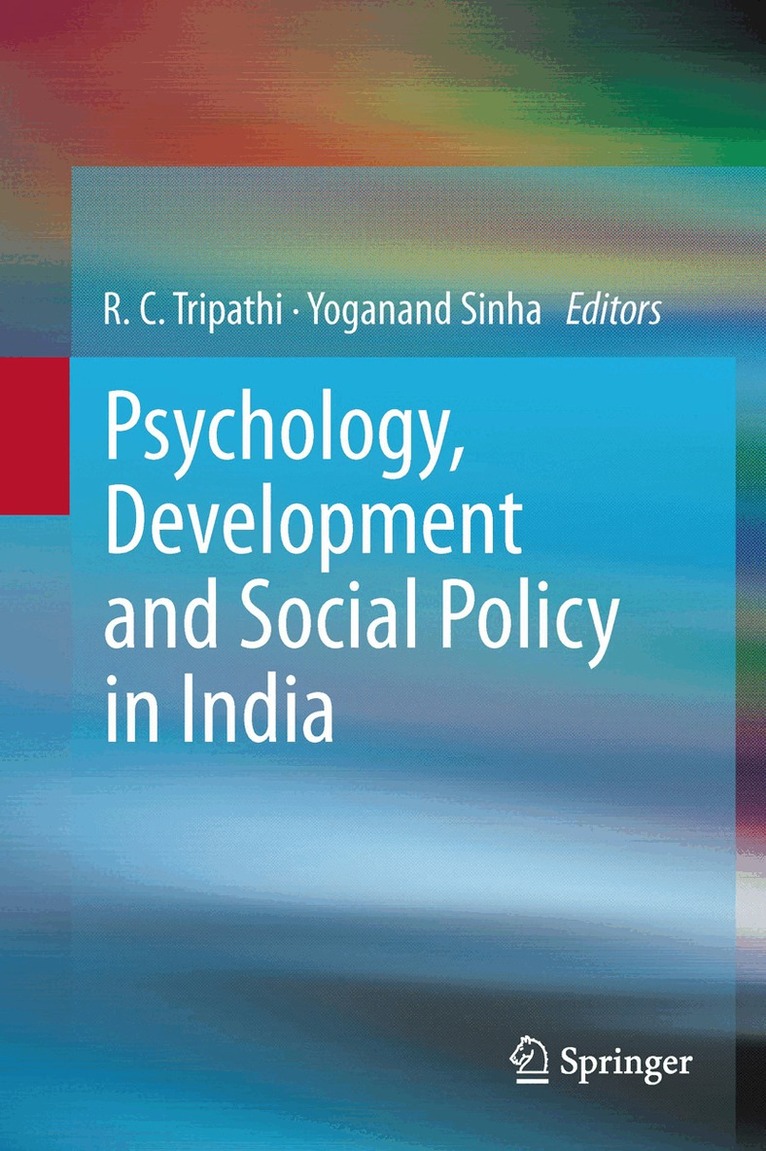
    Psychology, Development and Social Policy in India

    AvR. C. Tripathi,Yoganand Sinha

    Häftad, Engelska, 2015

    1 119 kr

    Beställningsvara. Skickas inom 10-15 vardagar. Fri frakt över 249 kr.

    Beskrivning

    This book examines how and where psychology can engage itself in the framing of social policies for national as well as human development in India. Although the role that psychological knowledge can play in informing social policy decisions has been discussed for a long time, psychologists by and large have had little role in framing policy decisions related to such important domains as education, health, social justice and social inclusion. Policy makers, not only in India, but more or less everywhere have focused on interventions at the macro level, which has led them to ignore the root causes of the problems lying at the micro level. However, with the more humanistic approaches now being followed by economists and other social scientists, the person in society is slowly taking centrestage. Micro-level variables like happiness, the wellbeing of individuals and the social relationships within which people define themselves are becoming important. Therefore, this book discusses important psychological issues related to human development; particularly, health and education, social justice, social integration, environment and work organizations, besides focusing on some general issues relating to the logic of making social policies. It is a first-ever attempt in India to inform policy makers about how micro-variables can be a crucial factor to consider while framing social policies.

    Produktinformation

    • Utgivningsdatum:2015-08-23
    • Mått:155 x 235 x 19 mm
    • Vikt:522 g
    • Format:Häftad
    • Språk:Engelska
    • Antal sidor:320
    • Förlag:Springer, India, Private Ltd
    • ISBN:9788132217480

    Utforska kategorier

    • Psykologi inom Psykologi och pedagogik
    • Regionalt styre och förvaltning inom Samhälle och politik
    • Historia inom Historia och arkeologi

    Mer om författaren

    R. C. Tripathi (PhD, Michigan) is former Professor in Psychology, University of Allahabad, India and former Director, G.B. Pant Social Science Institute, India. He has been on the boards of many apex higher education bodies in India, including the University Grants Commission and the Indian Council of Social Science Research. Among his publications are Expanding Horizons of Mind Science/s (with P.N. Tandon and N. Srinivasan); Norm Violation and Intergroup Relations (with R. DeRidder); and Psychology in Human and Social Development (with J.W. Berry and R.C. Mishra). He is the Editor of Psychology and Developing Societies, an international journal published by SAGE. Yoganand Sinha is Associate Professor in Psychology, University of Allahabad, India and has been involved in the development and teaching of programmes of the psychology of social change and national development; and also of Human Resource Development and Management. He is an HR consultant and serves on the boards of HR firms. An avid bird photographer, he has recently published a book on birds at the Indian School of Business, Hyderabad.

    Recensioner i media

    “The present book by experts and practitioners in the field of psychology, who, with their work have transcended disciplinary bounds is a book long due. It presents a mirror to both the practitioners in psychology as well as the administrators and policy makers. … In the book, there are several chapters, which set the tone for discussions and dialogue on the core idea of well-being and the radiating arrows into different fields … .” (Shilpa Ashok Pandit, Psychological Studies, Vol. 60, 2015)

    Innehållsförteckning

    • Chapter 1: Introduction: The Psychological Coordinates of Social Policy in India.- Chapter 2: Social Research and Public Policy.- Chapter 3: Psychology and National Development.- Chapter 4: Human Development: Concept and Strategy.- Chapter 5: Education: Path to Development and Happiness in Rural India?.- Chapter 6: Language Policy and Education: Towards Multilingual Education.- Chapter 7: Learning Disability: Issues and Concerns with Implications for Social Policy.- Chapter 8: Social Policy and Mental Health: The Case of India.- Chapter 9: Psychology and Physical Disability Policies.- Chapter 10: Relevance of Traditional Healing and Health Care Practices in India.- Chapter 11: Psychological Impact of Poverty and Socio-Cultural Disadvantage: Some Problems of Policy and Intervention Research.- Chapter 12: Research on Distributive Justice: Implications for Social Policy.- Chapter 13: The Hindu-Muslim Divide: Building Sustainable Bridges.- Chapter 14: Gender Role Transformation and its Implication for Culture and Policy.- Chapter 15: The Environment-Behaviour link: Challenges for Policy Makers.​