• Fri frakt över 249 kr
  • •
  • Snabba leveranser
  • •
  • Billiga böcker
Kundservice

Du är på sajten för privatpersoner.

Företag, bibliotek eller offentlig verksamhet?

Du handlar på classic.bokus.com, där alla dina funktioner finns intakta.
Till classic.bokus.com
Bokus logotyp. Gå till startsidan.
  • Erbjudanden
  • Nyheter
  • Student
  • Topplistor
  • Barn & ungdom
  • Bokus Play
  • E-böcker
  • Pocketböcker
  • Spel & pussel

10% rabatt på allt med kod: NYSTART10 →

Sidfot

Mina sidor

    Hjälp

    • Kundservice
    • Vanliga frågor och svar
    • Frakt och leverans
    • Retur vid ångerrätt
    • Reklamera vara
    • Betalning
    • Köpvillkor
    • Allmänna villkor
    • Information om webbplatsens tillgänglighet

    Om Bokus

    • Om oss
    • Pressrum
    • För studenter
    • För företag
    • För bibliotek och offentlig verksamhet
    • För leverantörer
    • Hållbarhet

    Populärt

    • Aktuella erbjudanden
    • Presentkort
    • Studentlitteratur
    • Nya böcker
    • Topplistor
    • Signerade böcker
    • Engelska böcker

    Inspiration

    • Boktips
    • BookTok
    • Populära bokserier
    • Barnbokskaraktärer
    • Populära författare
    Logotyp för Bokus
    Följ oss på Facebook (extern länk)Följ oss på Instagram (extern länk)Följ oss på YouTube (extern länk)Följ oss på TikTok (extern länk)
    bokus @ CookiesAnpassa cookiesIntegritetspolicyKöpvillkor
    Till Citymail hemsida (extern länk)Till Budbee hemsida (extern länk)Till Postnord hemsida (extern länk)Till Schenker hemsida (extern länk)Till Early Bird hemsida (extern länk)Till Walleys hemsida (extern länk)
    1. Samhälle och politik
    2. Politik och statsskick
    3. Statsvetenskap och politisk teori

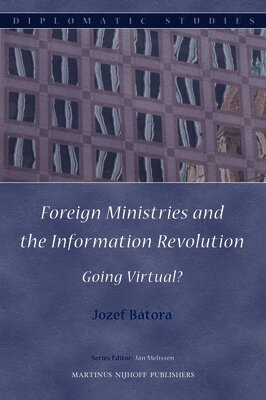
    Foreign Ministries and the Information Revolution: Going Virtual?

    AvJozef Bátora

    Inbunden, Engelska, 2008

    Del 2 i serien Diplomatic Studies

    2 359 kr

    Beställningsvara. Skickas inom 5-8 vardagar. Fri frakt över 249 kr.

    Beskrivning

    The ongoing information revolution is perceived as a profound organizational challenge for foreign ministries. Yet there is only scant empirical evidence on the nature of the change dynamics. Anchored in new institutionalist approaches in political science, this book reconceptualizes diplomacy as an institution of the modern state order and identifies its key organizing principles maintained by the global group of foreign ministries. With this conceptualization as a point of departure, the book provides a comparative analysis of information technology effects in the foreign ministries of Canada, Norway and Slovakia. The result is a comprehensive assessment of the magnitude and the direction of change in the organizational machinery of diplomacy in early 21st Century.

    Produktinformation

    • Utgivningsdatum:2008-07-25
    • Mått:156 x 234 x 14 mm
    • Vikt:581 g
    • Format:Inbunden
    • Språk:Engelska
    • Serie:Diplomatic Studies
    • Antal sidor:252
    • Förlag:Brill
    • ISBN:9789004169005

    Utforska kategorier

    • Statsvetenskap och politisk teori inom Samhälle och politik
    • Folkrätt inom Juridik

    Mer om författaren

    Jozef Bátora, PhD. (2006) in Political Science, University of Oslo, is Research Fellow at the Institute for European Integration Research, Austrian Academy of Sciences in Vienna.

    Innehållsförteckning

    • Chapter 1: INTRODUCTIONIT-revolution and diplomacyInstitutional resilience of diplomacyIT-revolution or institutional resilience?Organization of chaptersChapter 2: THE ORGANIZATIONAL BASIS OF MODERN DIPLOMACY: ITS EMERGENCE, CHARACTERISTICS AND CHANGE2.1 Introduction2.2 The ‘informational prerogative’ of the state and the organizing principles of modern diplomacy2.3 Diplomacy as an institution of the interstate order2.4 ConclusionChapter 3: ANALYZING IT-EFFECTS IN FOREIGN MINISTRIES3.1 Introduction3.2 Foreign ministries and the information revolution(s)3.3 IT and institutional change dynamics3.3.1 IT-enabled institutional transformation3.4 Operationalizing the core organizing principles of diplomacy3.5 Multiple scenarios of IT-effects on the organizational basis of diplomacy3.6 Methodology3.7 ConclusionChapter 4: DEPARTMENT OF FOREIGN AFFAIRS AND INTERNATIONAL TRADE4.1 Introduction4.2 Institutional background and characteristics of DFAIT4.3 IT-infrastructure of DFAIT4.4 IT-effects on hierarchy4.5 IT-effects on secrecy4.6 IT-effects on communication with the public4.6.2 Level of centralization of communication with the public 4.7 ConclusionChapter 5: ROYAL NORWEGIAN MINISTRY OF FOREIGN AFFAIRS5.1 Introduction5.2 Institutional background and characteristics of N-MFA5.3 IT-infrastructure of N-MFA5.4 IT-effects on hierarchy5.5 IT-effects on secrecy5.6 IT-effects on communication with the public5.7 ConclusionChapter 6MINISTRY OF FOREIGN AFFAIRS OF THE SLOVAK REPUBLIC6.1 Introduction6.2 Institutional background and characteristics of MFASR6.3 IT-infrastructure of MFASR6.4 IT-effects on hierarchy6.5 IT-effects on secrecy6.6 IT-effects on communication with the public6.7 ConclusionChapter 7: CONCLUSION: THE ORGANIZATIONAL BASIS OF DIPLOMACY RENEWED7.1 Introduction7.2 IT-effects on the core organizing principles of diplomacy: the main findings7.2.3 IT-effects on communication with the public7.2.4 Additional observations and findings7.3 What were the drivers of change?7.4 Theoretical observations7.5. Revolution ante portas?ReferencesAppendixes