• Fri frakt över 249 kr
  • •
  • Snabba leveranser
  • •
  • Billiga böcker
Kundservice

Du är på sajten för privatpersoner.

Företag, bibliotek eller offentlig verksamhet?

Du handlar på classic.bokus.com, där alla dina funktioner finns intakta.
Till classic.bokus.com
Bokus logotyp. Gå till startsidan.
  • Erbjudanden
  • Nyheter
  • Student
  • Topplistor
  • Barn & ungdom
  • Bokus Play
  • E-böcker
  • Pocketböcker
  • Spel & pussel

10% studentrabatt med kod TERM26

Sidfot

Mina sidor

    Hjälp

    • Kundservice
    • Vanliga frågor och svar
    • Frakt och leverans
    • Retur vid ångerrätt
    • Reklamera vara
    • Betalning
    • Köpvillkor
    • Allmänna villkor
    • Information om webbplatsens tillgänglighet

    Om Bokus

    • Om oss
    • Pressrum
    • För studenter
    • För företag
    • För bibliotek och offentlig verksamhet
    • För leverantörer
    • Hållbarhet

    Populärt

    • Aktuella erbjudanden
    • Presentkort
    • Studentlitteratur
    • Nya böcker
    • Topplistor
    • Signerade böcker
    • Engelska böcker

    Inspiration

    • Boktips
    • BookTok
    • Populära bokserier
    • Barnbokskaraktärer
    • Populära författare
    Logotyp för Bokus
    Följ oss på Facebook (extern länk)Följ oss på Instagram (extern länk)Följ oss på YouTube (extern länk)Följ oss på TikTok (extern länk)
    bokus @ CookiesAnpassa cookiesIntegritetspolicyKöpvillkor
    Till Citymail hemsida (extern länk)Till Budbee hemsida (extern länk)Till Postnord hemsida (extern länk)Till Schenker hemsida (extern länk)Till Early Bird hemsida (extern länk)Till Walleys hemsida (extern länk)
    1. Samhälle och politik
    2. Samhälle och kultur
    3. Kultur och medier
    4. Kulturvetenskap

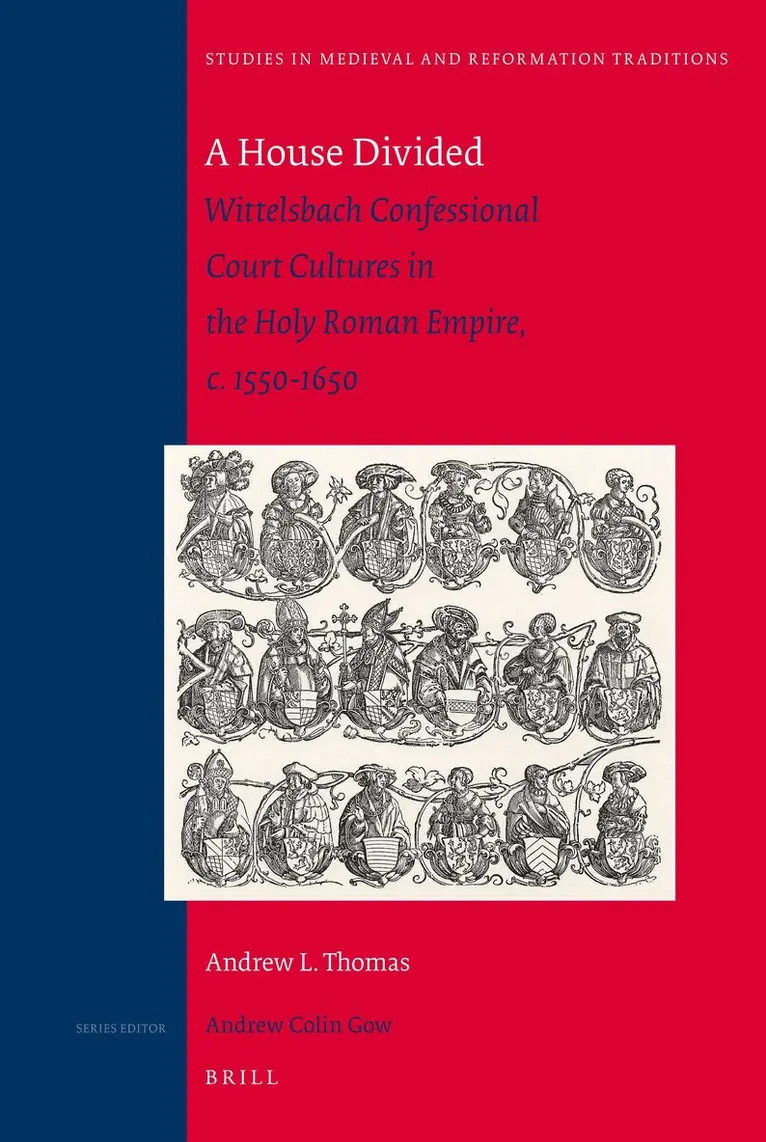
    House Divided: Wittelsbach Confessional Court Cultures in the Holy Roman Empire, c. 1550-1650

    AvAndrew L. Thomas

    Inbunden, Engelska, 2010

    Del 150 i serien Studies in Medieval and Reformation Traditions

    2 325 kr

    Beställningsvara. Skickas inom 5-8 vardagar. Fri frakt över 249 kr.

    Beskrivning

    This book is the only book-length monograph comparing the impact of confessional identity on both halves of the Wittelsbach dynasty which provided Bavarian dukes and German emperors as well as its implications for late Renaissance court culture. It demonstrates that religious conflict led to the development of distinctly confessional court cultures among the main Wittelsbach courts. Likewise, it illuminates how these confessional court cultures contributed significantly to the splintering of Renaissance humanism along religious lines in this era. Concomitantly, it sheds new light on the impact of late medieval dynastic competition on shaping the early modern Wittelsbach courts as well as the important role of Wittelsbach women in the creation and continuation of dynastic piety in their roles as wives, mothers, and patronesses of the arts.

    Produktinformation

    • Utgivningsdatum:2010-04-06
    • Mått:160 x 240 x 29 mm
    • Vikt:862 g
    • Format:Inbunden
    • Språk:Engelska
    • Serie:Studies in Medieval and Reformation Traditions
    • Antal sidor:404
    • Förlag:Brill
    • ISBN:9789004183568

    Utforska kategorier

    • Kulturvetenskap inom Samhälle och politik

    Mer om författaren

    Andrew L. Thomas, Ph. D. (2007) in History, Purdue University, is Assistant Professor of History at Salem College. He and Charles Ingrao have copublished two monographs dealing with the influence of Austrian Habsburg consorts in the High Baroque.

    Recensioner i media

    “Andrew Thomas’s book deserves high merit for its comprehensive treatment, based on a broad range of sources, and for its mastery of several bodies of scholarly literature. The theme of the two Wittelsbach branches as dynastic and territorial rivals, and as representatives of the religious fragmentation of the German lands, is not a new discovery. Andrew Thomas gives it, however, an original and comprehensive treatment that is surely both new and valuable. His highly interesting, challenging book engages many of the principal themes of German history in what has come to be called the confessional age.”Thomas A. Brady, Jr., University of California, Berkeley. In: Sixteenth Century Journal, Vol. 42, No. 1 (2012), pp. 181-182. "Die Dissertation ist gut recherchiert. Ihre Ergebnisse werden im überlegten Aufbau und formal einwandfreier Form niedergelegt. Die Ausführungen sind durch einen hinreichenden, jedoch nicht überbordenden Anmerkungsapparat hilfreich untermauert. [...] Insgesamt ist eine Untersuchung gelungen, die Wissenschaftlichkeit, Lesbarkeit und Benutzbarkeit gekonnt miteinander verbindet. Das originell ansetzende, inhaltlich anregende und formal rundum gefällige Buch stellt einen anregenden und weiterführenden Beitrag der interdisziplinär arbeitenden Kulturgeschichte zur Reformationsforschung dar." Alois Schmid, Ludwig-Maximilians-Universität München. In: Francia-Recensio 2012.“More than just a study of one dynasty, with its emphasis on political, cultural and religious history, A house divided reflects the dynamism of Europe in the early modern world.”Amy K. Bosworth, Muskingum University, New Concord, Ohio. In: The Journal of Ecclesiastical History, Vol. 63, No. 1 (January 2012), pp. 165-166. "This is an exciting study, with an innovative and cross-disciplinary approach."Jonathan Spangler, Manchester Metropolitan University. In: European Review of History, Vol. 18, No. 4 (October 2011), pp. 581-583. "Eine wertvolle Studie sowohl zur Geschichte des Hauses Wittelsbach wie auch zur Geistes- und Kulturgeschichte Mitteleuropas in jener Sattelzeit des 16./17. Jahrhunderts." Josef Johannes Schmid, Johannes Gutenberg-Universität Mainz. In: sehepunkte 11 (2011), Nr. 3 [15.03.2011].

    Innehållsförteckning

    • List of IllustrationsAcknowledgementsIntroduction1. Reflecting Dynastic Destinies: Mirror of Prince Literature and Wittelsbach Education2. Patronage and Piety: The Confessionalization of Wittelsbach Courts in Heidelberg and Munich3. Confessional Frontiers and Border Wars: The Confessionalization of Bavaria and the Palatinate4. Wedding Bells and Cannon Fire: Wittelsbach Confessional Diplomacy5. A Winter’s Tale: The “Winter King” and the Court at Prague 6. Image-Breaking: Iconoclasm and Identity Crisis7. Clarion Calls: White Mountain and Wittelsbach Legitimacy8. Metamorphosis: The Palatinate in Transition and the “Bohemian” Court in Exile at The Hague ConclusionBibliographyAppendicesApendix A: Wittelsbach Genealogy (1300-1550 Apendix B: Palatine Wittelsbachs Genealogy (1550-1650 Apendix C: Bavarian Wittelsbachs Genealogy (1550-1650) Index