• Fri frakt över 249 kr
  • •
  • Snabba leveranser
  • •
  • Billiga böcker
Kundservice

Du är på sajten för privatpersoner.

Företag, bibliotek eller offentlig verksamhet?

Du handlar på classic.bokus.com, där alla dina funktioner finns intakta.
Till classic.bokus.com
Bokus logotyp. Gå till startsidan.
  • Erbjudanden
  • Nyheter
  • Student
  • Topplistor
  • Barn & ungdom
  • Bokus Play
  • E-böcker
  • Pocketböcker
  • Spel & pussel

10% rabatt på allt med kod: NYSTART10 →

Sidfot

Mina sidor

    Hjälp

    • Kundservice
    • Vanliga frågor och svar
    • Frakt och leverans
    • Retur vid ångerrätt
    • Reklamera vara
    • Betalning
    • Köpvillkor
    • Allmänna villkor
    • Information om webbplatsens tillgänglighet

    Om Bokus

    • Om oss
    • Pressrum
    • För studenter
    • För företag
    • För bibliotek och offentlig verksamhet
    • För leverantörer
    • Hållbarhet

    Populärt

    • Aktuella erbjudanden
    • Presentkort
    • Studentlitteratur
    • Nya böcker
    • Topplistor
    • Signerade böcker
    • Engelska böcker

    Inspiration

    • Boktips
    • BookTok
    • Populära bokserier
    • Barnbokskaraktärer
    • Populära författare
    Logotyp för Bokus
    Följ oss på Facebook (extern länk)Följ oss på Instagram (extern länk)Följ oss på YouTube (extern länk)Följ oss på TikTok (extern länk)
    bokus @ CookiesAnpassa cookiesIntegritetspolicyKöpvillkor
    Till Citymail hemsida (extern länk)Till Budbee hemsida (extern länk)Till Postnord hemsida (extern länk)Till Schenker hemsida (extern länk)Till Early Bird hemsida (extern länk)Till Walleys hemsida (extern länk)
    1. Filosofi och religion
    2. Religion och tro
    3. Religion: allmänt

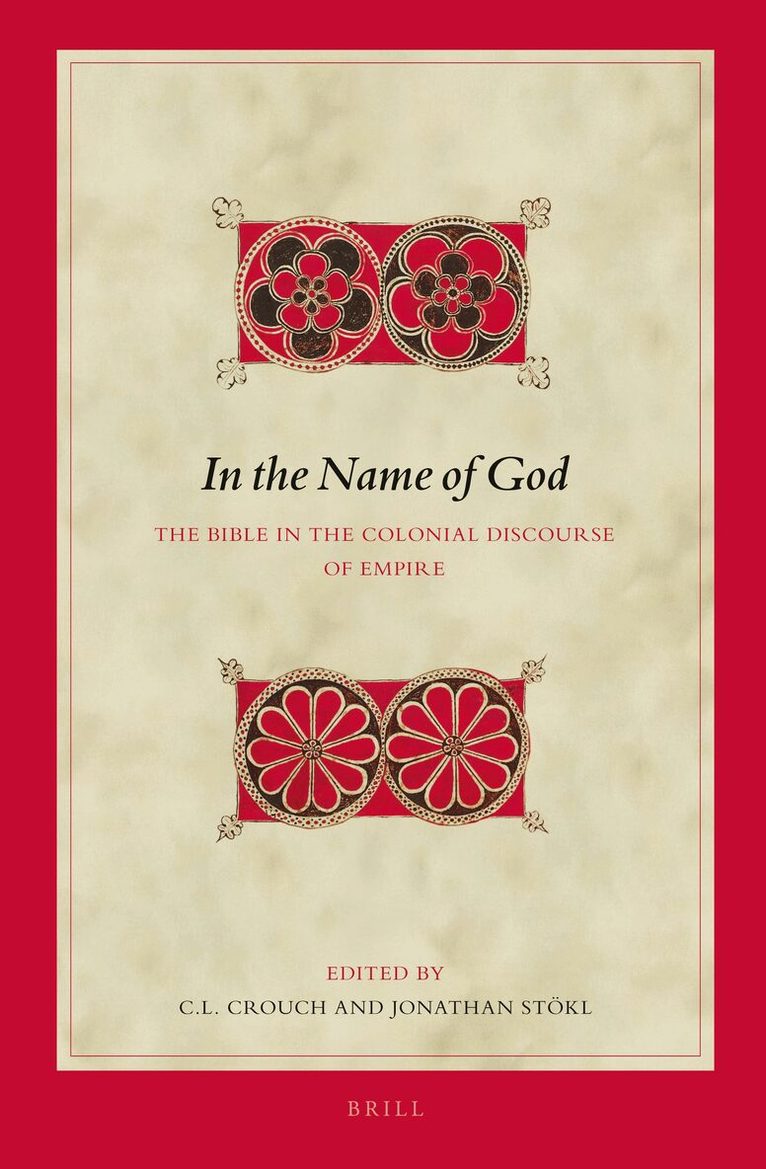
    In the Name of God

    The Bible in the Colonial Discourse of Empire

    AvC.L. Crouch,Jonathan Stökl

    Inbunden, Engelska, 2013

    Del 126 i serien Biblical Interpretation Series

    2 085 kr

    Beställningsvara. Skickas inom 5-8 vardagar. Fri frakt över 249 kr.

    Beskrivning

    In In the Name of God biblical scholars and historians begin the exciting work of deconstructing British and Spanish imperial usage of the Bible as well as the use of the Bible to counteract imperialism. Six essays explore the intersections of political movements and biblical exegesis. Individual contributions examine English political theorists' use of the Bible in the context of secularisation, analyse the theological discussion of discoveries in the New World in a context of fraught Jewish-Christian relations in Europe and dissect millennarian preaching in the lead up to the Crimean War. Others investigate the anti-imperialist use of the Bible in southern Africa, compare Spanish and British biblicisation techniques and trace the effects of biblically-rooted articulations of nationalism on the development of Hinduism's relationship to the Vedas. Contributors include: Yvonne Sherwood, Ana Valdez, Mark Somos, Andrew Mein, Hendrik Bosman and Hugh Pyper.

    Produktinformation

    • Utgivningsdatum:2013-11-29
    • Mått:155 x 235 x 16 mm
    • Vikt:445 g
    • Format:Inbunden
    • Språk:Engelska
    • Serie:Biblical Interpretation Series
    • Antal sidor:192
    • Förlag:Brill
    • ISBN:9789004258334

    Utforska kategorier

    • Religion: allmänt inom Filosofi och religion
    • Kolonialism och imperialism inom Historia och arkeologi
    • Biblar inom Filosofi och religion

    Mer om författaren

    C.L. Crouch, DPhil (2009), is Lecturer in Hebrew Bible at the University of Nottingham. She has published on War and Ethics in the Ancient Near East (de Gruyter 2009), Genesis and the prophetic books. Her current research is on identity formation in Deuteronomy.Jonathan Stökl, DPhil (2009), is Lecturer in Hebrew Bible / Old Testament at King’s College London. He has published a monograph Ancient Near Eastern Prophecy: A Philological and Sociological Comparison (Brill 2012) and articles on prophecy in the Hebrew Bible and the Ancient Near East.

    Recensioner i media

    "I find this volume to be wonderfully challenging of overly repeated stereotypes in “postcolonial” discussions. There is a general motif of “not so fast” running through this entire volume that is challenging and refreshing. Whether or not one agrees with the arguments put forward—and I suspect there will be considerable debate—this volume succeeds in prodding thought and that, one hopes, will generate more discussion. We owe a great deal of thanks to the writers and editors of this important book."Daniel L. Smith-Christopher, Loyola Marymount University