• Fri frakt över 249 kr
  • •
  • Snabba leveranser
  • •
  • Billiga böcker
Kundservice

Du är på sajten för privatpersoner.

Företag, bibliotek eller offentlig verksamhet?

Du handlar på classic.bokus.com, där alla dina funktioner finns intakta.
Till classic.bokus.com
Bokus logotyp. Gå till startsidan.
  • Erbjudanden
  • Nyheter
  • Student
  • Topplistor
  • Barn & ungdom
  • Bokus Play
  • E-böcker
  • Pocketböcker
  • Spel & pussel

10% rabatt på allt med kod: NYSTART10 →

Sidfot

Mina sidor

    Hjälp

    • Kundservice
    • Vanliga frågor och svar
    • Frakt och leverans
    • Retur vid ångerrätt
    • Reklamera vara
    • Betalning
    • Köpvillkor
    • Allmänna villkor
    • Information om webbplatsens tillgänglighet

    Om Bokus

    • Om oss
    • Pressrum
    • För studenter
    • För företag
    • För bibliotek och offentlig verksamhet
    • För leverantörer
    • Hållbarhet

    Populärt

    • Aktuella erbjudanden
    • Presentkort
    • Studentlitteratur
    • Nya böcker
    • Topplistor
    • Signerade böcker
    • Engelska böcker

    Inspiration

    • Boktips
    • BookTok
    • Populära bokserier
    • Barnbokskaraktärer
    • Populära författare
    Logotyp för Bokus
    Följ oss på Facebook (extern länk)Följ oss på Instagram (extern länk)Följ oss på YouTube (extern länk)Följ oss på TikTok (extern länk)
    bokus @ CookiesAnpassa cookiesIntegritetspolicyKöpvillkor
    Till Citymail hemsida (extern länk)Till Budbee hemsida (extern länk)Till Postnord hemsida (extern länk)Till Schenker hemsida (extern länk)Till Early Bird hemsida (extern länk)Till Walleys hemsida (extern länk)
    1. Kultur
    2. Konstböcker
    3. Konsthistoria

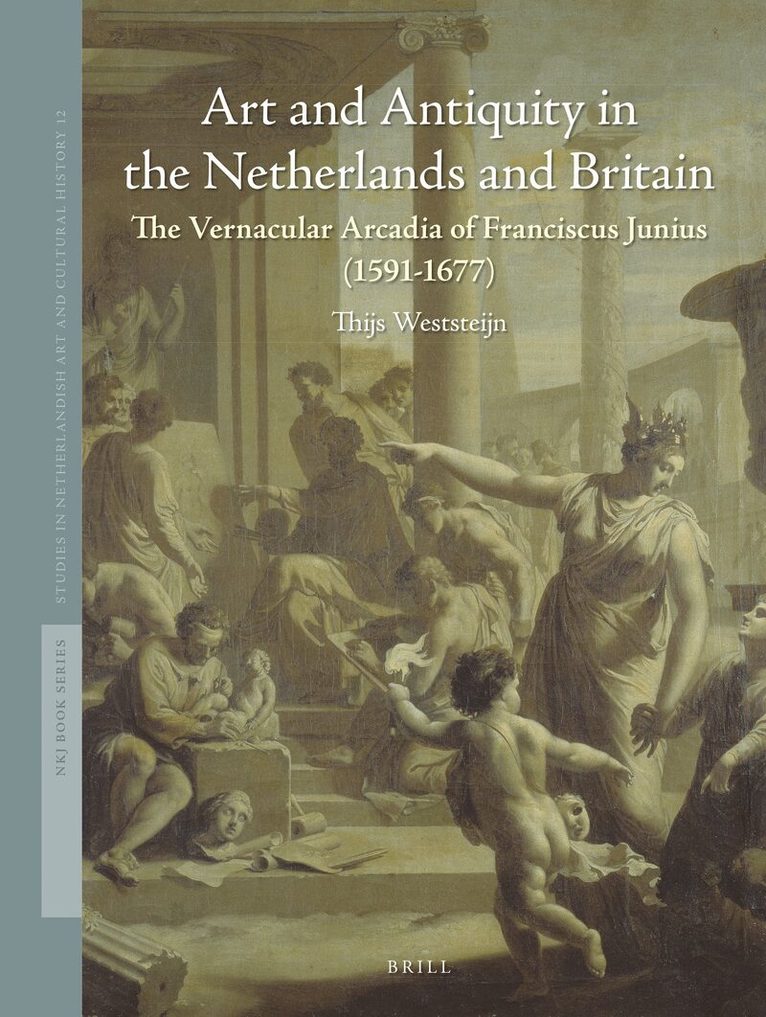
    Art and Antiquity in the Netherlands and Britain

    The Vernacular Arcadia of Franciscus Junius (1591–1677)

    AvThijs Weststeijn

    Inbunden, Engelska, 2015

    Del 12 i serien Studies in Netherlandish Art and Cultural History

    2 706 kr

    Beställningsvara. Skickas inom 5-8 vardagar. Fri frakt över 249 kr.

    Beskrivning

    How did the classical tradition survive on the North Sea shores? This richly illustrated book explores the interplay between art and erudition in the seventeenth century. It analyses the sources, editions, and reception of Franciscus Junius’s writings to chart how ideas about Northern European painting, from Van Dyck to Rembrandt, developed as a counterweight to the Italian tradition. Thus the language of art in Junius’s The Painting of the Ancients appears to be related to his seminal work in the field of Germanic linguistics and his discovery of the shared pre-Christian civilization of Holland and England. Junius’s innovative pairing of scholarship to the painter’s practice illuminates the reception of antiquity and the creation of an Anglo-Dutch artistic Arcadia.

    Produktinformation

    • Utgivningsdatum:2015-02-13
    • Mått:170 x 245 x 34 mm
    • Vikt:1 365 g
    • Format:Inbunden
    • Språk:Engelska
    • Serie:Studies in Netherlandish Art and Cultural History
    • Antal sidor:452
    • Förlag:Brill
    • ISBN:9789004283619

    Utforska kategorier

    • Konsthistoria inom Kultur

    Mer om författaren

    Thijs Weststeijn is Associate Professor of Art History at the University of Amsterdam. He has published widely on seventeenth-century art and theory, including The Universal Art of Samuel van Hoogstraten (2013) and The Visible World (2008).

    Recensioner i media

    "Weststeijn’s book is a major contribution to the scholarship on seventeenth-century art theory and practice and is an exemplar for future studies on the subject."John R. Decker, Georgia State University

    Innehållsförteckning

    • ContentsAcknowledgments ixList of Illustrations xList of Abbreviations xxiiiIntroduction: Franciscus Junius’ Vernacular Arcadia 1“An Extremely Learned and Famous Man” 9Painting and Philology in the Netherlands 13Artistic Terms in Latin and in the Vernacular 19Junius in the European “Republic of Painting” 231 “Transform this Age into a Golden One”: Junius and the Arundel Collection 31Dutch Art in England: The Arundel Circle 41Antiquarianism in Britain and the Netherlands 47The Genesis of The Painting of the Ancients 66Arundel’s Paper Museum 73The Gentleman’s Exercise: Civil Conversations about Art 872 More than a Paraphrase: The Painting of the Ancients in Latin, English, and Dutch 103“More than Paraphrastic License” 116Differences in Terminology 124Junius, Van Hoogstraten, De Lairesse, and Rembrandt 128“Polishing” and “Demarcating” the Vernacular 1403 Dutch and English Antiquity: The Germanic Origins of Art 151The Germanic Languages as Languages of Art 153Germanic Iconography 155Germanic Style 175Rembrandt’s Conspiracy of Claudius Civilis 181Aftermath: The Saxon Gods at Stowe 1884 Actualizing the Ancients: Junius, Vossius, Lampsonius 195The Neo-Latin Tradition of Art Theory 199The Four Popular Arts 203The Concept of Graphein 206Painting and Rhetoric 208Actualizing the Ancients 211The “Father of Painting in the Netherlands”: Lambert Lombard 227Classical Scholarship and the Painter’s Studio: A Vernacular Symbiosis 2355 The Painter’s Right Hand: Teghenwoordigheydt and the Presence of Painting 245The Reception of Junius’ Ideas among Artists 245Painting and Ekphrasis 248Presence, or Teghenwoordigheydt 258“As if the artist were present” 260The Beholder’s Presence 268The Artistic Experience: A Mental Activity for Both Artist and Viewer 277Conclusion: From Mimesis to Imagination 289Imagination and Lifelikeness 290“A Hidden Room”: Art as a Shelter from Conflict 300Coda: The Presence of the Past as an Aesthetic Ideal 311AppendicesGerardus Vossius, The Art of Painting (1650) 315Table 1: Contents of Junius’ The Painting of the Ancients 327Table 2: The Reception of Junius’ Treatise in the Seventeenth and Eighteenth Centuries 329Table 3: Major Differences between the English and Dutch Editions 358Table 4: Terminology in the Dutch Edition 369Notes 381Bibliography 422Index of Names 443