• Fri frakt över 249 kr
  • •
  • Snabba leveranser
  • •
  • Billiga böcker
Kundservice

Du är på sajten för privatpersoner.

Företag, bibliotek eller offentlig verksamhet?

Du handlar på classic.bokus.com, där alla dina funktioner finns intakta.
Till classic.bokus.com
Bokus logotyp. Gå till startsidan.
  • Erbjudanden
  • Nyheter
  • Student
  • Topplistor
  • Barn & ungdom
  • Bokus Play
  • E-böcker
  • Pocketböcker
  • Spel & pussel

Må bättre, för mindre! Upp till 50% rabatt på hälsoböcker

Sidfot

Mina sidor

    Hjälp

    • Kundservice
    • Vanliga frågor och svar
    • Frakt och leverans
    • Retur vid ångerrätt
    • Reklamera vara
    • Betalning
    • Köpvillkor
    • Allmänna villkor
    • Information om webbplatsens tillgänglighet

    Om Bokus

    • Om oss
    • Pressrum
    • För studenter
    • För företag
    • För bibliotek och offentlig verksamhet
    • För leverantörer
    • Hållbarhet

    Populärt

    • Aktuella erbjudanden
    • Presentkort
    • Studentlitteratur
    • Nya böcker
    • Topplistor
    • Signerade böcker
    • Engelska böcker

    Inspiration

    • Boktips
    • BookTok
    • Populära bokserier
    • Barnbokskaraktärer
    • Populära författare
    Logotyp för Bokus
    Följ oss på Facebook (extern länk)Följ oss på Instagram (extern länk)Följ oss på YouTube (extern länk)Följ oss på TikTok (extern länk)
    bokus @ CookiesAnpassa cookiesIntegritetspolicyKöpvillkor
    Till Citymail hemsida (extern länk)Till Budbee hemsida (extern länk)Till Postnord hemsida (extern länk)Till Schenker hemsida (extern länk)Till Early Bird hemsida (extern länk)Till Walleys hemsida (extern länk)
    1. Ekonomi och Ledarskap
    2. Nationalekonomi
    3. Ekonomisk historia

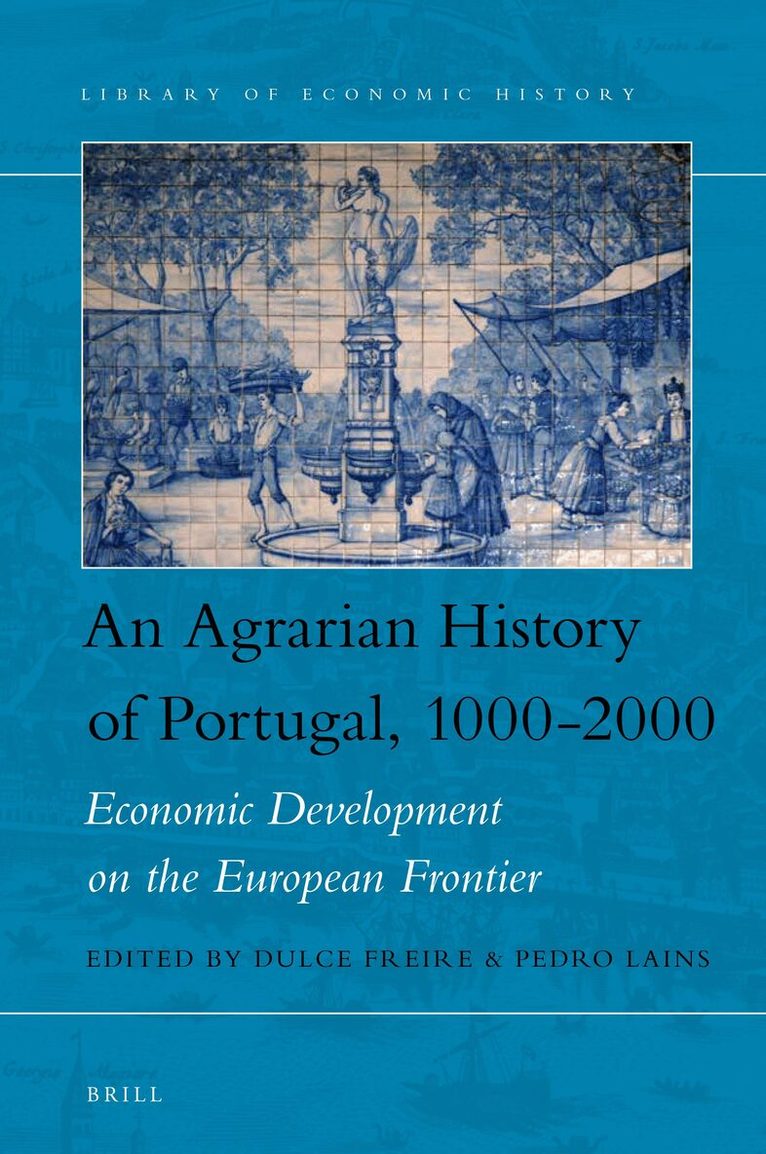
    Agrarian History of Portugal, 1000-2000

    Economic Development on the European Frontier

    AvDulce Freire

    Inbunden, Engelska, 2016

    Del 7 i serien Library of Economic History

    2 368 kr

    Beställningsvara. Skickas inom 5-8 vardagar. Fri frakt över 249 kr.

    Beskrivning

    This book follows the renovation of European economic history towards a more unified interpretation of sources of growth and stagnation. To better understand the diversity of patterns of growth, we need to look beyond the study of the industrialization of the core economies, and explore the centuries before it occurred. Portuguese agriculture was hardly ever at the European productivity and technological forefront and the distance from it varied substantially across the second Millennium. Yet if we look at the periods of the Christian Reconquista, the recovery from the Black Death, the response to the globalization of the Renaissance, to the eighteenth century economic enlightenment, or to nineteenth century industrialization, we may conclude that agriculture in this country of the European periphery was often adaptive and dynamic. The fact that economic backwardness was not overcome by the end of the period is no longer the most relevant aspect of that story.Contributors are: Luciano Amaral, Amélia Branco, Dulce Freire, António Henriques, Pedro Lains, Susana Münch Miranda, Margarida Sobral Neto, Jaime Reis, Ana Maria Rodrigues, José Vicente Serrão and Ester G. Silva.

    Produktinformation

    • Utgivningsdatum:2016-12-08
    • Mått:155 x 235 x 26 mm
    • Vikt:686 g
    • Format:Inbunden
    • Språk:Engelska
    • Serie:Library of Economic History
    • Antal sidor:350
    • Förlag:Brill
    • ISBN:9789004311534

    Utforska kategorier

    • Ekonomisk historia inom Ekonomi och Ledarskap
    • Internationell ekonomi inom Ekonomi och Ledarskap
    • Lantbruk, fiske och skogsbruk inom Ekonomi och Ledarskap

    Mer om författaren

    Dulce Freire, PhD (2008) in Contemporary History (FCSH-UNL), is research fellow at the Institute of Social Sciences, University of Lisbon. She works in rural and agricultural history in Portuguese and Iberian contexts. She is coordinator of the FCT research project: "Portuguese agriculture: food, development and sustainability, 1870-2010", and chair of the Rural History Network/ESSHC-IISG. Among her publications are To Produce and To Drink. The wine issue in the Estado Novo, 2010 and Rural world: transformation and resistance in the Iberian Peninsula (20th Century), 2004. Pedro Lains, PhD (1992) in History (European University Institute, Florence), is research Professor at the Institute of Social Sciences, University of Lisbon. He researches mainly in Economic History of the 19th and 20th Centuries. Among his publications are História da Caixa Geral de Depósitos, 1876-2010, 2011 and Agriculture and Economic Development in Europe since 1870, 2008.

    Recensioner i media

    "A pioneering collaborative effort, based largely on a rich but 'hidden' literature in Portuguese. It opens the distinctive and fascinating history of Portuguese agriculture over a millennium to the outside world." – Cormac O’ Grada, University College Dublin"This book is a very significant contribution to the economic history of Europe.Since the formation of Portugal to the present, it offers a comprehensive analysis of the evolution of Portuguese agriculture by the best specialists in the subject." – Vicente Pinilla, University of Zaragoza

    Innehållsförteckning

    • List of Maps, Tables and GraphsNotes on the ContributorsIntroduction Dulce Freire and Pedro LainsPart I – State formation and Malthusian growthChapter 1 – The Reconquista and its legacy, 1000-1348António HenriquesIntroductionThe ReconquistaInstitutional developmentsCities, markets and agrotownsProduction and productivityConclusionChapter 2 – The Black Death and recovery, 1348-1500Ana Maria S. A. RodriguesIntroductionPlague, war and demographic declineThe reversal of fortunesCommercializationThe impact of the overseas expansionConclusionPart II – New frontiers, crisis and growthChapter 3 – Coping with Europe and the Empire, 1500-1620Susana Münch MirandaIntroductionPopulation pressure and urban expansionInstitutional framework and output cyclesThe landscape and the production structureThe marketplaceConclusionChapter 4 – Conflict and decline, 1620-1703Margarida Sobral NetoIntroductionDomestic settlements and emigrationColonial tradeSubsistence farming and the marketOutput cyclesConclusionChapter 5 – Extensive growth and market expansion, 1703-1820José Vicente SerrãoIntroductionThe rural landscapeThe macroeconomic contextGrain issuesProperty rightsConclusionChapter 6 – Gross agricultural output: a quantitative, unified perspective, 1500-1850Jaime ReisIntroductionMethod and dataTrend, cycles and short term fluctuationsAre the results consistent?ConclusionPart III – Growth, structural change and economic policyChapter 7 – Growth and structural change, 1820-1929Amélia Branco and Ester G. SilvaIntroductionLand, output and productivityInstitutional changeAgrarian innovationConclusionChapter 8 – Economic policy, growth and the demise, 1929-2000 Luciano Amaral and Dulce FreireIntroductionQuantitative evolutionProtectionismState and corporatist organizationsThe Common Agricultural PolicyConclusionPart IV – Lessons from the second MillenniumChapter 9 – Agriculture and economic development on the European frontier, 1000-2000Pedro LainsIntroductionLessons from the European frontierConvergence and divergence in European agricultureConclusionAppendix – Maps and data for climate, relief, administrative divisions, urbanization, agricultural output and infrastructures in Portugal, 1000-2000Index