• Fri frakt över 249 kr
  • •
  • Snabba leveranser
  • •
  • Billiga böcker
Kundservice

Du är på sajten för privatpersoner.

Företag, bibliotek eller offentlig verksamhet?

Du handlar på classic.bokus.com, där alla dina funktioner finns intakta.
Till classic.bokus.com
Bokus logotyp. Gå till startsidan.
  • Erbjudanden
  • Student
  • Topplistor
  • Barn & ungdom
  • Bokus Play
  • E-böcker
  • Ljudböcker
  • Pocketböcker
  • Spel & pussel

10% rabatt på allt med kod NYSTART10 →

Sidfot

Mina sidor

    Hjälp

    • Kundservice
    • Vanliga frågor och svar
    • Frakt och leverans
    • Retur vid ångerrätt
    • Reklamera vara
    • Betalning
    • Köpvillkor
    • Allmänna villkor
    • Information om webbplatsens tillgänglighet

    Om Bokus

    • Om oss
    • Pressrum
    • För studenter
    • För företag
    • För bibliotek och offentlig verksamhet
    • För leverantörer
    • Hållbarhet

    Populärt

    • Aktuella erbjudanden
    • Presentkort
    • Studentlitteratur
    • Nya böcker
    • Topplistor
    • Signerade böcker
    • Engelska böcker

    Inspiration

    • Boktips
    • BookTok
    • Populära bokserier
    • Barnbokskaraktärer
    • Populära författare
    Logotyp för Bokus
    Följ oss på Facebook (extern länk)Följ oss på Instagram (extern länk)Följ oss på YouTube (extern länk)Följ oss på TikTok (extern länk)
    bokus @ CookiesAnpassa cookiesIntegritetspolicyKöpvillkor
    Till Citymail hemsida (extern länk)Till Budbee hemsida (extern länk)Till Postnord hemsida (extern länk)Till Schenker hemsida (extern länk)Till Early Bird hemsida (extern länk)Till Walleys hemsida (extern länk)
    1. Skönlitteratur
    2. Litteraturvetenskap
    3. Litteraturvetenskap

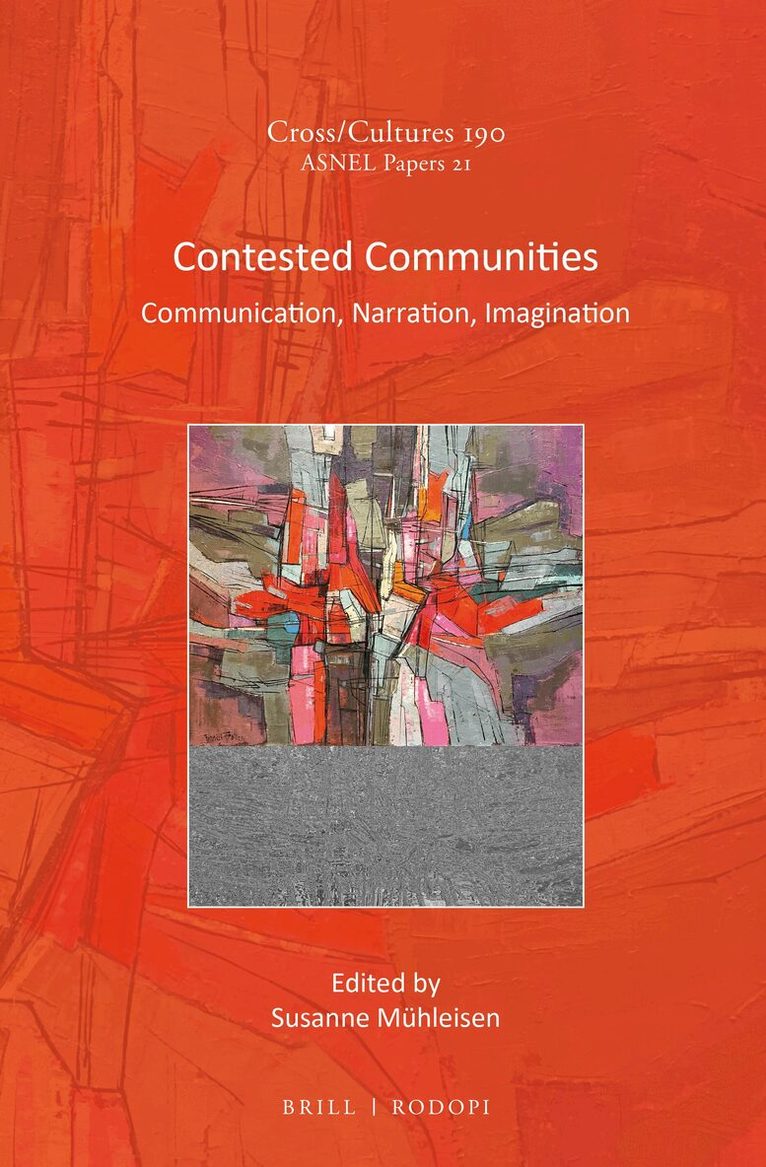
    Contested Communities

    Communication, Narration, Imagination

    AvSusanne Mühleisen

    Inbunden, Engelska, 2017

    Del 190 i serien Cross/Cultures

    2 104 kr

    Beställningsvara. Skickas inom 5-8 vardagar. Fri frakt över 249 kr.

    Beskrivning

    This interdisciplinary volume investigates community in postcolonial language situations, texts, and media. In actual and imagined communities, membership assumes shared features – values, linguistic codes, geographical origin, gender, sexuality, ethnicity, religion, professional interests and practices. How is membership in such communities constructed, manifested, tested or contested? What new forms have emerged in the wake of globalization, translocation, and digital media? Contributions in linguistic, literary, and cultural studies explore the role of communication, narratives, memory, and trauma in processes of (un)belonging.One section treats communication and the speech community. Here, linguistic contributions investigate the concept of the native speaker in World Englishes, in socio-cultural communities identified by styles of verbal duelling, in diaspora communities, physical and digital, where identification with formerly stigmatized linguistic codes acquires new currency. Divisions and alignments in digital communities are at stake in postcolonial African countries like Cameroon where identification with ex-colonizer and ex-colonized is a hot issue. Finally, discourse communities also exist in such traditional media as newspapers (e.g., the Indian tabloid in English).In a section devoted to narrative and narration, the focus is on literary perspectives – post-colonial memory, trauma, and identity in Caribbean literary works by David Chariandy and Pauline Melville and in Australian Aboriginal fiction; narratives of banditry in colonial India; xenophobia and urban space in South Africa; human–animal community crossings and anthropomorphism in Life of Pi.A third section, on linguistic crossings in transnational music styles in global and Ugandan music industries, examines language, style, and belonging in music cultures. The volume closes with a controversial debate on the agendas of academic/non-academic and postcolonial/Western communities with regard to homophobia in Jamaican dancehall culture.CONTRIBUTORS: Eric A. Anchimbe, Susan Arndt, Roman Bartosch, Carolyn Cooper, Daria Dayter, Dagmar Deuber, Tobias Döring, Stephanie Hackert, Caroline Koegler, Stephan Laqué, Andrea Moll, Susanne Mühleisen, Jochen Petzold, Katja Sarkowsky, Britta Schneider, Anne Schröder, Jude Ssempuuma, Robert JC Young

    Produktinformation

    • Utgivningsdatum:2017-11-09
    • Mått:155 x 235 x 27 mm
    • Vikt:707 g
    • Format:Inbunden
    • Språk:Engelska
    • Serie:Cross/Cultures
    • Antal sidor:320
    • Förlag:Brill
    • Medarbetare:Susanne Mühleisen
    • ISBN:9789004335264

    Utforska kategorier

    • Litteraturvetenskap inom Skönlitteratur
    • Språkvetenskap och lingvistik inom Språk och ordböcker
    • Referensverk och tvärvetenskap inom Samhälle och politik

    Mer om författaren

    SUSANNE MÜHLEISEN is Professor of English Linguistics at Bayreuth University with a research and publication focus on English/contact varieties, pragmatics, and discourse communities in Africa and the Caribbean. A wide range of interests in postcolonial issues has also resulted in interdisciplinary collaborations, e.g., on postcolonial crime fiction, foodways, and Caribbean commodification.

    Innehållsförteckning

    • List of Tables and FiguresI: ON COMMUNITYIntroduction: On Community Formation, Manifestation, and Contestation: Acts of Membership and ExclusionSUSANNE MÜHLEISENCommunity and the CommonROBERT JC YOUNGII: COMMUNICATION AND THE SPEECH COMMUNITYThe Native Speaker in World Englishes: A Historical PerspectiveSTEPHANIE HACKERTOrality and Literacy in Verbal Duelling: Playing the Dozens in the Twenty-First CenturyDARIA DAYTERPrestige Change in Contact Varieties of English in Urban Diaspora CommunitiesSUSANNE MÜHLEISEN & ANNE SCHRÖDERDiasporic Cyber-Jamaican: Stylized Dialect of an Imagined CommunityANDREA MOLL’Africa is not a Game’: Constructions of Ex-Colonized and Ex-Colonizer Entities OnlineERIC A. ANCHIMBEThe Indian Tabloid in English: What Type of Community Does It Speak To, and How?DAGMAR DEUBERIII: NARRATING ACROSS THE NATIONThuggee: Thornton, Taylor and the Literature of Banditry in Colonial IndiaTOBIAS DÖRINGHaunting Conflicts: Memory, Forgetting, and the Struggle for Community in David Chariandy’s SoucouyantKATJA SARKOWSKYWhose Hillbrow? Xenophobia and the Urban Space in the ‘New’ South AfricaJOCHEN PETZOLDOrientation and Narration: Aboriginal Identity in Nugi Garimara’s Follow the Rabbit-Proof FenceSTEPHAN LAQUÉA ‘furry subjunctive case’ of Empathy: Human–Animal Communities in Life of Pi and the Question of Literary AnthropomorphismROMAN BARTOSCHMigration, Rhizomic Identities, and the Black Atlantic in Postcolonial Literary Studies: The Trans-Space as Home in Pauline Melville’s Short Story “Eat Labba and Drink Creek Water”SUSAN ARNDTIV: LANGUAGE,STYLE, AND BELONGING INMUSIC CULTURESCommunity and Language in Transnational Music Styles: Symbolic Meanings of Spanish in Salsa and ReggaetónBRITTA SCHNEIDERLanguage Crossings in Transnational Music Cultures: Bottom-Up Promotion of Kiswahili Through the Music Industry in UgandaJUDE SSEMPUUMAV: COUNTER-ARGUMENTCross Talk: Jamaican Popular Music and the Politics of TranslationCAROLYN COOPERAt Whose Cost? A Critical Reading of Carolyn Cooper’s Keynote Lecture “Cross Talk: Jamaican Popular Music and the Politics of Translation”CAROLINE KOEGLERNotes on ContributorsIndex