Inbunden, Engelska, 2017
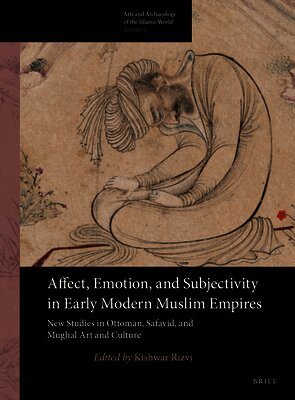
Affect, Emotion, and Subjectivity in Early Modern Muslim Empires: New Studies in Ottoman, Safavid, and Mughal Art and Culture
Del 9 i serien Arts and Archaeology of the Islamic World
2429 kr
Beställningsvara. Skickas inom 5-8 vardagar. Fri frakt över 249 kr.
Beskrivning
Produktinformation
- Utgivningsdatum: 2017-10-19
- Mått: 193 x 260 x 18 mm
- Vikt: 884 g
- Format: Inbunden
- Språk: Engelska
- Serie: Arts and Archaeology of the Islamic World
- Antal sidor: 224
- Förlag: Brill
- Medarbetare: Kishwar Rizvi
- ISBN: 9789004340473
Utforska kategorier
Mer om författaren
Kishwar Rizvi is a Professor of Islamic Art and Architecture at Yale University. She is the author of The Transnational Mosque: Architecture and Historical Memory in the Contemporary Middle East (University of North Carolina Press, 2015), which received the 2017 Charles Rufus Morey Book Award from the College Art Association. Other titles include The Safavid Dynastic Shrine: Architecture, Religion and Power in Early Modern Iran (2011) and the Modernism and the Middle East: Architecture and Politics in the Twentieth Century (2008).
Recensioner i media
"The essays in the book are well arranged and follow one another in a fluid conversation that makes the book accessible even to readers who may not have specialized knowledge of each of the aesthetic cultures under analysis. Readers are expected to acknowledge the interconnectedness of the early modern globe, especially the circulation of texts, objects, and people, and how this, in specific ways, informed visual orders in localized sites of cultural production. The force of the book, however, lies in the contributors’ shared premise of the multivalent artifact that embodies, indexes, traces, and enacts the dialectics of its own production and reception. This requires a willingness to approach the visual sign or the tactile object with an imaginative sense of multiple and overlapping contexts. The essays are framed by a succinct introduction of themes by Kishwar Rizvi that also doubles as a stand-alone essay on existing discourses around affect, self-representation, portraits, temporality, and mobility... The book’s freshness lies in its attempt to verbalize the affective and the subjective codification of artifacts. As Houghteling sums up, “The methodology for writing more enlivened art histories remains unsolved” (125). But it is precisely such a challenge all the authors answer by compiling and presenting intricate registers of signs and significations within which specific artifacts would have circulated across the intertwined aesthetic cultures of the Ottoman, Safavid, and Mughal empires."Priyani Roy Choudhury in: Renaissance Quarterly. Vol. LXXI I I , No. 1.
Betyg & recensioner
0 recensioner
Inga recensioner tillgängliga.