• Fri frakt över 249 kr
  • •
  • Snabba leveranser
  • •
  • Billiga böcker
Kundservice

Du är på sajten för privatpersoner.

Företag, bibliotek eller offentlig verksamhet?

Du handlar på classic.bokus.com, där alla dina funktioner finns intakta.
Till classic.bokus.com
Bokus logotyp. Gå till startsidan.
  • Erbjudanden
  • Nyheter
  • Student
  • Topplistor
  • Barn & ungdom
  • Bokus Play
  • E-böcker
  • Pocketböcker
  • Spel & pussel

Må bättre, för mindre! Upp till 50% rabatt på hälsoböcker

Sidfot

Mina sidor

    Hjälp

    • Kundservice
    • Vanliga frågor och svar
    • Frakt och leverans
    • Retur vid ångerrätt
    • Reklamera vara
    • Betalning
    • Köpvillkor
    • Allmänna villkor
    • Information om webbplatsens tillgänglighet

    Om Bokus

    • Om oss
    • Pressrum
    • För studenter
    • För företag
    • För bibliotek och offentlig verksamhet
    • För leverantörer
    • Hållbarhet

    Populärt

    • Aktuella erbjudanden
    • Presentkort
    • Studentlitteratur
    • Nya böcker
    • Topplistor
    • Signerade böcker
    • Engelska böcker

    Inspiration

    • Boktips
    • BookTok
    • Populära bokserier
    • Barnbokskaraktärer
    • Populära författare
    Logotyp för Bokus
    Följ oss på Facebook (extern länk)Följ oss på Instagram (extern länk)Följ oss på YouTube (extern länk)Följ oss på TikTok (extern länk)
    bokus @ CookiesAnpassa cookiesIntegritetspolicyKöpvillkor
    Till Citymail hemsida (extern länk)Till Budbee hemsida (extern länk)Till Postnord hemsida (extern länk)Till Schenker hemsida (extern länk)Till Early Bird hemsida (extern länk)Till Walleys hemsida (extern länk)
    1. Ekonomi och Ledarskap
    2. Nationalekonomi
    3. Ekonomiska system

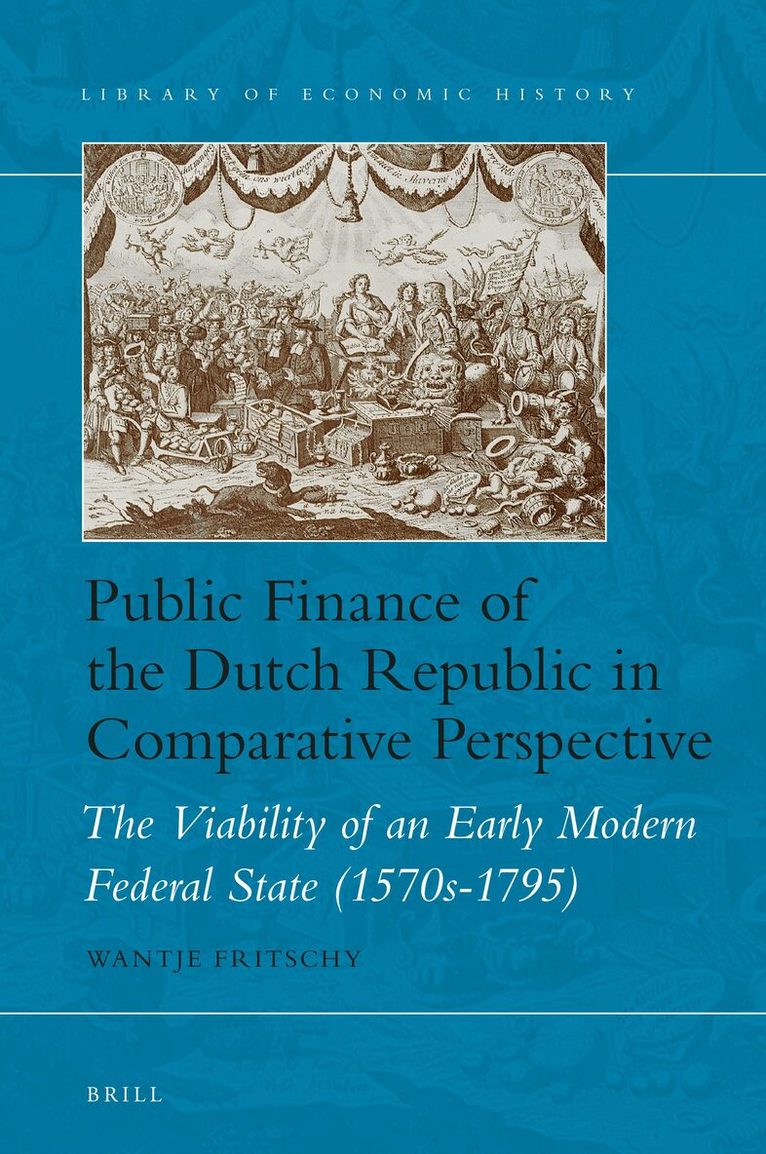
    Public Finance of the Dutch Republic in Comparative Perspective

    The Viability of an Early Modern Federal State (1570s-1795)

    AvWantje Fritschy

    Inbunden, Engelska, 2017

    Del 9 i serien Library of Economic History

    2 472 kr

    Beställningsvara. Skickas inom 5-8 vardagar. Fri frakt över 249 kr.

    Beskrivning

    This study offers the first complete overview of the remarkable public finances of the Dutch Republic of the United Provinces. Wantje Fritschy has analysed the development and structure of its public revenue and expenditure. She argues that a ‘tax revolution’ and the ‘fiscal resilience’ of the provinces together were more important for its surprising performance than Holland’s public debt alone, and the institutional and economic characteristics of its ‘urban system’ were more important than wealth due to foreign trade. Comparisons with the fiscal systems of three more centralized states - the Venetian Republic, Britain and the Ottoman Empire - underline the crucial importance of long-term ‘urbanization trajectories’ in understanding early-modern fiscal performance. It was not because it was federal that the Dutch Republic collapsed.

    Produktinformation

    • Utgivningsdatum:2017-06-01
    • Mått:155 x 235 x 31 mm
    • Vikt:826 g
    • Format:Inbunden
    • Språk:Engelska
    • Serie:Library of Economic History
    • Antal sidor:430
    • Förlag:Brill
    • ISBN:9789004341272

    Utforska kategorier

    • Ekonomiska system inom Ekonomi och Ledarskap
    • Ekonomisk historia inom Ekonomi och Ledarskap
    • Finansiering inom Ekonomi och Ledarskap

    Mer om författaren

    Wantje Fritschy (Ph.D. Leiden 1988) is retired senior lecturer in Economic and Social History and professor in the History of Early Modern Public Finance at VU University Amsterdam; she has led a large research project on public finance in the Dutch Republic at the Huygens Institute of Netherlands History (Huygens ING) in The Hague.

    Recensioner i media

    "The book is one of the most outstanding results of a long sequence of research that has seen the publication of important works and fundamental datasets on the Dutch public finance during the Ancien Regime. [...] The book is a splendid example of the passion of a scholar who has spent many years in researching and thinking". Luciano Pezzolo, in TIJDSCHRIFT SOCIALE & ECON.GESCHIEDENIS 16 (1), 2019.

    Innehållsförteckning

    • LIST OF ILLUSTRATIONSPREFACEGENERAL INTRODUCTIONThe question at stakePossible answersPolitical institutionsMentalityEconomic factors‘Urban systems’ and state formationThe approach of this bookThe structure of this bookPART ONE The development of the fiscal system of the Dutch RepublicIntroduction: a new state0.1 The Union of Utrecht: the start of a new state?0.2 Historical backgrounds and institutional characteristicsFrom Revolt to RepublicThe institutional legacy of the HabsburgsThe States General, Holland, the Council of State and the stadholderThe fiscal articles of the Union of Utrecht0.3 The concept ‘public finance of the Dutch Republic’, the data and the estimatesPublic finance of and in the Dutch RepublicThe reliability of data and estimates1. Financing the first phase of the revolt against Spain (1566-1572)1.1 Calvinist donations and the credit of the Prince of Orange1.2 A prince in search of new sources of finance1.3 The first financial decisions of the ‘free’ States of Holland1.4 Conclusion2. From under-taxed part of an empire to heavily taxed republi2.1 Holland and the Spanish EmpireHolland’s fiscal system under the HabsburgsAlva’s attempt at centralizationCastile’s fiscal system2.2 The development of Holland’s fiscal system until 1609The increasing amounts needed for the warHolland’s ‘tax revolution’Direct and indirect taxesThe tax burden before and after the RevoltLoans as a source of revenue: ‘short’ term obligations and long term annuitiesHolland’s ‘real’ financial revolutionHolland’s fiscal system at the start of the Twelve Years Truce2.3 The other provincesThe importance of ZeelandThe ‘general means’ and the States GeneralThe ‘general means’ and the provinces: urban resistance and urban acceptanceThe ‘quotas-system’ and the fiscal performance of the provinces2.4 The financial scope of the ‘Generality’Former royal domains and other confiscated property as sources of public revenueForeign financial supportGenerality taxesGenerality-loansPrivateers booty and customs (‘convooien en licenten’)2.5 Conclusion3. Public finance of the Dutch Republic in the 17th and 18 th centuries3.1 The increasing public expenditure of the Dutch RepublicWar expenditureDebt serviceOther public expenditure3.2 The resilience of the provincial revenue systemsThe ‘institutional structure’ of the public revenue of the RepublicThe ‘social-economic structure’ of the public revenue of the provincesPrice-increasing taxes on general consumption and tax riotsPrice-increasing indirect taxes on ‘luxury’ consumptionThe increasing role of direct taxationThe ‘tax morale’ of Dutch citizensThe tax burden in Holland and in Overijssel‘Capital’ or ‘coercion’: the role of loans in Dutch war financeA comparison with the centralized tax system of 18073.3 ConclusionPART TWO The fiscal system of the Dutch Republic in international comparative perspectiveIntroduction4. A comparison with the Venetian Republic4.1 Common characteristics and long term differencesMuch in commonDiffering long term domestic developmentsAnother maritime state and its ‘Year of Disaster’4.2 ‘Survive and prosper on the cheap’The structure of public expenditureA ‘peaceful republic’ and an ‘expenditure bottom’?4.3 Taxation in a centralized and a federal urbanized republicDifferences in public revenue and in wealthThe fiscal contributions of ‘centre ’ and ‘periphery’ in the two republics4.4 Differing debt developments‘Mountains of debt’, forced loans and ‘citizenship’Voluntary loans based on trust and private interestDebt sizes, interest burdens and interest ratesPublic banks and public loans in both republics4.5 Conclusion5. A comparison with Great Britain5.1 The comparability of Britain and the Netherlands5.2 National public finance: a long term perspective5.3 Public expenditure in two maritime statesTotal public expenditure before and after c. 1690A comparison of military expenditure before 1688The structure of Dutch and British public expenditure since c. 16905.4 Public revenue in two commercial statesTotal public revenue comparedNon-parliamentary and parliamentary taxationCustoms in a large monarchy and a small republicIndirect taxation, urbanization and centralizationThe EIC, the VOC and public revenue5.5 A comparison of loan financing and public debtForeign merchants and the king’s subjects versus cities and citizensDowning and the Dutch example‘1672’ in BritainThe long road of Britain’s ‘financial revolution’A quantitative comparison of the British and the Dutch public debt5.6 Conclusion6. A comparison with the Ottoman Empire6.1 Two incomparable statesWhy was Ottoman public revenue so low?6.2 Contrastive long term trajectories of state formationContrasting population developmentsContrasting patterns of land use‘State-driven’ versus ‘economy-driven’ urbanization trajectoriesThe consequences for public finance of different urbanization trajectories6.3 A quantitative comparison of public revenueThe extremely low level of state revenue in the Ottoman EmpireThe marginal importance of domestic indirect taxation‘Coin clipping’ as a source of public revenue6.4 Deficits, ‘advance payments’, advances and debtIltizamThe malikane-systemThe esham-systemPublic debts and the interest prohibition6.5 ConclusionGENERAL CONCLUSIONEpilogueAPPENDIX: The taxes in the Dutch RepublicABBREVIATIONSPRIMARY SOURCES AND DATABASESREFERENCESINDEX