• Fri frakt över 249 kr
  • •
  • Snabba leveranser
  • •
  • Billiga böcker
Kundservice

Du är på sajten för privatpersoner.

Företag, bibliotek eller offentlig verksamhet?

Du handlar på classic.bokus.com, där alla dina funktioner finns intakta.
Till classic.bokus.com
Bokus logotyp. Gå till startsidan.
  • Erbjudanden
  • Nyheter
  • Student
  • Topplistor
  • Barn & ungdom
  • Bokus Play
  • E-böcker
  • Pocketböcker
  • Spel & pussel

10% studentrabatt med kod TERM26

Sidfot

Mina sidor

    Hjälp

    • Kundservice
    • Vanliga frågor och svar
    • Frakt och leverans
    • Retur vid ångerrätt
    • Reklamera vara
    • Betalning
    • Köpvillkor
    • Allmänna villkor
    • Information om webbplatsens tillgänglighet

    Om Bokus

    • Om oss
    • Pressrum
    • För studenter
    • För företag
    • För bibliotek och offentlig verksamhet
    • För leverantörer
    • Hållbarhet

    Populärt

    • Aktuella erbjudanden
    • Presentkort
    • Studentlitteratur
    • Nya böcker
    • Topplistor
    • Signerade böcker
    • Engelska böcker

    Inspiration

    • Boktips
    • BookTok
    • Populära bokserier
    • Barnbokskaraktärer
    • Populära författare
    Logotyp för Bokus
    Följ oss på Facebook (extern länk)Följ oss på Instagram (extern länk)Följ oss på YouTube (extern länk)Följ oss på TikTok (extern länk)
    bokus @ CookiesAnpassa cookiesIntegritetspolicyKöpvillkor
    Till Citymail hemsida (extern länk)Till Budbee hemsida (extern länk)Till Postnord hemsida (extern länk)Till Schenker hemsida (extern länk)Till Early Bird hemsida (extern länk)Till Walleys hemsida (extern länk)
    1. Samhälle och politik
    2. Samhälle och kultur
    3. Sociala grupper och identitet
    4. Genusvetenskap

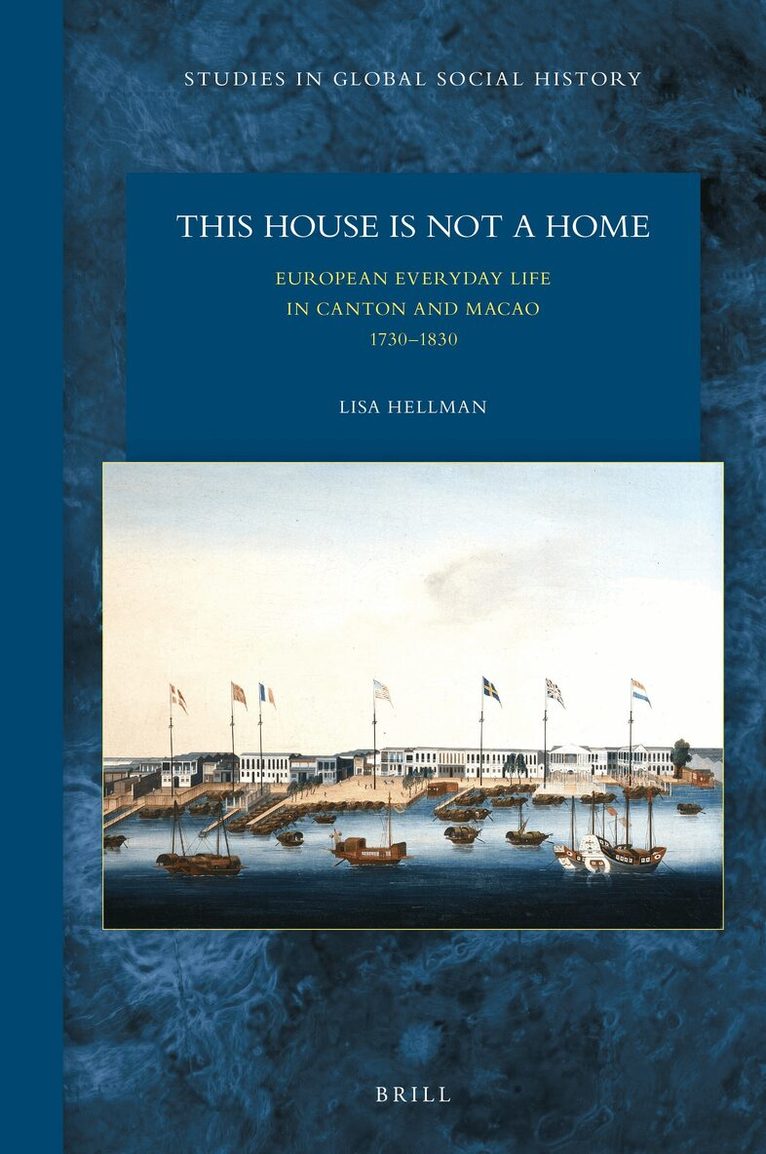
    This House Is Not a Home: European Everyday Life in Canton and Macao 1730–1830

    AvLisa Hellman

    Inbunden, Engelska, 2018

    Del 34 i serien Studies in Global Social History

    2 192 kr

    Beställningsvara. Skickas inom 5-8 vardagar. Fri frakt över 249 kr.

    Beskrivning

    Lisa Hellman offers the first study of European everyday life in Canton and Macao. How foreigners could live, communicate, move around – even whom they could interaction with – were all things strictly regulated by the Chinese authorities. The Europeans sometimes adapted to, and sometimes subverted, these rules.Focusing on this conditional domesticity shows the importance of gender relations, especially the construction of masculinity. Using the Swedish East India Company, a minor European actor in an expanding Asian empire, as a point of entry highlights the multiplicity of actors taking part in local negotiations of power. The European attempts at making a home in China contributes to a global turn in everyday history, but also to an everyday turn in global history.

    Produktinformation

    • Utgivningsdatum:2018-10-25
    • Mått:155 x 235 x 25 mm
    • Vikt:663 g
    • Format:Inbunden
    • Språk:Engelska
    • Serie:Studies in Global Social History
    • Antal sidor:318
    • Förlag:Brill
    • ISBN:9789004369740

    Utforska kategorier

    • Genusvetenskap inom Samhälle och politik
    • Socialhistoria och kulturhistoria inom Historia och arkeologi
    • Historia inom Historia och arkeologi

    Mer om författaren

    Lisa Hellman, Ph.D,. is an award-winning historian who combines global, social, gender and maritime history with Asian studies to explore Europeans’ lives abroad. She has published in five languages on intercultural interactions in Asia during the early modern period.

    Recensioner i media

    "Hellman’s book provides an important basis for further research on Canton as the core of a multi-pole, multi-scale, multi-empire urban network established across the ports of the Pearl River Delta. It should be read by anyone interested in the social and urban processes of globalization of the long eighteenth and nineteenth centuries". Regina Campinho, in Connections. A Journal for Historians and Area Specialists, October 2020. "The book provides many new insights into the daily activities of the European community in Canton and Macao. [...] Maritime historians who are theoretically oriented will likely find much of interest in this study". Paul A. Van Dyke, in The International Journal of Maritime History, 31(4).

    Innehållsförteckning

    • AcknowledgementsList of IllustrationsAbbreviations and Terminology1 Entering Canton and Macao 1 Asian Power and European Compliance2 The Daily Making of a Home3 The Practices of Daily Life4 Tactics in the Face of a Conditional Everyday Life5 What is Missing is the Commonplace Abroad6 The Remains of the Days2 The Who’s Who of Canton and Macao1 The Foreign Trade Groups1.1 -Chinese Traders and Masculinities1.2 The Foreign Women1.3 Sailors and Slaves2 The People of Macao3 The Local Trade Groups3.1 The Merchants, the Officials – and ‘the mandarins’3.2 The Labourers of the Pearl River Delta3.3 The Prostitutes4 The ‘Chinese’4.1 ‘The Chinese men’4.2 ‘The Chinese women’5 ConclusionColin Campbell and the 1730s3 A Space for Intersections1 The City Space1.1 Walking Around the City1.2 City of Women2 The Factory Space2.1 nside the Factories2.2 The Dining Space3 Macao4 The Harbour Space5 The Water Space6 ConclusionMichael Grubb and the 1750s and 1760s4 The Communication Struggle1 Separate Groups, Separate Languages?1.1 Circumventing the Rules1.2 Pidgin English2 Local and Global Communication Channels2.1 The Role of the Interpreters2.2 Letters from Near and Far2.3 Channels for Circulation of Knowledge<3 ConclusionOlof Lindahl and the 1770s and 1780s5 Spending Time and Spending Money 1 Domestic Consumption 2 Food as Cultural Evaluation and Adaptation3 Drinking Right and Drinking Wrong4 Sharing a Cup of Tea and a Smoke5 What You Get from Giving Away6 Boredom and What to do about it7 Going Outside8 ConclusionAnders Ljungstedt and the Early Nineteenth Century6 Finding and Becoming Trustworthy Men1 Spaces for Trust2 Finding a Language for Trust2.1 Gossip and Secrets2.2 The Myth of Special Friendship3 How to Look Trustworthy4 How to Act Trustworthy4.1 Finding a Certainty of Response4.2 Accepting Distrust4.3 Adapting Masculinities5 Conclusion7 This House is Not a Home1 Multi-faceted Control and a Plurality of Responses2 Everyday Relations of Ethnicity, Class and Gender3 Globalisation, not European ExpansionBibliography