• Fri frakt över 249 kr
  • •
  • Snabba leveranser
  • •
  • Billiga böcker
Kundservice

Du är på sajten för privatpersoner.

Företag, bibliotek eller offentlig verksamhet?

Du handlar på classic.bokus.com, där alla dina funktioner finns intakta.
Till classic.bokus.com
Bokus logotyp. Gå till startsidan.
  • Erbjudanden
  • Nyheter
  • Student
  • Topplistor
  • Barn & ungdom
  • Bokus Play
  • E-böcker
  • Pocketböcker
  • Spel & pussel

10% rabatt på allt med kod: NYSTART10 →

Sidfot

Mina sidor

    Hjälp

    • Kundservice
    • Vanliga frågor och svar
    • Frakt och leverans
    • Retur vid ångerrätt
    • Reklamera vara
    • Betalning
    • Köpvillkor
    • Allmänna villkor
    • Information om webbplatsens tillgänglighet

    Om Bokus

    • Om oss
    • Pressrum
    • För studenter
    • För företag
    • För bibliotek och offentlig verksamhet
    • För leverantörer
    • Hållbarhet

    Populärt

    • Aktuella erbjudanden
    • Presentkort
    • Studentlitteratur
    • Nya böcker
    • Topplistor
    • Signerade böcker
    • Engelska böcker

    Inspiration

    • Boktips
    • BookTok
    • Populära bokserier
    • Barnbokskaraktärer
    • Populära författare
    Logotyp för Bokus
    Följ oss på Facebook (extern länk)Följ oss på Instagram (extern länk)Följ oss på YouTube (extern länk)Följ oss på TikTok (extern länk)
    bokus @ CookiesAnpassa cookiesIntegritetspolicyKöpvillkor
    Till Citymail hemsida (extern länk)Till Budbee hemsida (extern länk)Till Postnord hemsida (extern länk)Till Schenker hemsida (extern länk)Till Early Bird hemsida (extern länk)Till Walleys hemsida (extern länk)
    1. Kultur
    2. Konstböcker
    3. Konsthistoria

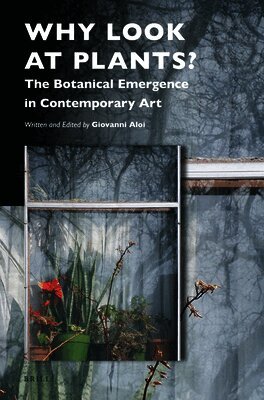
    Why Look at Plants?

    The Botanical Emergence in Contemporary Art

    AvGiovanni Aloi

    Inbunden, Engelska, 2019

    Del 5 i serien Critical Plant Studies

    3 448 kr

    Beställningsvara. Skickas inom 5-8 vardagar. Fri frakt över 249 kr.

    Beskrivning

    Winner of the 2019 Outstanding Academic Titles award in Choice, a publishing unit of the Association of College & Research Libraries (ACRL)Why Look at Plants? proposes a thought-provoking and fascinating look into the emerging cultural politics of plant-presence in contemporary art. Through the original contributions of artists, scholars, and curators who have creatively engaged with the ultimate otherness of plants in their work, this volume maps and problematizes new intra-active, agential interconnectedness involving human-non-human biosystems central to artistic and philosophical discourses of the Anthropocene.Plant’s fixity, perceived passivity, and resilient silence have relegated the vegetal world to the cultural background of human civilization. However, the recent emergence of plants in the gallery space constitutes a wake-up-call to reappraise this relationship at a time of deep ecological and ontological crisis. Why Look at Plants? challenges readers’ pre-established notions through a diverse gathering of insights, stories, experiences, perspectives, and arguments encompassing multiple disciplines, media, and methodologies.

    Produktinformation

    • Utgivningsdatum:2019-01-22
    • Mått:193 x 260 x 22 mm
    • Vikt:1 067 g
    • Format:Inbunden
    • Språk:Engelska
    • Serie:Critical Plant Studies
    • Antal sidor:282
    • Förlag:Brill
    • Medarbetare:Giovanni Aloi
    • ISBN:9789004375246

    Utforska kategorier

    • Konsthistoria inom Kultur
    • Filosofiska discipliner inom Filosofi och religion
    • Växtböcker inom Djur och Natur

    Mer om författaren

    Giovanni Aloi is an art historian in modern and contemporary art specializing in the representation of animals and plants in contemporary art. Aloi currently teaches at the School of the Art Institute of Chicago, Sotheby’s Institute of Art New York and London, and Tate Galleries. He is the Editor in Chief of Antennae: The Journal of Nature in Visual Culture (www.antennae.org.uk). He is the author of Art & Animals (2011) and Speculative Taxidermy: Natural History, Animal Surfaces, and Art in the Anthropocene (2018). With Caroline Picard, Aloi is the co-editor of the University of Minnesota Press series Art after Nature.

    Recensioner i media

    "The emergence of the botanical from quiet, passive existence that constantly hums around us to active/interactive politicization on gallery walls, in installations, and in critical studies is so potent that it has become a full-fledged art movement. This book both unravels and invites an artistic reimagining of the human relationship to plants, in all its manifestations. [...] in light of the ongoing environmental crisis, the book isinvaluable. [... It] could not be more timely." - J. Natal, Columbia College Chicago, in: Choice Magazine, Vol. 57 No. 1 (September 2019)"In sum, Why Look at Plants? is essential reading for anyone interested in the role of the arts in considering human/non-human interactions, plant blindness, posthumanist thought, or the myriad implications of the Anthropocene." - Stephen Goddard, in: Esse, issue 99 (2020), p. 111.

    Innehållsförteckning

    • ContentsAcknowledgmentsList of FiguresNotes on ContributorsAbout This BookIntroduction: Why Look at Plants?Giovanni AloiPart 1: Forest1 Lost in the Post-Sublime ForestGiovanni Aloi2 The Humblest Props Now Play a RoleCaroline Picard3 Ungrid-able Ecologies: Becoming Sensor in a Black Oak SavannahNatasha Myers4 An Open Book of GrassJenny Kendler Part 2: Trees5 Trees: Upside-Down, Inside-Out, and MovingGiovanni Aloi6 Animation, Animism … Dukun Dukun & DNALucy Davis7 Tree Wound PortraitsShannon Lee Castleman8 Contested Sites: Forest as Uncommon GroundGreg Lee Ruffing9 Quercus velutina, Art of Fiction, No. 11111011Lindsey FrenchPart 3: Garden10 Falling from GraceGiovanni Aloi11 Hortus Conclusus: The Garden of Earthly MindWendy Wheeler12 Eden’s Heirs: Biopolitics and Vegetal Affinities in the Gardens of LiteratureJoela Jacobs13 Thoreau’s BeansMichael MarderPart 4: Greenhouse14 The Greenhouse EffectsGiovanni Aloi15 SolariseLuftwerk16 The Glass Shields the Eyes of the Plant: Darwin’s Glasshouse StudyHeidi Norton17 The Lichen MuseumLaurie PalmerPart 5: Store18 Hyperplant Shelf-LifeGiovanni Aloi19 Life in the AislesLinda Tegg20 Roomba Rumba: Interview with Katherine BeharFatma Çolakoğlu and Ulya Soley21 Home Depot Throwing Out PlantsVarious ContributorsPart 6: House22 Presence, Bareness, and Being-WithGiovanni Aloi23 Houseplants as Fictional SubjectsSusan McHugh24 Seeing Green: The Climbing OtherDawn Sanders25 Plant RadioAmanda WhitePart 7: Laboratory26 Psychoactives and BiogeneticsGiovanni Aloi27 Of Plants and Robots: Art, Architecture and Technoscience for Mixed SocietiesMonika Bakke28 Boundary PlantsSara Black29 The Illustrated HerbalTova FloresIndexPart 8: Of Other Spaces30 (Brief) EncountersGiovanni Aloi31 Places of Maybe: Plants “Making Do” Without the Belly of the BeastAndrew Yang32 The NeophyteLois Weinberger33 Herbarium Perrine: Interview with Mark DionInterviewer:Giovanni Aloi34 Burning Flowers: Interview with Mat CollishawInterviewer:Giovanni Aloi35 A Program for Plants: In Conversation, CodaGiovanni Aloi, Brian M. John, Linda Tegg and Joshi RadinBibliographyIndex