• Fri frakt över 249 kr
  • •
  • Snabba leveranser
  • •
  • Billiga böcker
Kundservice

Du är på sajten för privatpersoner.

Företag, bibliotek eller offentlig verksamhet?

Du handlar på classic.bokus.com, där alla dina funktioner finns intakta.
Till classic.bokus.com
Bokus logotyp. Gå till startsidan.
  • Erbjudanden
  • Nyheter
  • Student
  • Topplistor
  • Barn & ungdom
  • Bokus Play
  • E-böcker
  • Pocketböcker
  • Spel & pussel

Må bättre, för mindre! Upp till 50% rabatt på hälsoböcker

Sidfot

Mina sidor

    Hjälp

    • Kundservice
    • Vanliga frågor och svar
    • Frakt och leverans
    • Retur vid ångerrätt
    • Reklamera vara
    • Betalning
    • Köpvillkor
    • Allmänna villkor
    • Information om webbplatsens tillgänglighet

    Om Bokus

    • Om oss
    • Pressrum
    • För studenter
    • För företag
    • För bibliotek och offentlig verksamhet
    • För leverantörer
    • Hållbarhet

    Populärt

    • Aktuella erbjudanden
    • Presentkort
    • Studentlitteratur
    • Nya böcker
    • Topplistor
    • Signerade böcker
    • Engelska böcker

    Inspiration

    • Boktips
    • BookTok
    • Populära bokserier
    • Barnbokskaraktärer
    • Populära författare
    Logotyp för Bokus
    Följ oss på Facebook (extern länk)Följ oss på Instagram (extern länk)Följ oss på YouTube (extern länk)Följ oss på TikTok (extern länk)
    bokus @ CookiesAnpassa cookiesIntegritetspolicyKöpvillkor
    Till Citymail hemsida (extern länk)Till Budbee hemsida (extern länk)Till Postnord hemsida (extern länk)Till Schenker hemsida (extern länk)Till Early Bird hemsida (extern länk)Till Walleys hemsida (extern länk)
    1. Kultur
    2. Musikböcker

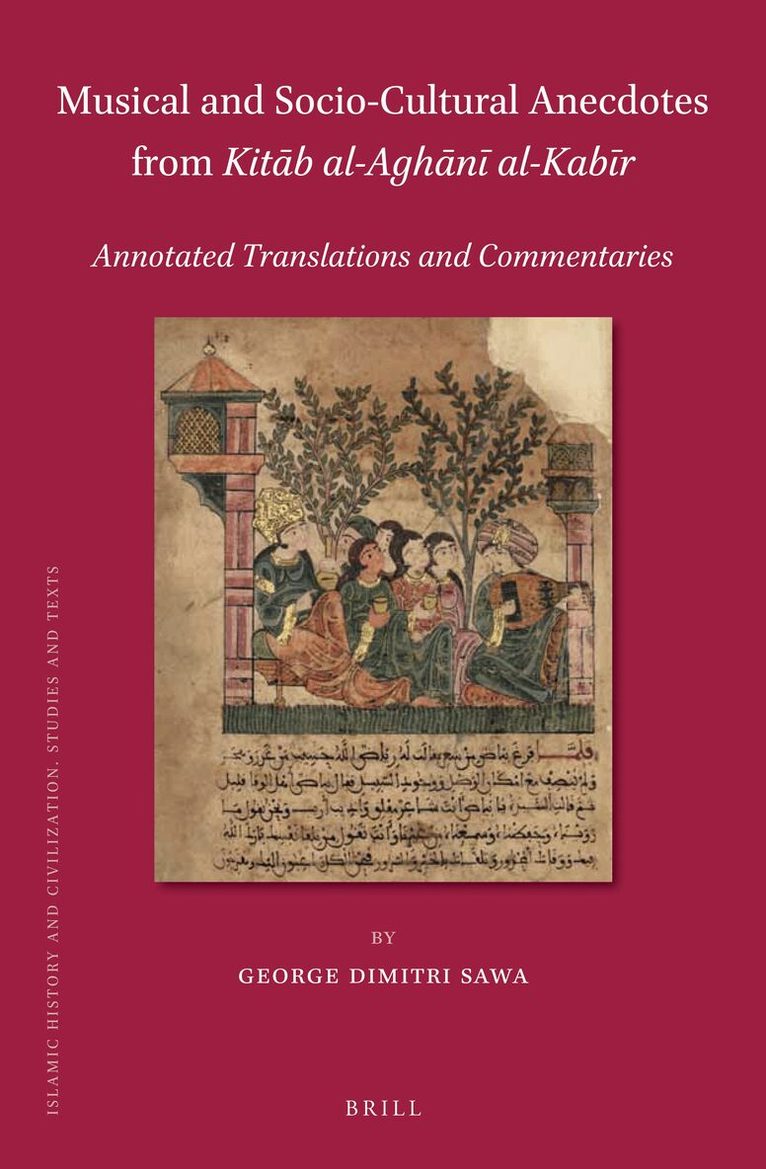
    Musical and Socio-Cultural Anecdotes from Kitāb al-Aghānī al-Kabīr

    Annotated Translations and Commentaries

    AvGeorge Dimitri Sawa

    Inbunden, Engelska, 2019

    Del 159 i serien Islamic History and Civilization

    2 810 kr

    Beställningsvara. Skickas inom 5-8 vardagar. Fri frakt över 249 kr.

    Beskrivning

    The present volume consists of translated anecdotes, on musicological and socio-cultural topics, from al-Iṣbahānī’s Kitāb al-Aghānī al-Kabīr (The Grand Book of Songs) with annotations and commentaries. It deals with musical rhythmic and melodic modes, technical terms and treatises; music instruments; composition techniques and processes; education and oral/written transmissions; vocal and instrumental performances and their aesthetics; solo and ensemble music; change and its inevitability; musical and textual improvisations; ṭarab and the acute emotions of joy or grief; medieval dances; social status. Though extracts from The Grand Book of Songs have been translated in European languages since 1816, this work presents a much larger and more comprehensive scope that will benefit musicologists, medievalist and Middle Eastern scholars as well as the general reader.

    Produktinformation

    • Utgivningsdatum:2019-01-24
    • Mått:155 x 235 x 33 mm
    • Vikt:873 g
    • Format:Inbunden
    • Språk:Engelska
    • Serie:Islamic History and Civilization
    • Antal sidor:466
    • Förlag:Brill
    • ISBN:9789004383623

    Utforska kategorier

    • Musikböcker inom Kultur
    • Mellanösterns historia inom Historia och arkeologi
    • Socialhistoria och kulturhistoria inom Historia och arkeologi

    Mer om författaren

    George Dimitri Sawa is an independent scholar with a PhD in Music and Middle East Studies, from the University of Toronto. He taught Middle Eastern Music History: medieval, modern and sacred music,at the University of Toronto (1987-1995) and York University (1982-1986, 1994, 2006-2007).

    Recensioner i media

    “Unquestionably, this is a volume covering a vast area: literature, history, biography, social comment, and of course information about music and its development. Sawa’s volume is a splendid work for the completion of which a combination of patience and erudition was obviously among its prerequisites, - the result being one of those tomes indispensable for students of Music, Ethnomusicology, and Sociology of Art.”- Stavros Nikolaidis in:Journal of Oriental and African Studies, Volume 29 (2020).“Wesentliches geleistet und ein wertvolles Referenzwerk geschaffen, welches dazu beiträgt, das kitāb al-aġānī auch für nicht arabistische Disziplinen zu erschließen und leichter zugänglich zu machen.“ - Anna Diltsch in Institut für Orientalistik Wien , (2022).

    Innehållsförteckning

    • PrefaceAcknowledgmentsAbbreviationsEditorial NotesIntroduction: Abū l-Faraj al-Iṣfahānī and His Book of Songs1 TheoryThe ModesA The Eight Rhythmic ModesB The Eight Melodic ModesC The Three Passages on Rhythmic and Melodic Modes in the Book of SongsD Jins and ṬarīqaE Rare Songs Containing Eight or Ten NotesF Early Singing: Ḥudāʾ, Naṣb, and RukbānG Technical TermsH Theoretical Treatises, Anecdotes, Biographies, Song Collections, Authorship, Modes2 InstrumentsA Aerophones: Mizmār, Nāy, and SurnāyB Idiophones: ʿAṣāt, Dawāt, Jaras, Juljul, Khashaba, Miqraʿa, Nāqūs, Qaḍīb, Qarbūs, Raḥl, Ṣaffāqa, ṢanjC Membranophones: ʿArṭaba, Duff, Murabbaʿ, ṬablD Chordophones: Barbaṭ, Kankala, Miʿzafa, Mizhar, Ṣanj, Ṭunbūr, ʿūdE Storage and Workshop for Instrument MakingF Improvised Instruments3 CompositionA The Use of Music to Embellish and Spread PoetryB The Origins of Arabic MusicC Technique and Process of CompositionD Dreams and Jinns as Sources for CompositionsE ContrafactaF Style and the Imitation of StyleG Composition: Talent Versus Intellect, Head Versus HeartH SpecializationI AnalysisJ AuthorshipK Poems, Composers, and ModesL The Number of Lines of Poems Set to MusicM Choosing and Altering the Order of the Verses and Mixing PoemsN Names of MelodiesO OutputP Quality Versus QuantityQ Poems Conducive to Be Set to MusicR The Best Composers and CompositionsS ComparisonsT Weak CompositionsU Women’s Compositions and SoftnessV Folklore Songs: Sailors, Masons, and Water CarriersW Monopolies on Poems4 Education and TransmissionA General EducationB PedigreeC Music EducationD The Important Role of Women as Teachers, Transmitters, and MemorizersE Memory LossF Learning and Repetitions, Slow Learners and Fast LearnersG Problems of Difficulty and TransmissionH Prevention of Transmission and StinginessI Good and Bad TransmittersJ Unconventional TransmissionsK Miscellaneous5 PerformanceA Singers and SongstressesB To Sing: Qāla, Qaraʾa, ḤaddathaC Voice ProductionD Beautiful VoiceE Powerful VoiceF Poor VoicesG Stratagem for Poor VoicesH Excellence in PerformanceI Poor Performance and WeaknessesJ PosturesK Difficult SongsL ComparisonsM The Limitations of DescriptionsO Size of RepertoireP Lute Playing in the Persian StyleQ Lute VirtuosityR Inheriting a Family BusinessS Performance OrderT The Composition of the Majlis and Its Effect on PerformanceU Songs without Words6 Solos, Accompaniment, and Ensemble MusicA Murtajil: A CappellaB Instrumental SolosC Unaccompanied Duet SingingD Unison Ensemble SingingE Unison Ensemble Singing with Lute AccompanimentF A Soloist and Her ChorusG Hand Clapping, Castanets, and DancingH TambourinesI ṬablJ LuteK ṬunbūrL Voice and NāyM Murtajil and Irtijāl7 Musical Stability and ChangeA On the Inevitability of ChangeB Change Is PermissibleC Change Is Frowned UponD Wine and Its Positive and Negative Effects on SingingE The Truth about the Singer Mālik Not Composing but Altering and Beautifying the Songs of OthersF Change as a Tool to Embarrass an Enemy8 Musical and Textual Improvisations9 Ṭarab and the Effects of Singing on People and AnimalsA Preliminary DefinitionsB Physical Effects on People and AnimalsC Emotional EffectsD Effects on the ImaginationE Therapeutic EffectsF Ṭarab and Effects of Music: Miscellaneous Topics10 DanceA Zafn and RaqṣB Early Arabic Music and Dance According to Ibn KhaldūnC Dastband and ĪlāʾD KurrajE Raqṣ and the Completion of Musical ArtsF The Required Qualities of Dancers According to the Oration of an Anonymous Singer/Boon Companion of the Caliph Al-Muʿtamid, as Reported in the Meadows of Gold of Al-Masʿūdī11 Physiognomy, Attire, Character, Social Status, and Permissibility of MusicA The Importance of a Beautiful Face, Body, and AttireB Character and KnowledgeC Slaves, Freed Slaves, Mawlās, and FreemanD Is It a Sin to Sing?E It Is Not a Sin to Sing If the Singer Is Pious and Endowed with Good Character, or If the Songs Are Not EroticF The Contradictory and Ambiguous Roles of Noblemen, Theologians, and Administrators Toward Music and MusiciansG The Shame of Being an InstrumentalistH Words of Wisdom in Support of MusicArabic English GlossaryBibliographyIndex of People and PlacesIndex of Terms and SubjectsCharts