• Fri frakt över 249 kr
  • •
  • Snabba leveranser
  • •
  • Billiga böcker
Kundservice

Du är på sajten för privatpersoner.

Företag, bibliotek eller offentlig verksamhet?

Du handlar på classic.bokus.com, där alla dina funktioner finns intakta.
Till classic.bokus.com
Bokus logotyp. Gå till startsidan.
  • Erbjudanden
  • Nyheter
  • Student
  • Topplistor
  • Barn & ungdom
  • Bokus Play
  • E-böcker
  • Pocketböcker
  • Spel & pussel

10% rabatt på allt med kod NYSTART10 →

Sidfot

Mina sidor

    Hjälp

    • Kundservice
    • Vanliga frågor och svar
    • Frakt och leverans
    • Retur vid ångerrätt
    • Reklamera vara
    • Betalning
    • Köpvillkor
    • Allmänna villkor
    • Information om webbplatsens tillgänglighet

    Om Bokus

    • Om oss
    • Pressrum
    • För studenter
    • För företag
    • För bibliotek och offentlig verksamhet
    • För leverantörer
    • Hållbarhet

    Populärt

    • Aktuella erbjudanden
    • Presentkort
    • Studentlitteratur
    • Nya böcker
    • Topplistor
    • Signerade böcker
    • Engelska böcker

    Inspiration

    • Boktips
    • BookTok
    • Populära bokserier
    • Barnbokskaraktärer
    • Populära författare
    Logotyp för Bokus
    Följ oss på Facebook (extern länk)Följ oss på Instagram (extern länk)Följ oss på YouTube (extern länk)Följ oss på TikTok (extern länk)
    bokus @ CookiesAnpassa cookiesIntegritetspolicyKöpvillkor
    Till Citymail hemsida (extern länk)Till Budbee hemsida (extern länk)Till Postnord hemsida (extern länk)Till Schenker hemsida (extern länk)Till Early Bird hemsida (extern länk)Till Walleys hemsida (extern länk)
    1. Kultur
    2. Konstböcker

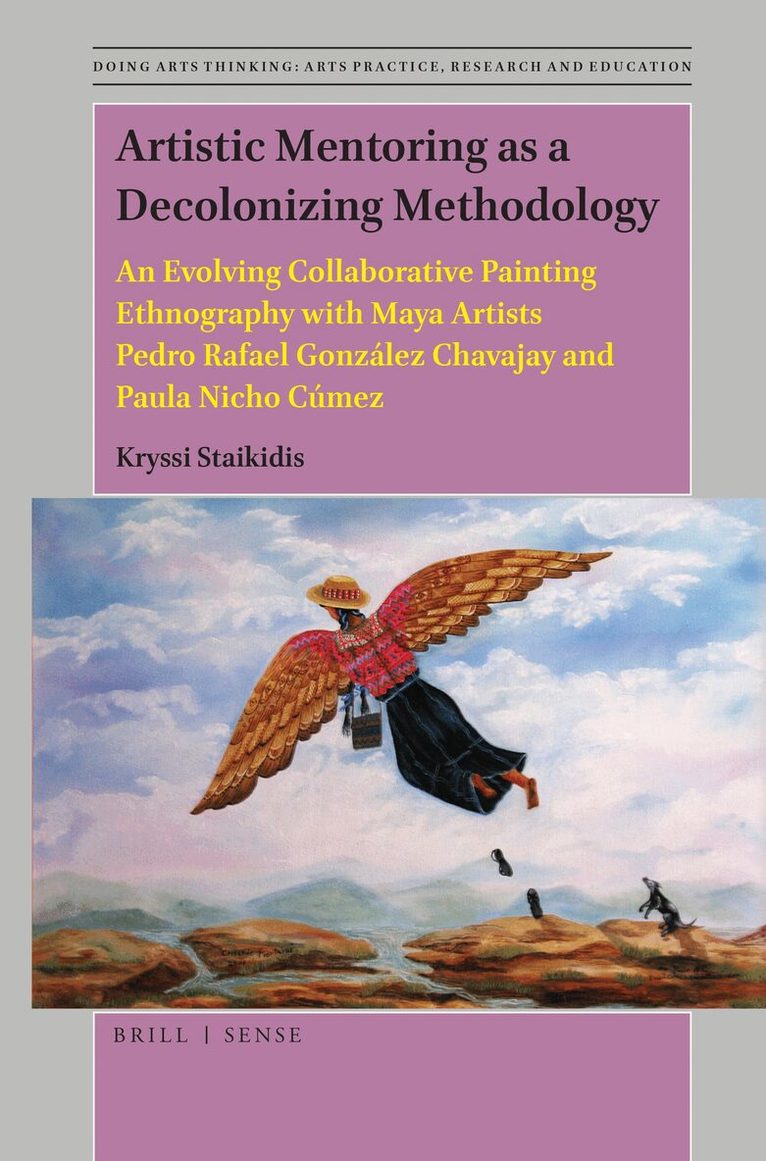
    Artistic Mentoring as a Decolonizing Methodology

    An Evolving Collaborative Painting Ethnography with Maya Artists Pedro Rafael González Chavajay and Paula Nicho Cúmez

    AvKryssi Staikidis

    Häftad, Engelska, 2020

    Del 5 i serien Doing Arts Thinking: Arts Practice, Research and Education

    678 kr

    Beställningsvara. Skickas inom 5-8 vardagar. Fri frakt över 249 kr.

    Fler format och utgåvor

    Inbunden

    1 887 kr

    Beskrivning

    To expand the possibilities of “doing arts thinking” from a non-Eurocentric view, Artistic Mentoring as a Decolonizing Methodology: An Evolving Collaborative Painting Ethnography with Maya Artists Pedro Rafael González Chavajay and Paula Nicho Cúmez is grounded in Indigenous perspectives on arts practice, arts research, and art education. Mentored in painting for eighteen years by two Guatemalan Maya artists, Kryssi Staikidis, a North American painter and art education professor, uses both Indigenous and decolonizing methodologies, which involve respectful collaboration, and continuously reexamines her positions as student, artist, and ethnographer searching to redefine and transform the roles of the artist as mentor, historian/activist, ethnographer, and teacher.The primary purpose of the book is to illuminate the Maya artists as mentors, the collaborative and holistic processes underlying their painting, and the teaching and insights from their studios. These include Imagined Realism, a process excluding rendering from observation, and the fusion of pedagogy and curriculum into a holistic paradigm of decentralized teaching, negotiated curriculum, personal and cultural narrative as thematic content, and the surrounding visual culture and community as text. The Maya artist as cultural historian creates paintings as platforms of protest and vehicles of cultural transmission, for example, genocide witnessed in paintings as historical evidence. The mentored artist as ethnographer cedes the traditional ethnographic authority of the colonizing stance to the Indigenous expert as partner and mentor, and under this mentorship analyzes its possibilities as decolonizing arts-based qualitative inquiry. For the teacher, Maya world views broaden and integrate arts practice and arts research, inaugurating possibilities to transform arts education.

    Produktinformation

    • Utgivningsdatum:2020-07-23
    • Mått:155 x 235 x 22 mm
    • Vikt:606 g
    • Format:Häftad
    • Språk:Engelska
    • Serie:Doing Arts Thinking: Arts Practice, Research and Education
    • Antal sidor:378
    • Förlag:Brill
    • ISBN:9789004392823

    Utforska kategorier

    • Konstböcker inom Kultur
    • Pedagogisk teori och filosofi inom Psykologi och pedagogik
    • Utbildningsstrategier och utbildningspolitik inom Psykologi och pedagogik

    Mer om författaren

    Kryssi Staikidis, Ed.D. (2004), Teachers College Columbia University, is Professor in Art + Design Education at Northern Illinois University. She co-edited Transforming Our Practices: Indigenous Art, Pedagogies, and Philosophies (National Art Education Association, 2017) and has published many articles and book chapters in art education.

    Innehållsförteckning

    • Osiyo: Welcome in CherokeeChristine Ballengee MorrisForewordLuke Eric LassiterAcknowledgementsList of FiguresIntroductionMentor BiographiesPedro Rafael González Chavajay Joseph JohnstonPaula Nicho CúmezJoseph JohnstonSalvador Cúmez CurruchichJoseph JohnstonPART 1: The Artist as Mentor: The Mentoring Relationship as a Teaching Method and Paintings as Didactic ToolsIntroduction to Part 1: The Artist as mentor Pastor Maya (Maya Pastor)1 Personal and Cultural Narrative as Inspiration: A Painting and Pedagogical Collaboration with Two Maya ArtistsA Problem of PerspectiveA Problem of PracticePerspective and Practice in ContextDecolonizing MethodologiesResultsLife as TextDiscussionApplicationsConclusion2 Where Lived Experience Resides in Art Education: A Painting and Pedagogical Collaboration with Paula Nicho CúmezIntroductionReflections on Feminist PedagogyFemale Kaqchikel Maya Painting and Teaching ProcessesOwning One’s Narrative in Collaboratively Produced PaintingsWeaving Women’s Iconography in PaintingsFusion: One Imagines the Painting into BeingKaqchikel Women Painters’ Iconography: Personal in CulturalMaya Women Painters as Role ModelsAsserting Female Ways of Connected Knowing and Teacher/Student Role ReversalsA Feminist Teacher’s Strategy: To ElicitConclusionPART 2: The Artist as Historian: Paintings as Historical Documents, Sites for Cultural Transmission, and Platforms of Protest and ResistanceIntroduction to Part 2: The Artist as Historian, Massacre en Atitlán (Massacre in Atitlán)Painting as a Site for Claiming Maya History3 Maya Paintings as Teachers of Justice: Art Making the Impossible PossibleThe Maya Painting Movement in ContextOur Values Must Be Salvaged and Presented to Our Children4 Crossing Borders5 Advocating for Justice: A Maya Painter’s JourneyA Story of CourageThe Anthropology of Genocide: Annihilating Difference (Hinton, 2002)A Brief Overview of Guatemalan HistoryA Tragic Moment in History: Massacre in Santiago Atitlán December 3, 1990Pedro Rafael González Chavajay’s StoryPART 3: The Artist as Ethnographer: Collaborative Ethnography, Decolonizing Research Practice, and the Ethics of RepresentationIntroduction to Part 3: The Artist as Ethnographer, Nuestra Amistad (Our Friendship)6 “Coming of Age in Methodology”: Two Collaborative Inquiries with Shinnecock and Maya PeoplesDiane’s Research StoryShinnecock MuseumKryssi’s Research StoryConclusion: Closing the DistanceSection 1: Ethical Changes in Representation Phase One – Participants and Research Process7 Visual Privileging: Subjectivity in Collaborative Ethnography8 Decolonizing Development through Indigenous Artist-Led InquirySpeaking with, Not for or about OthersThe Recounting of Tales, Myths and ReadingsApproaching Arts-Based Inquiry with Eyes Wide-OpenResearching in Ways that Might (Dis)Serve Multiple PopulationsConclusionsSection 2: Ethical Changes in Representation Phase Two – Relational Presentation9 Indigenous Methodologies: A Collaborative Painting with Maya Painter Paula Nicho CúmezIntroductionA Collaborative Painting with Maya Painter Paula Nicho CúmezConclusion10 The Inseparability of Indigenous Research and Pedagogy: A Collaborative Painting of a Maya Tz’utuhil Grieving RitualSharing Pain and HappinessWe Shared ThisLa ConsolaciónOh What a Wonderful ThemeYou Were the Author of This PaintingYou Were ThereReality of a CommunityThis Painting Carries Something ImportantWe Have Gotten to Know Each OtherPart of a Larger StoryPART 4: The Artist as Teacher: Transformations of the Academy and the Artist/TeacherIntroduction to Part 4: The Artist as Teacher, La Consolacion (Condolence)Section 1: Transformations: Curricular Applications to Teaching11 Learning OUTSIDE the Box: How Mayan Pedagogy Informs a Community/University PartnershipInroads: Art EducationConnections: Transferring Knowledge across CulturesThe SpecificsHow It Unfolded: Step by StepNegotiating LearningLeadership: Novices Become ExpertsCultural Narratives: Paths to LearningCo-Mentoring, Friendship, and the Co-Construction of KnowledgeConclusions and Implications Situated Learning: The Local Context12 Maya Teaching Methods: Transformers of Content and Pedagogy in Higher EducationPart One: Working out of Maya StudiosPart Two: Walk the TalkConclusionSection 2: Transformations: Self-Reflections of the Artist/Teacher13 Interior Paths: Transformations of a PainterEl Rapto del Gallo (Abduction of the Rooster): The Absence of Presence in Art EducationVendedora De Gallos (Seller of Roosters): Paths in as Lived ExperienceConclusion: Who Rules the Roost?14 Decolonizing Methodologies and the Ethics of Representation: A Collaborative Ethnography with Maya Artists Pedro Rafael González Chavajay and Paula Nicho CúmezIntroduction: Ethnography in Art EducationDescription of the Study: A Collaborative Ethnographic StudyLanguageDismantling Concepts: Research, Benefits, Researcher SubjectivityConfidentiality and Representation: How Will the Results Be Disseminated?Discussion: A Growing DiscomfortConclusion15 ConclusionDiscoveriesThrough the Lens of Life and DeathReciprocity and RelationshipDoing Arts ThinkingExpanding the Possibilities: Arts Thinking Grounded in Indigenous PerspectivesArtistic Mentoring as a Decolonizing MethodologyIndex