• Fri frakt över 249 kr
  • •
  • Snabba leveranser
  • •
  • Billiga böcker
Kundservice

Du är på sajten för privatpersoner.

Företag, bibliotek eller offentlig verksamhet?

Du handlar på classic.bokus.com, där alla dina funktioner finns intakta.
Till classic.bokus.com
Bokus logotyp. Gå till startsidan.
  • Erbjudanden
  • Nyheter
  • Student
  • Topplistor
  • Barn & ungdom
  • Bokus Play
  • E-böcker
  • Pocketböcker
  • Spel & pussel

10% rabatt på allt med kod: NYSTART10 →

Sidfot

Mina sidor

    Hjälp

    • Kundservice
    • Vanliga frågor och svar
    • Frakt och leverans
    • Retur vid ångerrätt
    • Reklamera vara
    • Betalning
    • Köpvillkor
    • Allmänna villkor
    • Information om webbplatsens tillgänglighet

    Om Bokus

    • Om oss
    • Pressrum
    • För studenter
    • För företag
    • För bibliotek och offentlig verksamhet
    • För leverantörer
    • Hållbarhet

    Populärt

    • Aktuella erbjudanden
    • Presentkort
    • Studentlitteratur
    • Nya böcker
    • Topplistor
    • Signerade böcker
    • Engelska böcker

    Inspiration

    • Boktips
    • BookTok
    • Populära bokserier
    • Barnbokskaraktärer
    • Populära författare
    Logotyp för Bokus
    Följ oss på Facebook (extern länk)Följ oss på Instagram (extern länk)Följ oss på YouTube (extern länk)Följ oss på TikTok (extern länk)
    bokus @ CookiesAnpassa cookiesIntegritetspolicyKöpvillkor
    Till Citymail hemsida (extern länk)Till Budbee hemsida (extern länk)Till Postnord hemsida (extern länk)Till Schenker hemsida (extern länk)Till Early Bird hemsida (extern länk)Till Walleys hemsida (extern länk)
    1. Historia och arkeologi
    2. Historia
    3. Forntidens historia

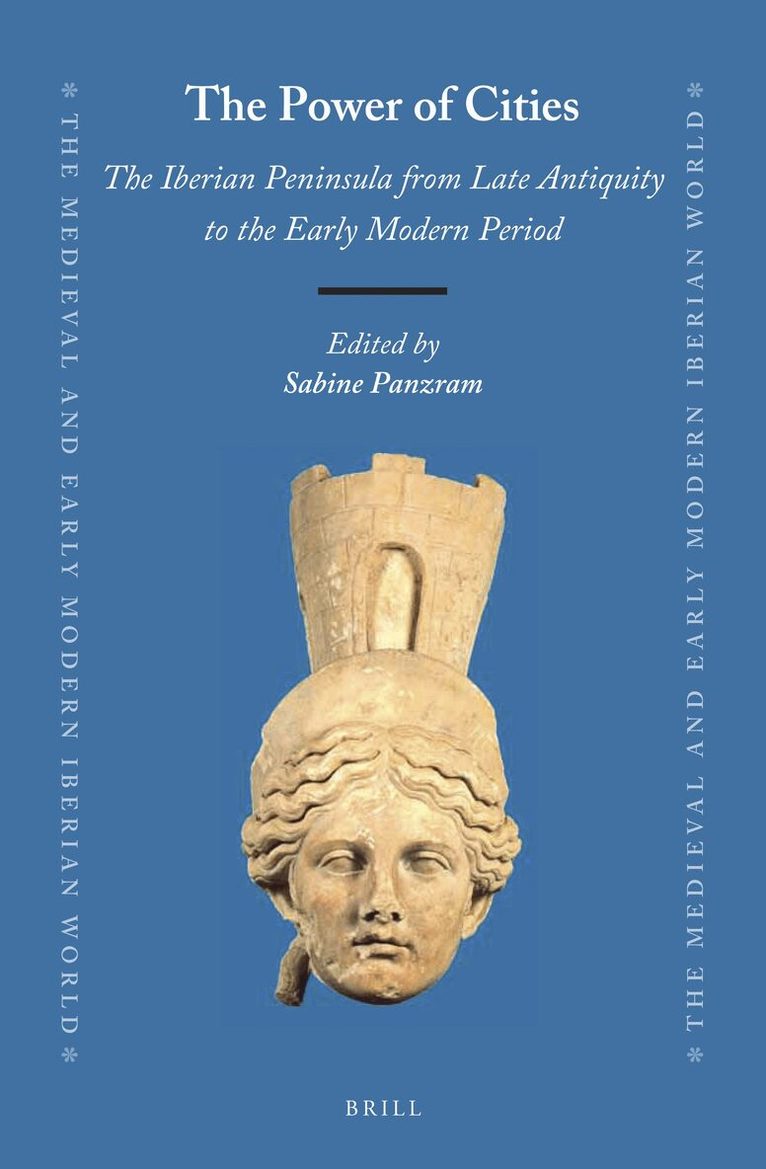
    Power of Cities

    The Iberian Peninsula from Late Antiquity to the Early Modern Period

    AvSabine Panzram

    Inbunden, Engelska, 2019

    Del 70 i serien Medieval and Early Modern Iberian World

    2 706 kr

    Beställningsvara. Skickas inom 5-8 vardagar. Fri frakt över 249 kr.

    Beskrivning

    The Power of Cities focuses on Iberian cities during the lengthy transition from the late Roman to the early modern period, with a particular interest in the change from early Christianity to the Islamic period, and on to the restoration of Christianity.Drawing on case studies from cities such as Toledo, Cordoba, and Seville, it collects for the first time recent research in urban studies using both archaeological and historical sources. Against the common portrayal of these cities characterized by discontinuities due to decadence, decline and invasions, it is instead continuity – that is, a gradual transformation – which emerges as the defining characteristic.The volume argues for a fresh interpretation of Iberian cities across this period, seen as a continuum of structural changes across time, and proposes a new history of the Iberian Peninsula, written from the perspective of the cities.Contributors are Javier Arce, María Asenjo González, Antonio Irigoyen López, Alberto León Muñoz, Matthias Maser, Sabine Panzram, Gisela Ripoll, Torsten dos Santos Arnold, Isabel Toral-Niehoff, Fernando Valdés Fernández, and Klaus Weber.

    Produktinformation

    • Utgivningsdatum:2019-09-26
    • Mått:155 x 235 x 29 mm
    • Vikt:771 g
    • Format:Inbunden
    • Språk:Engelska
    • Serie:Medieval and Early Modern Iberian World
    • Antal sidor:382
    • Förlag:Brill
    • Medarbetare:Sabine Panzram
    • ISBN:9789004399686

    Utforska kategorier

    • Forntidens historia inom Historia och arkeologi
    • Arkeologiska perioder och områden inom Historia och arkeologi
    • Socialhistoria och kulturhistoria inom Historia och arkeologi

    Mer om författaren

    Sabine Panzram, Ph.D. (2001), Münster University, is Professor of Ancient History at Hamburg University. She focuses in particular on social and urban history on the Iberian Peninsula. Her recent publications include: Entre civitas y madīna. El mundo de las ciudades en la Península Ibérica y en el norte de África (siglos IV-IX) (Casa de Velázquez, 2018).

    Recensioner i media

    "This set of texts represents a very necessary and fresh updating to the issue of urban life and urban development in Iberia. The work closes with a final balance of the volume coordinator, in which Panzram highlights the need to rewrite Iberian history from an urban perspective, an endeavour to which the reviewed work prominently contributes. It is likewise noteworthy, to conclude, the excellent quality of the edition, significantly enriched with a highly remarkable set of color maps, figures, and pictures providing the reader with very useful tools in order to gain a better understanding of different places and historical realities described in the book". Alejandro García Sanjuán, in Sehepunkte, 20 (2), 2020. This erudite collection of eight essays, bookended by remarks from Panzram (Univ. of Hamburg, Germany), covers the cities of the Iberianpeninsula from the Roman and Visigothic periods through the 18th century. [...] Maintaining a high standard of scholarship, this collection would be at home in any academic or research library, particularly those with collections on the history and culture of cities, and the history of Iberia. Summing Up: Recommended". D. C. Kierdorf, in Choice, 57 (1), June 2020.

    Innehållsförteckning

    • Preface and AcknowledgmentsList of Maps and FiguresNotes on ContributorsMaps1 Introduction: Urban History on the Iberian Peninsula—Current PerspectivesSabine PanzramPart 1: The City in Spania (4th to 7th Centuries)2 The Transformation of the City in Hispania between the 4th and the 6th CenturiesGisela Ripoll3 The Late Antique City in Spania—Toledo and RecópolisJavier ArcePart 2: The City in al-Andalus (8th to 11th Centuries)4 Ornament of the World: Urban Change in Early Islamic QurṭubaIsabel Toral-Niehoff and Alberto León Muñoz5 The Impact of the Arab Conquest on the Planning of the Iberian Cities: Toledo inside WallsFernando Valdés FernándezPart 3: The City in the Territories of the “Reconquista” (11th to 15th Centuries)6 Conquered Cities: Continuity and Transformation of Urban Structures in the Castilian “Reconquista” Territories (11th–14th Centuries)—Toledo and SevilleMatthias Maser7 The City in the Image/Images of the City: The Lost Tapestry of ValladolidMaría Asenjo GonzálezPart 4: The City in the Hispaniae (15th to 18th Centuries)8 Characteristics of Castilian Cities in the 16th and 17th CenturiesAntonio Irigoyen López9 Ports to “New Worlds”: Lisbon, Seville, Cádiz (15th–18th Centuries)Klaus Weber and Torsten dos Santos Arnold10 Epilogue: The Power of Cities—Rewriting the History of the Iberian PeninsulaSabine PanzramIndices