• Fri frakt över 249 kr
  • •
  • Snabba leveranser
  • •
  • Billiga böcker
Kundservice

Du är på sajten för privatpersoner.

Företag, bibliotek eller offentlig verksamhet?

Du handlar på classic.bokus.com, där alla dina funktioner finns intakta.
Till classic.bokus.com
Bokus logotyp. Gå till startsidan.
  • Erbjudanden
  • Nyheter
  • Student
  • Topplistor
  • Barn & ungdom
  • Bokus Play
  • E-böcker
  • Pocketböcker
  • Spel & pussel

10% studentrabatt med kod TERM26

Sidfot

Mina sidor

    Hjälp

    • Kundservice
    • Vanliga frågor och svar
    • Frakt och leverans
    • Retur vid ångerrätt
    • Reklamera vara
    • Betalning
    • Köpvillkor
    • Allmänna villkor
    • Information om webbplatsens tillgänglighet

    Om Bokus

    • Om oss
    • Pressrum
    • För studenter
    • För företag
    • För bibliotek och offentlig verksamhet
    • För leverantörer
    • Hållbarhet

    Populärt

    • Aktuella erbjudanden
    • Presentkort
    • Studentlitteratur
    • Nya böcker
    • Topplistor
    • Signerade böcker
    • Engelska böcker

    Inspiration

    • Boktips
    • BookTok
    • Populära bokserier
    • Barnbokskaraktärer
    • Populära författare
    Logotyp för Bokus
    Följ oss på Facebook (extern länk)Följ oss på Instagram (extern länk)Följ oss på YouTube (extern länk)Följ oss på TikTok (extern länk)
    bokus @ CookiesAnpassa cookiesIntegritetspolicyKöpvillkor
    Till Citymail hemsida (extern länk)Till Budbee hemsida (extern länk)Till Postnord hemsida (extern länk)Till Schenker hemsida (extern länk)Till Early Bird hemsida (extern länk)Till Walleys hemsida (extern länk)
    1. Historia och arkeologi
    2. Historia
    3. Historia: särskilda händelser och ämnen
    4. Socialhistoria och kulturhistoria

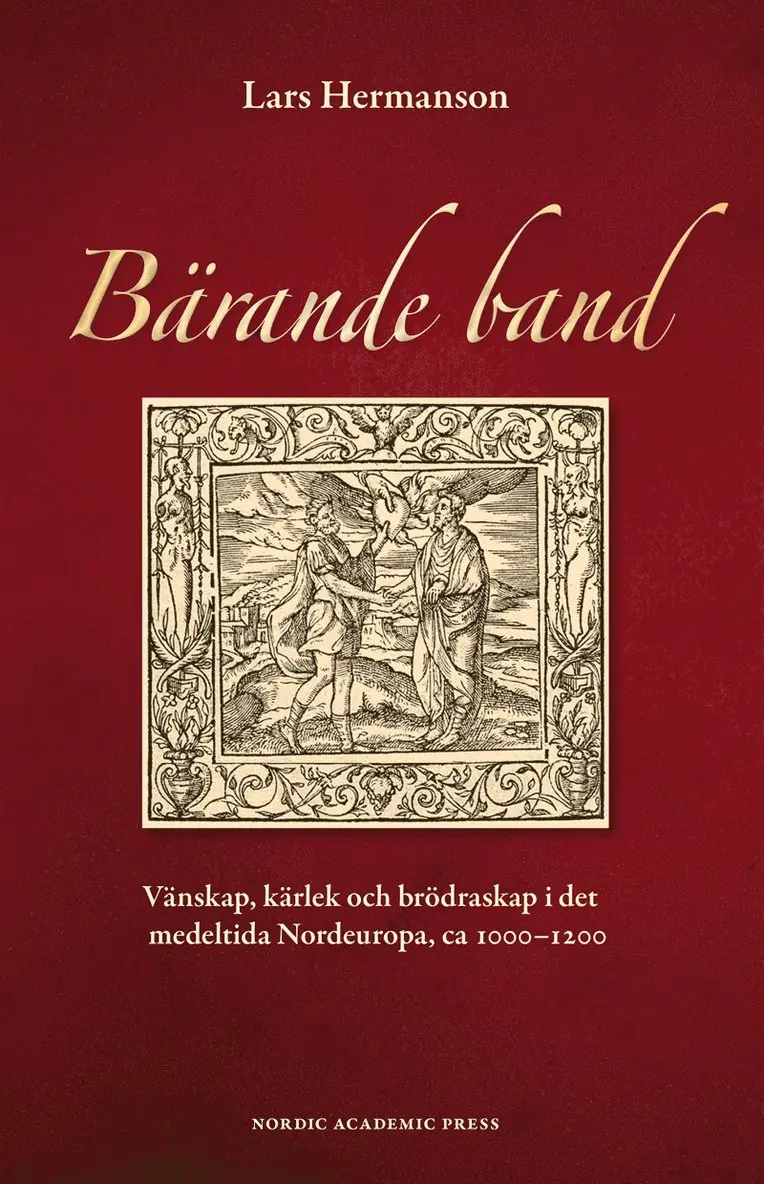
    Friendship, Love, and Brotherhood in Medieval Northern Europe, c. 1000-1200

    AvLars Hermanson

    Inbunden, Engelska, 2019

    Del 85 i serien Northern World

    1 719 kr

    Beställningsvara. Skickas inom 5-8 vardagar. Fri frakt över 249 kr.

    Beskrivning

    In this book, Lars Hermanson discusses how religious beliefs and norms steered attitudes to friendship and love, and how these ways of thinking affected social identity and political behaviour. With examples taken from eleventh- and twelfth-century northern Europe, the author investigates why friendship was praised both by brotherhoods of aristocratic warriors and by brethren within monastery walls. Social and political functions rested on personal connections rather than a strong central state in the High Middle Ages. This meant that friendship was an important pragmatic instrument for establishing social order and achieving success in the game of politics.

    Produktinformation

    • Utgivningsdatum:2019-05-29
    • Mått:155 x 235 x 23 mm
    • Vikt:577 g
    • Format:Inbunden
    • Språk:Engelska
    • Serie:Northern World
    • Antal sidor:282
    • Förlag:Brill
    • ISBN:9789004400078
    • Originaltitel:Bärande band. Vänskap, kärlek och brödraskap i det medeltida Nordeuropa, ca 1000-1200.

    Utforska kategorier

    • Socialhistoria och kulturhistoria inom Historia och arkeologi
    • Filosofiska discipliner inom Filosofi och religion
    • Historia inom Historia och arkeologi

    Mer om författaren

    Lars Hermanson is Professor of History at Gothenburg University. He has published many works on medieval political culture and has co-edited several anthologies on the subject, including Disputing Strategies in Medieval Scandinavia (Brill, 2013).

    Innehållsförteckning

    • List of FiguresAcknowledgementsIntroduction1 Friendship and Self-Interest2 Friendship as a Research Topic3 Thesis4 The Outline of the Book1 Ideas of Friendship, Love, and Brotherhood in Classical Philosophy1 Friendship in Theory2 The Terminology of Friendship3 Friendship in Greek Philosophy4  Amicitia in Roman Philosophy5 Friendship in the Apocalyptic Era6 From Classical Philosophy to the Christian Theology of Late Antiquity7 Summing Up2 Friendship and Social Formation in the High Middle Ages1 Centuries of Upheaval2 Different Friendship Discourses?3 The Ecclesiastical Elite3.1 Collective Identity3.2 Friendship as a Spiritual and Intellectual Concept3.3 Spiritalis Amicitia3.4 The Intellectual Field and the Language of Friendship3.5 Abbot William’s Collection of Letters3.6 The Terminology of Friendship3.7 Living Friendship4 The Secular Elite4.1 The Position of the Aristocracy in Society4.2 The Strategies of the Secular Elite to Legitimize Its Authority4.3 The Ideal Aristocrat4.4 The Social Environment4.5 The Court as a Political Arena5 Friendship and the Legitimation of Power in Saxo Grammaticus’ Gesta Danorum5.1 Saxo’s Classical View of History5.2 The Audience of Gesta Danorum5.3 The Spiritual Friendship between Bishop William and Svend Estridsen5.4 The Friendship Between Bishop Absalon and Valdemar I6 Collective Pragmatic Friendship: Alliance Systems and Politics7 The Practical Benefit of Friendship7.1 Friends and Royal Kinsmen8 Friendship and the Legitimation of Power9 Summing Up3 Friendship in an Oath-Taking Society – A Ritual Perspective1 The Oath-Taking Society1.1 Oaths and Friendship1.2 The Language of Rituals1.3 Ritual Friendship in a Broader Chronological and Geographical Perspective1.4 Ritual Friendship – Text and Practice2 Summing Up4 Friendship and Lordship in Twelfth-Century Scandinavia1 Different Forms of Government2 Friendship as a Form of Lordship – The Power Structure of Traditional Society2.1 Power Built Up from Below – The Power Basis of Icelandic Chieftains2.2 The Debate about Political Development in Norway in the Civil War Era2.3 Protective Relationships and Military Development2.4 Undermining Lordship – The Struggle for the Throne in Norway2.5 Friendship and the Political Structure2.6 The Fruits of Vertical Friendship2.7 Friendship – A Free Choice?2.8 Friendship and Mistrust2.9 Power, Reputation, Violence, and Friendship2.10 Friendship – A Two-Edged Sword2.11 The Popular Prince in Heimskringla and Gesta Danorum3 Friendship and the Christian Ideology of Lordship3.1 Royal Diplomas and the Sacred Order3.2 The Intellectual Debate on the Origin of Power3.3 God’s Friends and Satan’s Henchmen – The Dualistic Conflict Perspective4 Group Culture and Collective Friendship4.1 The Ideals, Structure, and Function of the Guilds4.2 Brotherhood and Continuity5 Friendship, Brotherhood, and Power Systems in Valdemarian Denmark5.1 King Valdemar’s Letter to the Gotland Travellers5.2 The Brotherhood List and Medieval Group Culture5.3 The Ideology and Function of European Brotherhoods5.4 Lord and Friend – Lord and Brother?5.5 The Redirection of Gift Exchange5.6 Oaths, Brotherhood, and Lordship6 Summing UpEpilogue1 Why Friendship?1.1 Friendship and Society1.2 Friendship and Legitimation1.3 Friendship and Structural Changes1.4 Friendship as Ideology and CultureBibliographyIndex