• Fri frakt över 249 kr
  • •
  • Snabba leveranser
  • •
  • Billiga böcker
Kundservice

Du är på sajten för privatpersoner.

Företag, bibliotek eller offentlig verksamhet?

Du handlar på classic.bokus.com, där alla dina funktioner finns intakta.
Till classic.bokus.com
Bokus logotyp. Gå till startsidan.
  • Erbjudanden
  • Nyheter
  • Student
  • Topplistor
  • Barn & ungdom
  • Bokus Play
  • E-böcker
  • Pocketböcker
  • Spel & pussel

10% studentrabatt med kod TERM26

Sidfot

Mina sidor

    Hjälp

    • Kundservice
    • Vanliga frågor och svar
    • Frakt och leverans
    • Retur vid ångerrätt
    • Reklamera vara
    • Betalning
    • Köpvillkor
    • Allmänna villkor
    • Information om webbplatsens tillgänglighet

    Om Bokus

    • Om oss
    • Pressrum
    • För studenter
    • För företag
    • För bibliotek och offentlig verksamhet
    • För leverantörer
    • Hållbarhet

    Populärt

    • Aktuella erbjudanden
    • Presentkort
    • Studentlitteratur
    • Nya böcker
    • Topplistor
    • Signerade böcker
    • Engelska böcker

    Inspiration

    • Boktips
    • BookTok
    • Populära bokserier
    • Barnbokskaraktärer
    • Populära författare
    Logotyp för Bokus
    Följ oss på Facebook (extern länk)Följ oss på Instagram (extern länk)Följ oss på YouTube (extern länk)Följ oss på TikTok (extern länk)
    bokus @ CookiesAnpassa cookiesIntegritetspolicyKöpvillkor
    Till Citymail hemsida (extern länk)Till Budbee hemsida (extern länk)Till Postnord hemsida (extern länk)Till Schenker hemsida (extern länk)Till Early Bird hemsida (extern länk)Till Walleys hemsida (extern länk)
    1. Skönlitteratur
    2. Dramatik

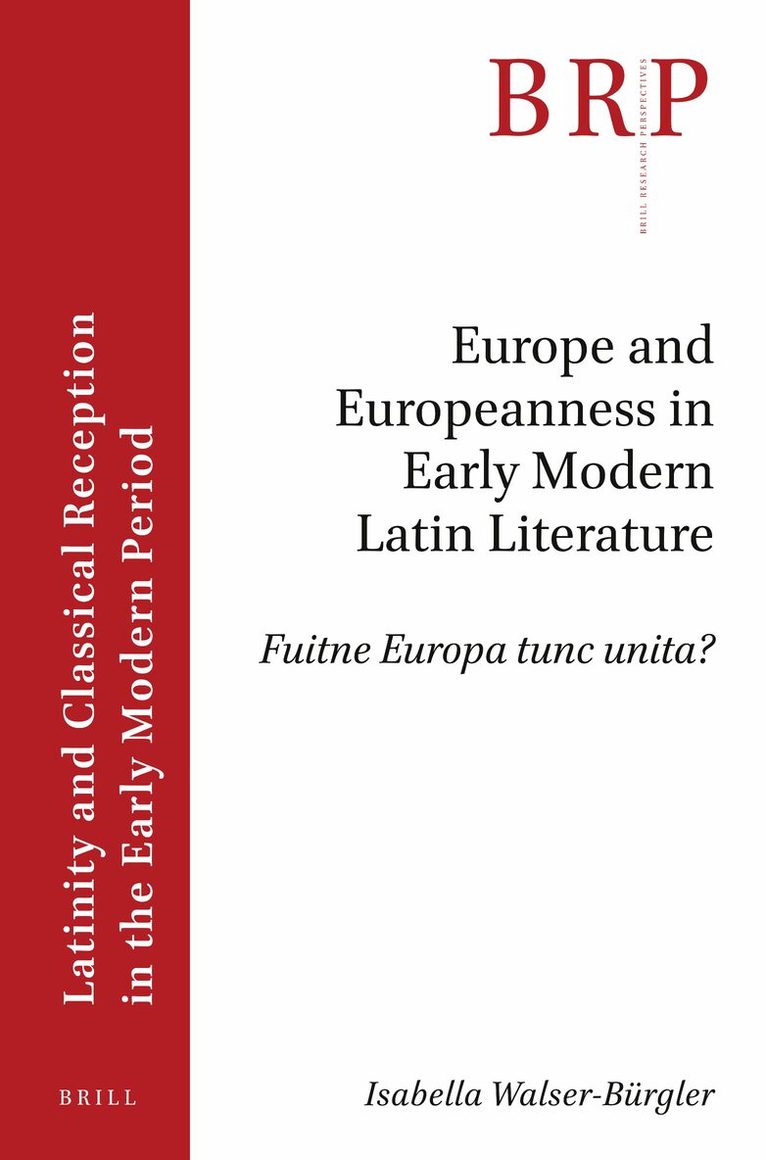
    Europe and Europeanness in Early Modern Latin Literature

    Fuitne Europa tunc unita?

    AvIsabella Walser-Bürgler

    Häftad, Engelska, 2021

    Del i serien Brill Research Perspectives in Latinity and Classical Reception in the Early Modern Period

    1 237 kr

    Beställningsvara. Skickas inom 5-8 vardagar. Fri frakt över 249 kr.

    Beskrivning

    The history of European integration goes back to the early modern centuries (c. 1400–1800), when Europeans tried to set themselves apart as a continental community with distinct political, religious, cultural, and social values in the face of hitherto unseen societal change and global awakening. The range of concepts and images ascribed to Europeanness in that respect is well documented in Neo-Latin literature, since Latin constituted the international lingua franca from the fifteenth to the eighteenth centuries. In Europe and Europeanness in Early Modern Latin Literature Isabella Walser-Bürgler examines the most prominent concepts of Europe and European identity as expressed in Neo-Latin sources. It is aimed at both an interested general audience and a professional readership from the fields of Latin studies, early modern history, and the history of ideas.

    Produktinformation

    • Utgivningsdatum:2021-02-11
    • Mått:155 x 235 x 8 mm
    • Vikt:256 g
    • Format:Häftad
    • Språk:Engelska
    • Serie:Brill Research Perspectives in Latinity and Classical Reception in the Early Modern Period
    • Antal sidor:136
    • Förlag:Brill
    • ISBN:9789004459540

    Utforska kategorier

    • Dramatik inom Skönlitteratur
    • Europas historia inom Historia och arkeologi

    Mer om författaren

    Isabella Walser-Bürgler, Ph.D. (2014), is Key Researcher at the Ludwig Boltzmann Institute for Neo-Latin Studies in Innsbruck (Austria). She has published monographs, editions, translations, and articles on the Neo-Latin novel, the early modern discourse of Europe, and early modern Latin university orations.

    Recensioner i media

    "Isabella Walser-Bürgler’s book aims to demonstrate the genesis and development of an important discourse, the history of European integration, that Neo-Latin sources can elucidate in a much deeper way than only the use of vernacular sources can do. She provides a smörgåsbord of titles and quotations that undoubtedly will serve this purpose very well and makes us understand that a rich source material awaits those who immerse themselves in the treasuries of libraries and archives. The possibilities for new understanding not only for the past but also for topics that engage us directly today are legion." Arne Jönsson in BMCR 22.06.44

    Innehållsförteckning

    • Editorial NoteAbstractKeywords1 Introduction2 Early Modern Latin: A European Language and a Language for ‘Europe’3 Antecedents of the Early Modern Discourse of Europe4 From Zero to Hero: Conceptualisations of Europe in the Early Modern Period5 PerspectivesReferences