• Fri frakt över 249 kr
  • •
  • Snabba leveranser
  • •
  • Billiga böcker
Kundservice

Du är på sajten för privatpersoner.

Företag, bibliotek eller offentlig verksamhet?

Du handlar på classic.bokus.com, där alla dina funktioner finns intakta.
Till classic.bokus.com
Bokus logotyp. Gå till startsidan.
  • Erbjudanden
  • Nyheter
  • Student
  • Topplistor
  • Barn & ungdom
  • Bokus Play
  • E-böcker
  • Pocketböcker
  • Spel & pussel

10% studentrabatt med kod TERM26

Sidfot

Mina sidor

    Hjälp

    • Kundservice
    • Vanliga frågor och svar
    • Frakt och leverans
    • Retur vid ångerrätt
    • Reklamera vara
    • Betalning
    • Köpvillkor
    • Allmänna villkor
    • Information om webbplatsens tillgänglighet

    Om Bokus

    • Om oss
    • Pressrum
    • För studenter
    • För företag
    • För bibliotek och offentlig verksamhet
    • För leverantörer
    • Hållbarhet

    Populärt

    • Aktuella erbjudanden
    • Presentkort
    • Studentlitteratur
    • Nya böcker
    • Topplistor
    • Signerade böcker
    • Engelska böcker

    Inspiration

    • Boktips
    • BookTok
    • Populära bokserier
    • Barnbokskaraktärer
    • Populära författare
    Logotyp för Bokus
    Följ oss på Facebook (extern länk)Följ oss på Instagram (extern länk)Följ oss på YouTube (extern länk)Följ oss på TikTok (extern länk)
    bokus @ CookiesAnpassa cookiesIntegritetspolicyKöpvillkor
    Till Citymail hemsida (extern länk)Till Budbee hemsida (extern länk)Till Postnord hemsida (extern länk)Till Schenker hemsida (extern länk)Till Early Bird hemsida (extern länk)Till Walleys hemsida (extern länk)
    1. Samhälle och politik
    2. Samhälle och kultur

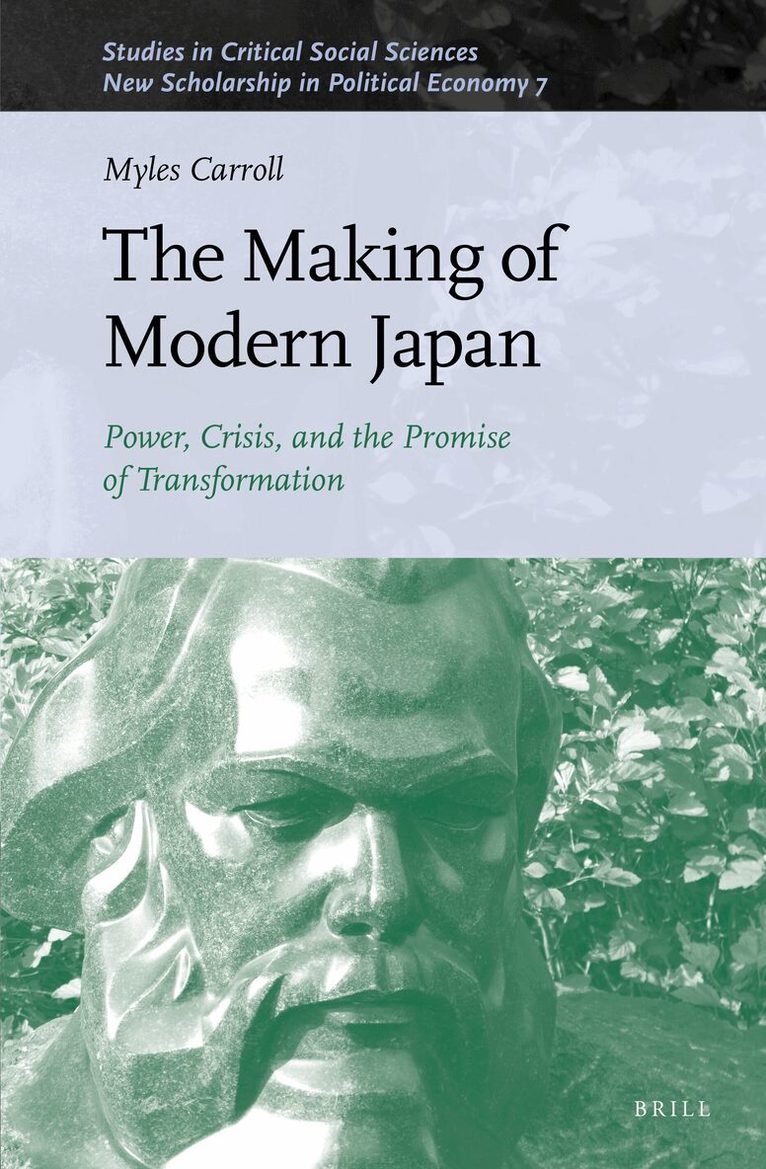
    Making of Modern Japan

    Power, Crisis, and the Promise of Transformation

    AvMyles Carroll

    Inbunden, Engelska, 2021

    Del i serien New Scholarship in Political Economy

    2 940 kr

    Beställningsvara. Skickas inom 5-8 vardagar. Fri frakt över 249 kr.

    Fler format och utgåvor

    Häftad

    363 kr

    Beskrivning

    In The Making of Modern Japan, Myles Carroll offers a sweeping account of post-war Japanese political economy, exploring the transition from the post-war boom to the crisis of today and the connections between these seemingly discrete periods. Carroll explores the multifarious international and domestic political, economic, social and cultural conditions that fortified Japan’s post-war hegemonic order and enabled decades of prosperity and stability. Yet since the 1990s, a host of political, economic, social and cultural changes has left this same hegemonic order out of step with the realities of the contemporary world, a contradiction that has led to three decades of crisis in Japanese society. Can Japan make the bold changes required to reverse its decline?

    Produktinformation

    • Utgivningsdatum:2021-10-21
    • Mått:155 x 235 x 23 mm
    • Vikt:587 g
    • Format:Inbunden
    • Språk:Engelska
    • Serie:New Scholarship in Political Economy
    • Antal sidor:266
    • Förlag:Brill
    • ISBN:9789004466517

    Utforska kategorier

    • Samhälle och kultur inom Samhälle och politik
    • Sociologi inom Samhälle och politik
    • Ekonomisk politik inom Ekonomi och Ledarskap

    Mer om författaren

    Myles Carroll is Assistant Professor in the Faculty of Core Research at Ochanomizu University, with a Ph.D. in Political Science (2020) from York University. He has published many articles on social reproduction and political economy in post-war Japan

    Innehållsförteckning

    • ACKNOWLEDGEMENTSLIST OF TABLE AND FIGURES1. IntroductionAnalytical approachOutline of the argumentOutline of chapters2. Lineages of Japanese political economyCreative conservatism and the developmental state: Japan’s post-war boomInstitutional approaches to the study of Japanese politicsThe long decline: Theorizing crisis in Heisei JapanThe welfare state and social reproduction in post-war JapanConclusion3. Towards a Gramscian understanding of Japanese political economyHistorical materialist methodologyHegemonyHegemony and hegemonic orderSocial reproductionConditions for hegemonic orderHistoric blocExplaining change: Conjunctural and organicOrganic crisisWorld order, forms of state, social forcesRelations of forceCaesarism, passive revolution and trasformismoPolitical ecologyTowards a Gramscian feminist approach to the Japanese post-war orderConclusion4. The post-war hegemonic orderThe post-war hegemonic orderConditions of post-war hegemonic orderGeopolitics: The Yoshida Doctrine and the US-Japan Security Treaty (Anpo) Global political economy: The Bretton Woods SystemThe electoral and party system: The rise of LDP dominanceThe state form: The rise of bureaucracy-driven governanceProduction and capital: Japanese developmentalism and the keiretsuProduction and labour: Enterprise unionism and lifetime employmentProduction and the petit bourgeoisie: Clientelism and the old middle classGender and the family: Extended families and the gender division of labourDemography and welfare: Young society, small welfare stateNation and ideology: The pacifist nationalism of the post-war eraEnvironment and national resources: Cheap oilThe post-war Japanese historic blocConclusion5. Contradictions and transitions of the Shōwa eraStructural changes to world orderThe Nixon shocksThe oil shocksAmerican trade frictions and the Plaza AccordStructural demographic changesThe beginning of an aging societyThe decline of extended familiesThe rise of women in the workforcePolitical changesInstitutional changesThe heyday of the kōenkaiThe rise of factions and the PARCInstitutional changes and continuities in Japanese business relationsLifetime employment and the dual systemClientelism and the construction stateImplications of these changes for hegemonic orderEconomic implicationsPolitical implicationsSocial implicationsConclusion6. The organic crisis of the Heisei eraHistorical background to the crisis1989-1993: Two electoral shocks1993-1996: Coalition governments, political reform1996-2001: LDP’s return to power, administrative and financial reform2001-2006: Rise of Koizumi, postal privatization2006-2009: LDP impasse2009-2012: Rise and fall of the DPJConditions of the crisisGeopolitics: Security Alliance in a post-Cold War worldGlobal political economy: Japan in a global neoliberal eraThe electoral and party system: Crisis, reform, and the end of LDP ruleThe state form: Institutional decay and administrative reformProduction and capital: The Americanization of Japanese capitalism? Production and labour: Deregulation and the rise of the working poorProduction and the petit bourgeoisie: End of the pork-barrel system? Gender and the family: The end of the male breadwinner model and shōshikaDemography and welfare: The rise of the ‘pension state’Nation and ideology: ‘Normal country’ or tan’itsu minzoku?Political ecology: Climate change, the nuclear turn and 3/11Implications of the crisisSummary of the economic accumulation crisisSummary of the political legitimation crisisSummary of the social reproduction crisisConclusion7. Caesarism, passive revolution and the return of the LDP under AbeAbe’s political comebackBreaking the deadlock: The Caesarism of “Abenomics” Breaking the deadlock through expansionary Keynesian policyBreaking the deadlock through neoliberal economic reformBreaking the deadlock through welfare state expansionImplications of Caesarism under AbeThe real Abe? Passive revolution, militarism and soft authoritarianismAsserting control over the LDPPassive revolution in administrative reformPassive revolution in domestic security policyAbe’s passive revolutionConsequences of Abe’s reign for the hegemonic orderCapital accumulationPolitical legitimationSocial reproductionConclusion8. Whither post-Abe Japan? Four scenarios for the futureThe neo-conservative optionOverviewRelations of force behind neo-conservatismThe neo-conservative solution to organic crisisChallenges and contradictions of neo-conservatismThe neo-liberal pathOverviewRelations of force behind neo-liberalismThe neo-liberal solution to organic crisisChallenges and contradictions of neo-liberalismBack to the future? Neo-communitarianismOverviewRelations of force behind neo-liberalismThe neo-liberal solution to organic crisisChallenges and contradictions of neo-liberalismCounter-hegemony and a democratic socialist futureOverviewRelations of force behind democratic socialismThe democratic socialist solution to organic crisisChallenges and contradictions of democratic socialismConclusion9. ConclusionContradictions for hegemonic order: Political legitimationContradictions for hegemonic order: Capital accumulationContradictions for hegemonic order: Social reproductionOverarching theoretical implications of the argumentBIBLIOGRAPHYINDEX