• Fri frakt över 249 kr
  • •
  • Snabba leveranser
  • •
  • Billiga böcker
Kundservice

Du är på sajten för privatpersoner.

Företag, bibliotek eller offentlig verksamhet?

Du handlar på classic.bokus.com, där alla dina funktioner finns intakta.
Till classic.bokus.com
Bokus logotyp. Gå till startsidan.
  • Erbjudanden
  • Nyheter
  • Student
  • Topplistor
  • Barn & ungdom
  • Bokus Play
  • E-böcker
  • Pocketböcker
  • Spel & pussel

10% rabatt på allt med kod: NYSTART10 →

Sidfot

Mina sidor

    Hjälp

    • Kundservice
    • Vanliga frågor och svar
    • Frakt och leverans
    • Retur vid ångerrätt
    • Reklamera vara
    • Betalning
    • Köpvillkor
    • Allmänna villkor
    • Information om webbplatsens tillgänglighet

    Om Bokus

    • Om oss
    • Pressrum
    • För studenter
    • För företag
    • För bibliotek och offentlig verksamhet
    • För leverantörer
    • Hållbarhet

    Populärt

    • Aktuella erbjudanden
    • Presentkort
    • Studentlitteratur
    • Nya böcker
    • Topplistor
    • Signerade böcker
    • Engelska böcker

    Inspiration

    • Boktips
    • BookTok
    • Populära bokserier
    • Barnbokskaraktärer
    • Populära författare
    Logotyp för Bokus
    Följ oss på Facebook (extern länk)Följ oss på Instagram (extern länk)Följ oss på YouTube (extern länk)Följ oss på TikTok (extern länk)
    bokus @ CookiesAnpassa cookiesIntegritetspolicyKöpvillkor
    Till Citymail hemsida (extern länk)Till Budbee hemsida (extern länk)Till Postnord hemsida (extern länk)Till Schenker hemsida (extern länk)Till Early Bird hemsida (extern länk)Till Walleys hemsida (extern länk)
    1. Kultur
    2. Musikböcker
    3. Musikvetenskap

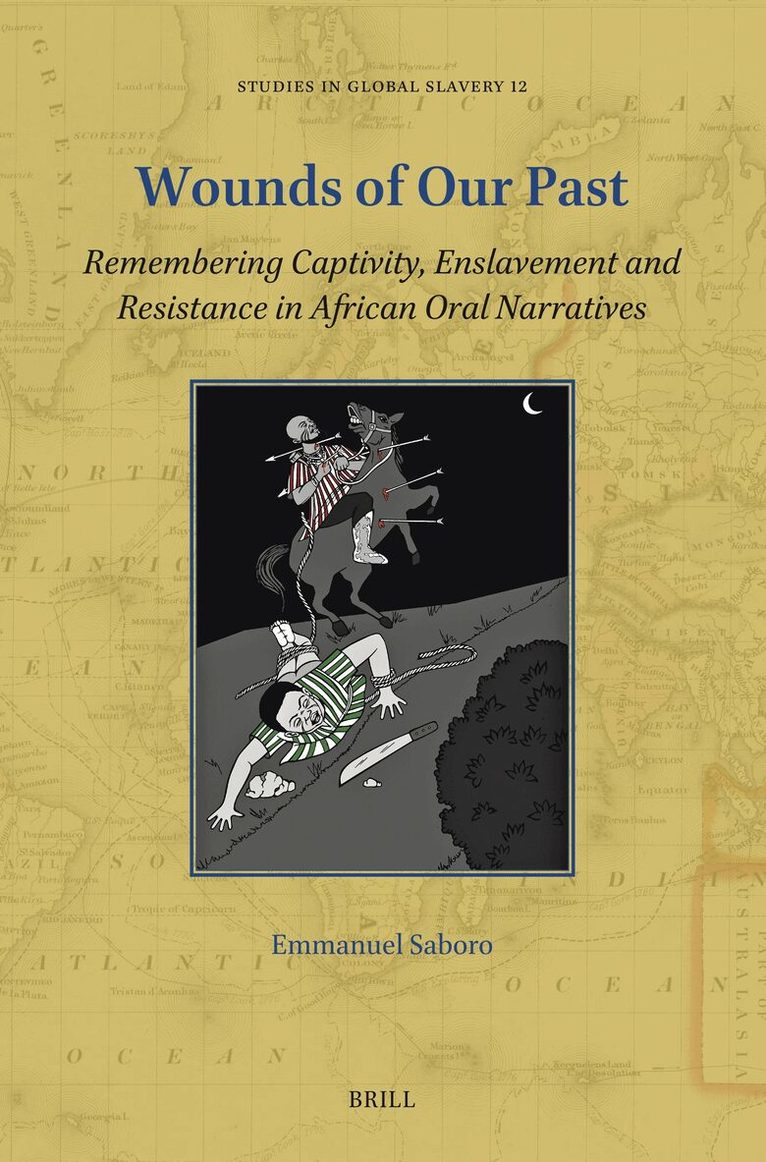
    Wounds of Our Past

    Remembering Captivity, Enslavement and Resistance in African Oral Narratives

    AvEmmanuel Saboro

    Inbunden, Engelska, 2022

    Del 12 i serien Studies in Global Slavery

    1 822 kr

    Beställningsvara. Skickas inom 5-8 vardagar. Fri frakt över 249 kr.

    Fler format och utgåvor

    Häftad

    795 kr

    Beskrivning

    Emmanuel Saboro’s study on memories of the slave era in northern Ghana is a most welcome addition to a long and storied scholarly tradition examining song lyrics associated with the institution of slavery. As one might expect, the vast majority of such studies focus on the music traditions of the enslaved in North America. Collected between the mid-19th and early 20th century, historians, musicologist, and literary scholars have systematically analyzed these songs for what the lyrics can tell us about experiences during the era of slavery and the slave trade. Similar works that focus on West Africa, however, are rare indeed. Like his North American counterparts, Saboro examines the songs of northern Ghana as coded messages that express hope, comfort, resistance, rage and triumph over adversity. Having “no fixed meanings”, Saboro describes them as both flexible and greatly useful for conveying a variety of meanings.

    Produktinformation

    • Utgivningsdatum:2022-04-14
    • Mått:155 x 235 x 13 mm
    • Vikt:465 g
    • Format:Inbunden
    • Språk:Engelska
    • Serie:Studies in Global Slavery
    • Antal sidor:184
    • Förlag:Brill
    • ISBN:9789004500174

    Utforska kategorier

    • Musikvetenskap inom Kultur
    • Socialhistoria och kulturhistoria inom Historia och arkeologi
    • Slaveri inom Historia och arkeologi

    Mer om författaren

    Emmanuel Saboro (PhD) is a Senior Lecturer at the Centre for African and International Studies, University of Cape Coast, Ghana. He obtained his PhD at the Wilberforce Institute for the Study of Slavery and Emancipation (WISE), University of Hull, England. He is a fellow of the American Council of Learned Societies (ACLS), African Humanities Program. His most recent publication Slavery, Oral Tradition and Identity Construction has appeared in T. Falola & T. Akinyemi (Eds), Palgrave Handbook of Oral Traditions and Folklore (Palgrave Macmillan, 2021).

    Recensioner i media

    "In this important and well-researched book, Emmanuel Saboro draws from original oral sources to show us how communities in northern Ghana are bearers of a collective memory of the transatlantic and internal trades." - Ana Lucia Araujo, Professor of History, Howard University

    Innehållsförteckning

    • ContentsForewordAcknowledgementsList of IllustrationsNote on Transcriptions and TranslationsIntroduction: Envisioning the Past in the Present: Hearing the Unsaid1 Northern Ghana and the Historiography of the Slave Trade2 Reconfiguring Enslavement and the Slave Trade in Africa: the Place of Oral Tradition3 Memory/Remembering4 Sources and Methods5 Structure of the Book1 Remembering a Fractured Past: Historicizing Violence, Captivity, and Enslavement in Northern Ghana in the Nineteenth Century1 Introduction2 The Gold Coast and the Trans-Atlantic Connection3 Navigating Histories, Constructing Identities: Geography and People of Northern Ghana, the Bulsa and Kasena in Perspective4 Post-abolition Slavery and the Slave Trade in the Nineteenth Century5 Asante and the Slave Trade in Northern Ghana in the Nineteenth Century6 The Zabarima Slave Raiding Hegemony in Northern Ghana7 “Babatu Has Really Dealt with Me and I Know”: the Portrait of a Ruthless Leader8 ‘Places, Places Are Still There’: Salaga, a Bloodied Landscape of Captivity, Enslavement, and Dispossession9 Conclusion2 The Song as a Cultural and Historical Archive for Reconstructing the Past1 Introduction2 The African Song Tradition: a Brief Overview3 Song Traditions in Northern Ghana: the Bulsa and Kasena in Perspective4 “They Have Killed Me, Killing of a Different Kind”: Dirges/Laments/Sorrow Songs5 War and Victory Songs6 The Bulsa Battle Cry7 The War Flute8 Performing Pain: Song, Ritual Dance, and Performance9 “Singing Rocks”: The Pikworo Slave Camp Songs10 Conclusion3 ‘Unspeakable Things Spoken’: Cultural Constructions of Trauma, Mourning Loss1 Introduction2 Framing Violence: Metaphorizing the Kanbong (Foreign Enslaver) as the Other3 Sexual Violence4 Of Mothering and Motherhood5 Of Place, Belonging and Home6 Where There Are No Graves: Metaphorizing Death and Mourning Loss4 “Sins of Our Fathers”: Re-reading Indigenous Complicity Narratives1 Notions of Betrayal: the Insider Motif2 The Politics of Silence: Survival or Complicity?3 Conclusion5 “We Are Free at Last”: Local Adaptations and Indigenous Resistance Strategies against Captivity and Enslavement in the Hinterland1 Introduction2 “We Have Fled, Fled a Lot”: Flight as a Survival and Resistance Strategy3 The Landscape and Hollow Trees as “Refuge Sites”4 Hiding in Hollow Trees5 Drums of War: Contestations and Deconstructing Notions of Victimhood6 Animistic Metaphors as Counter Representation Strategies7 The Lion8 The Elephant9 Celebrating Triumph over Tragedy10 ConclusionConclusion: Freedom beyond the Wound and the SilencesGlossaryBibliographyIndex